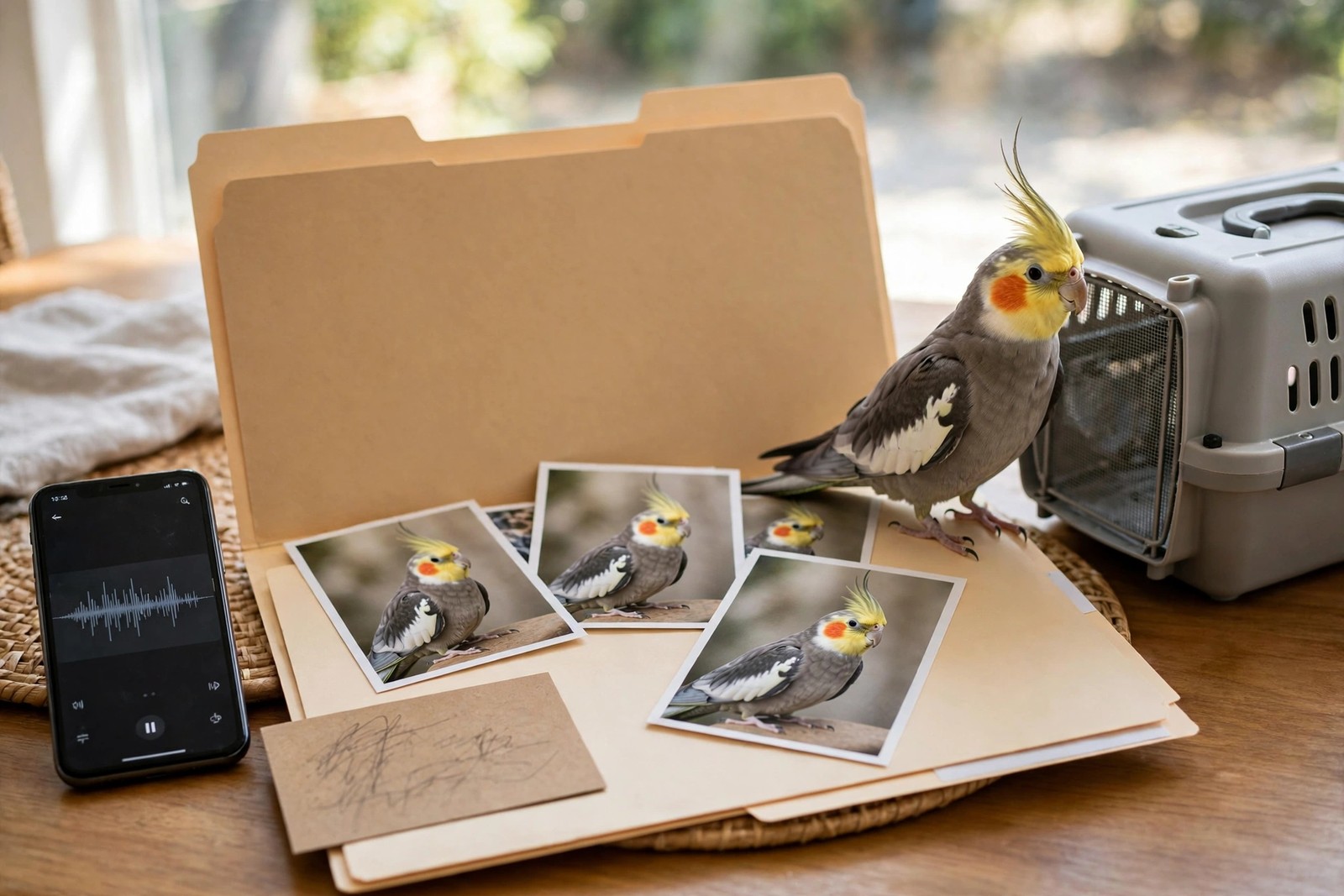
A lost bird kit is everything you would frantically wish for in the first hour after an escape, assembled calmly in advance: proof of who your bird is, tools to lure her back, and the phone numbers that matter. Birds are recovered because someone recognised them or heard them — this kit makes recognition fast and your search organised from the first minutes.
The Identification Folder
Photograph your bird properly: full body from both sides, close-ups of the face, any distinctive markings, unusual feathering, a crooked toe, or a beak quirk, in natural light without filters. Update the set after a moult or any appearance change. Write down her leg band number and letters exactly as stamped, character by character, photograph the band itself if you can do so without stressing her, and note the band's colour and which leg wears it — a band number is often the decisive proof that a found bird is yours. Add her microchip number if she has one, her species, sex if known, hatch information if you have it, and a plain-language description written for someone who knows nothing about birds.
Recordings That Can Bring Her Home
Record clear audio and video of her contact calls, flock calls, and favourite words or whistles, plus recordings of your own voice calling her name and the phrases you use at home. Store them on your phone and with a family member. In a search, these recordings played outdoors — followed by silence while you listen for a reply — can draw an answer from a frightened bird hiding high in a tree who would never call to a stranger's voice. Note her favourite treats and the sounds she cannot resist, such as a particular packet rustle, because a hungry, tired lost bird often comes down for food and familiarity before she comes down for people.
The Physical Kit and Contact List
Keep a suitable travel carrier assembled and accessible, not dismantled in storage, with a soft towel for gentle restraint, a portable perch if she uses one, sealed favourite food, and a small speaker for playing her recordings. A lightweight net belongs in the hands of someone experienced only; a panicked grab attempt can push a reachable bird further away, so the carrier, food, and recordings are the everyday recovery tools. Print the contact list on paper as well as storing it digitally: your avian vet, the nearest emergency vet, local parrot rescues and shelters, animal control, nearby bird clubs, and the neighbours most likely to spot an unusual bird in their garden. Include a ready-to-print flyer draft with her best photo, description, band details withheld in part so a claimant can prove ownership by completing them, and your phone number.
Keeping the Kit Alive
Refresh the kit twice a year: retake photos, confirm the band transcription against the leg, check the recordings still play, and update every phone number. Tell your bird-sitter where the kit lives. If the day ever comes, work the kit in order — search the immediate area playing her calls, alert neighbours, phone the list, post her description widely — and move fast while she is still close. KinsLe's Lost Pet Alert System puts that same description and photo in front of nearby Circle of Love members in minutes as a free alert, and a finder who has her safe can message you directly through it.