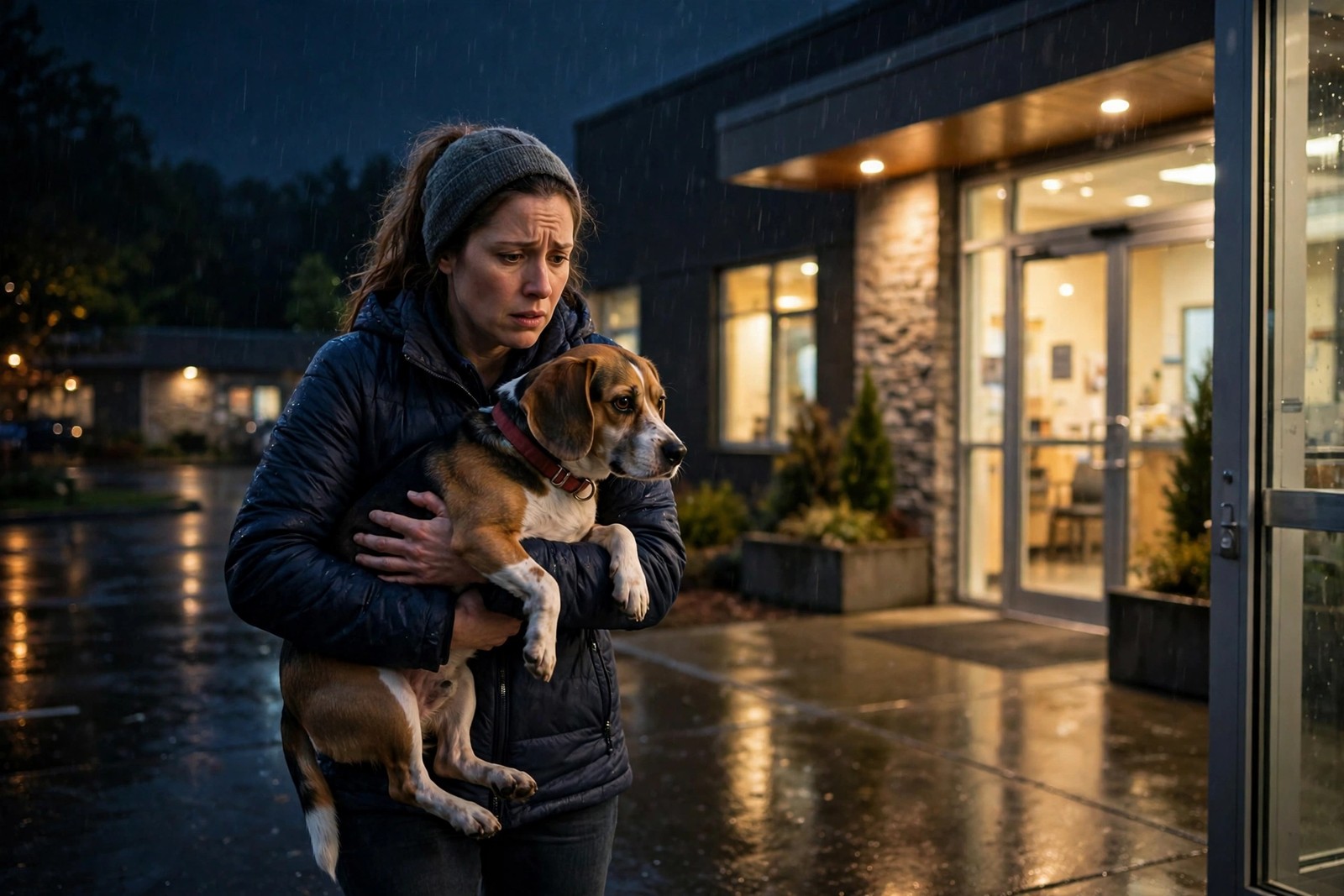
Night strips away the easy option of watching until morning surgery opens, so the decision between your regular vet's out-of-hours service and an emergency clinic has to rest on the signs in front of you. Prepare the framework in daylight: know how your practice covers nights, save the emergency number in your phone, and learn which signs always mean go now. Then, on the night itself, you are applying a plan rather than inventing one under stress.
Signs That Mean Emergency Care Now
Certain presentations should never wait for morning. Breathing difficulty in any form heads the list: laboured, noisy, or rapid breathing, or gums turning pale or blue-toned. Collapse, inability to stand, or a seizure also mean emergency care now, as does bleeding that continues despite gentle pressure. Repeated vomiting or retching alongside a swollen, tight abdomen is an emergency presentation in dogs, particularly larger deep-chested ones. Suspected poisoning, severe pain that makes a dog cry out, pant heavily, or guard part of the body, an injury to an eye, and straining to urinate while producing nothing all belong in the same category. With any of these, phone the emergency service as you prepare to travel so the team knows what is coming.
Signs That Can Usually Wait for Your Regular Vet
At the other end of the scale, a stable dog with a minor problem can usually be seen by your regular vet when the practice opens. A single vomit in a dog who stays bright, drinks, and settles fits that pattern, as does a mild limp without swelling or an obvious wound, a small appetite dip across one evening in a dog still moving and drinking normally, or a minor skin irritation discovered at bedtime. Waiting in these cases means active watching rather than dismissal. Note when the sign began, check the dog periodically through the night, and phone first thing in the morning, describing what you observed and how it evolved. If any problem on this list worsens or joins company with a sign from the emergency list, the decision changes with it.
The Middle Ground: Phone for Triage
Many night-time worries sit between those poles, and that middle ground exists for a phone call. Emergency services triage constantly and would rather advise a worried owner at midnight than meet a deteriorated dog at dawn. Describe the signs precisely: what happened, when it started, what your dog is doing now, and any known conditions or recent events such as possible access to something harmful. Follow the advice you are given, including advice to come in for examination even when the problem later proves minor, since a clinician triaging by phone works from your description and errs toward safety for good reason. Hesitation about seeming foolish should never enter the calculation, because the service exists for exactly these uncertain hours.
Travelling and Arriving Prepared
Keep an injured or ill dog warm, still, and supported during the journey, ideally on a firm surface in the car with a second person monitoring if one is available. Bring his records or know where they live, since the emergency team may never have met him: vaccination status, known conditions, current treatments, and your regular vet's name all speed up the first assessment. Tell the clinic anything he may have eaten or been exposed to, with packaging if the item is known. After the visit, ask for a summary to pass to your regular vet, so continuity survives the night and follow-up care builds on what the emergency team found.
Planning So the Night Stays About the Dog
Thinking about cost in advance, through savings set aside or insurance you chose calmly, removes money from the midnight decision and lets the signs alone decide. Review your practice's out-of-hours arrangements whenever they change, and keep the emergency number where a dog-sitter or family member can find it as easily as you can.
His essential history travels well in KinsLe's Pet Passport, where vaccination dates, known conditions, and his regular vet's details give an unfamiliar emergency team the background they need within minutes of arrival.