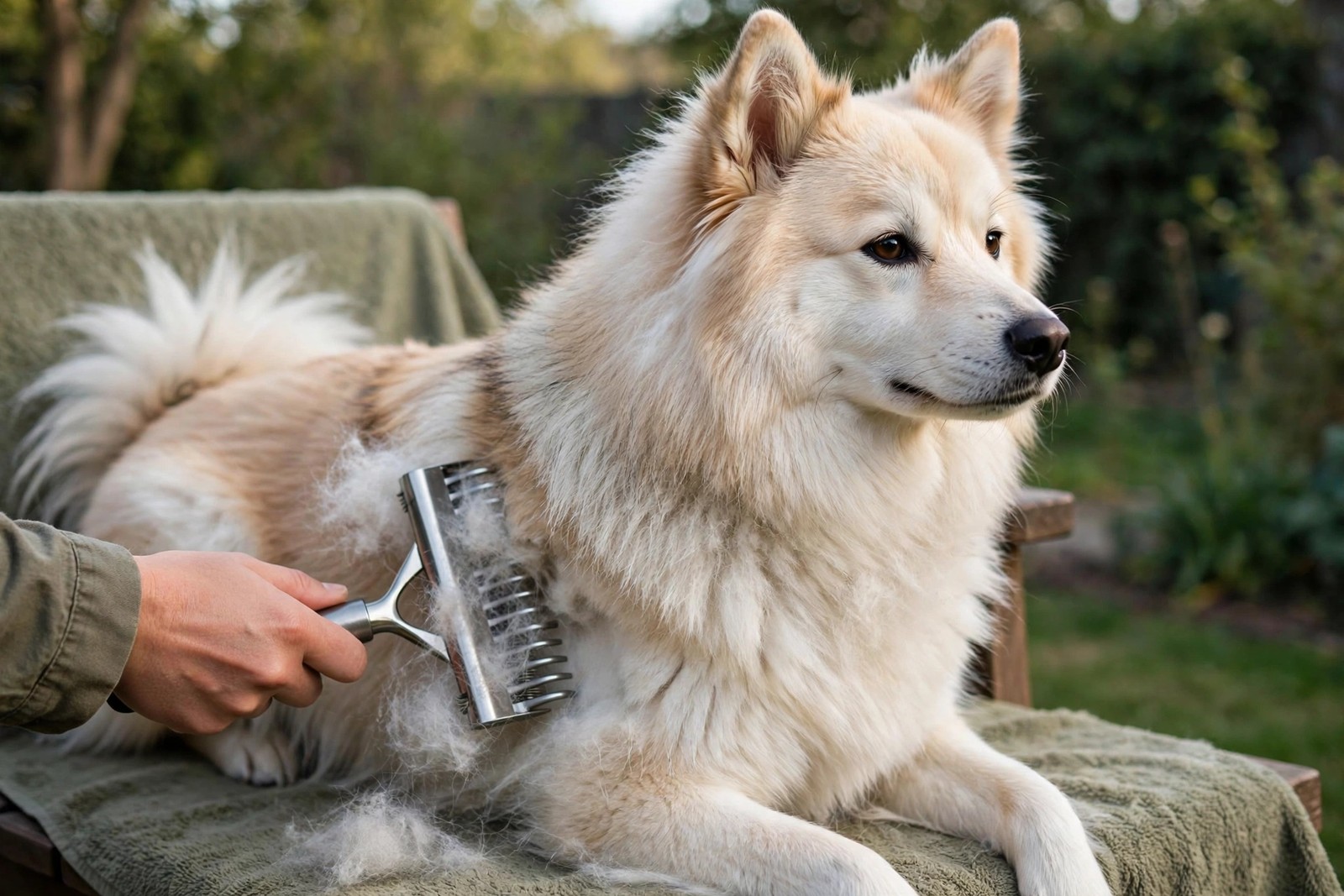
A spitz coat desheds from the bottom up: the soft undercoat is what leaves, while the longer guard hairs standing through it must stay uncut and unshaved, because they give the coat its weatherproof finish and its standing shape. Work in sections with an undercoat rake and a slicker brush, lifting the coat and brushing outwards in layers so loose undercoat comes away without tearing at the guard layer. Finish each section with a comb drawn right down to the skin; where the comb glides, that section is clear, and where it snags, packed undercoat is still hiding. Avoid any tool with blades that slice as they pull, and never shave a double coat except on veterinary advice — clipped guard hairs regrow slowly and unevenly, and the coat insulates against summer heat as well as winter cold.
The Basics First
With a dense double coat, the skin underneath is the thing you cannot see, so deshedding doubles as an inspection. Part the coat as you work and look at what the brush uncovers: redness, dandruff, parasites, small lumps, or the felted patches that form behind ears, in armpits and where a harness sits. Short sessions keep a spitz cooperative — ten calm minutes daily through a coat blow beats an hour of wrestling that teaches him to hide when the brush box opens. Brush outdoors or in one easy-clean corner during the heavy weeks, and follow a full session with a bath and a thorough dry only once the loose coat is already out, since bathing packed undercoat sets it like felt.
A Workable Routine
Work through a session in this order:
- Start at the hindquarters and work forward in sections, one area fully clear before moving on
- Lift the coat and brush outwards in layers with a slicker, following with an undercoat rake
- Comb each finished section down to the skin to prove no packed undercoat remains
- Leave blades, cutting tools and clippers out of the routine entirely
- Stop while your dog is still calm, and return tomorrow rather than forcing a finish
Note which areas clog fastest on your dog — many spitz types felt behind the ears and at the trousers first — and start future sessions there while he is freshest. A quick photo of the coat's condition each month makes thinning, patchiness or a coat that is not coming back after a blow obvious far earlier than memory does.
Keeping It Going
Judge each session against your own dog's normal: how much undercoat usually comes out in a week, how his skin usually looks, how he usually stands for grooming. A sudden change — bald patches, a sour smell from the skin, frantic scratching — is a vet conversation, not a cue to brush harder. In KinsLe, Care Teams records each finished grooming task with a timestamp once the assigned person marks it done, which shows at a glance whose session is still owing today.