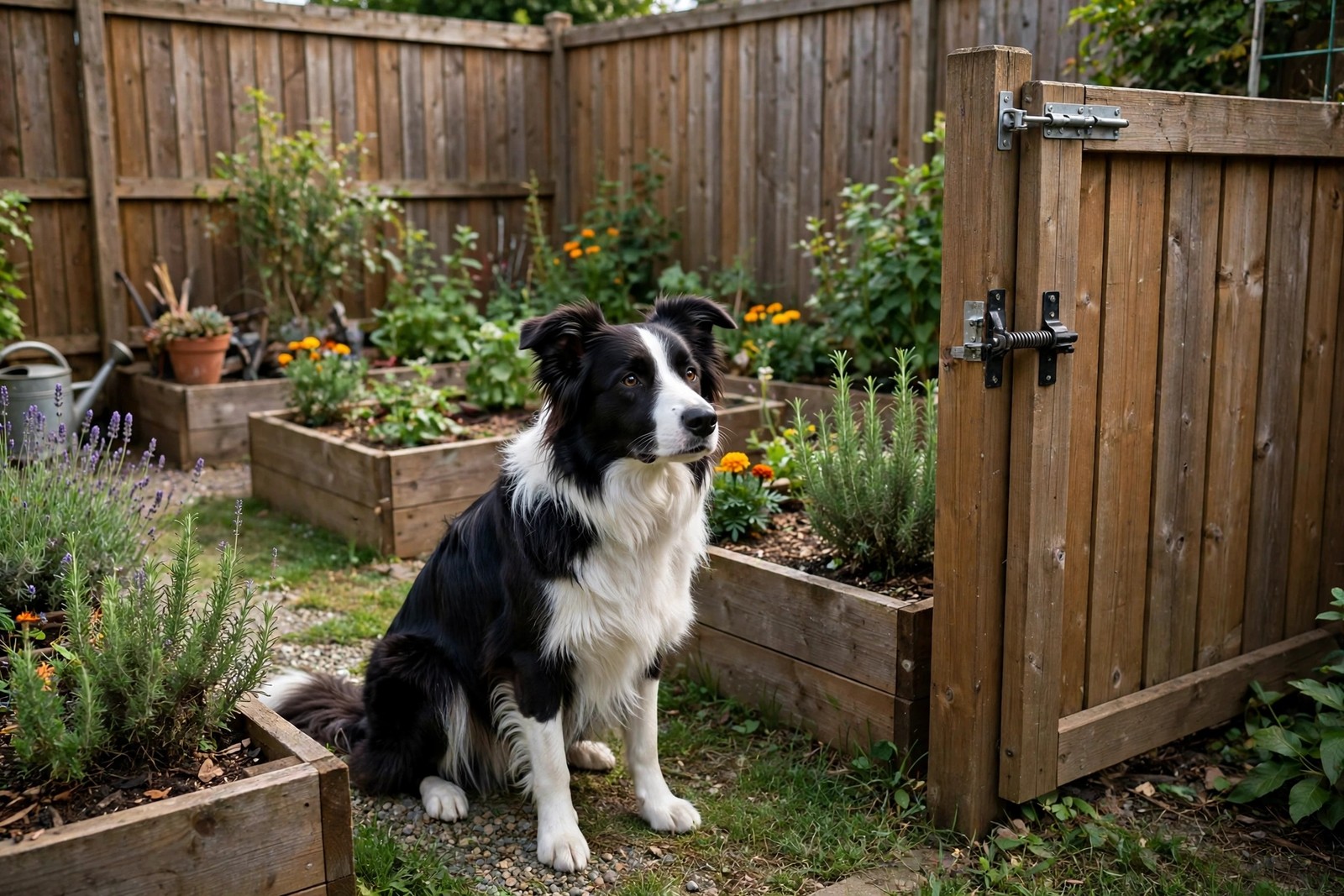
Dog-proofing a garden is not one job but three: a boundary your dog cannot get over, under or through; a ground surface that survives digging; and a sweep for the plants and chemicals that genuinely poison dogs. Work through them in that order, then walk the finished garden at dog height before the first unsupervised outing.
Pass One: The Boundary
Start outside the fence and look at it as an escape artist would. Height needs to beat your dog's athleticism, not an average dog's — a fit medium or large dog who can jump needs a fence around five to six feet, and determined climbers may need an inward-angled top section. Walk the whole line checking for gaps at ground level where boards warp, hedges thin out or soil washes away, because small dogs push through holes owners never notice from standing height. Gates defeat more proofing than fences do: fit a spring or hinge that swings the gate shut by itself, plus a latch your dog cannot nudge up with a nose, and make closing it a household rule. Finally, check for launch pads — bins, benches, log piles and raised beds parked against the fence give a jumper a halfway platform; move them at least a few feet away from the boundary.
Pass Two: Digging and the Ground Itself
Dogs dig at fence lines because the interesting world is on the other side, and they dig in soft borders because it is fun. For fence-line digging, bury mesh or lay flat pavers along the base of the fence, or dig a shallow trench and set the fence's bottom edge down into it, so paws meet something solid instead of a tunnel. Give determined diggers a legal outlet — a designated digging corner or sand pit with buried toys — and redirect them there every time. Check the ground for hazards too: cover or fence off ponds a puppy could fall into, secure compost heaps, which can contain moulds that are dangerous to dogs, remove sharp metal edging, and fill holes where a running dog could catch a leg.
Pass Three: Plants and Chemicals That Poison
This pass matters most and gets skipped most often. Plants commonly grown in gardens that are toxic to dogs include lilies, azalea and rhododendron, oleander, sago palm, foxglove, yew and autumn crocus; either remove them or fence those beds off properly, and be just as careful with spring bulbs, which dogs dig up and chew. In the shed, treat slug pellets — especially older metaldehyde types — weedkillers, rat poison, antifreeze and fertiliser as the serious risks they are: locked away, in sealed containers, never scattered where a dog can graze. Cocoa-shell mulch is also toxic to dogs and best avoided entirely. If you suspect your dog has eaten a plant or chemical, call a vet straight away rather than waiting for symptoms.
Keep It Proofed as Seasons Change
A proofed garden does not stay proofed. Storms loosen panels, winter kills hedge cover, new plants arrive as gifts, and growing puppies turn a safe fence into a low one. Re-walk the boundary every couple of months and after any storm, and repeat the check whenever a new dog joins the household. Sharing the plant list, the gate rule and the off-limits beds with everyone at home through KinsLe's Family Sharing means a visiting relative or dog-sitter works from the same safety picture you do.