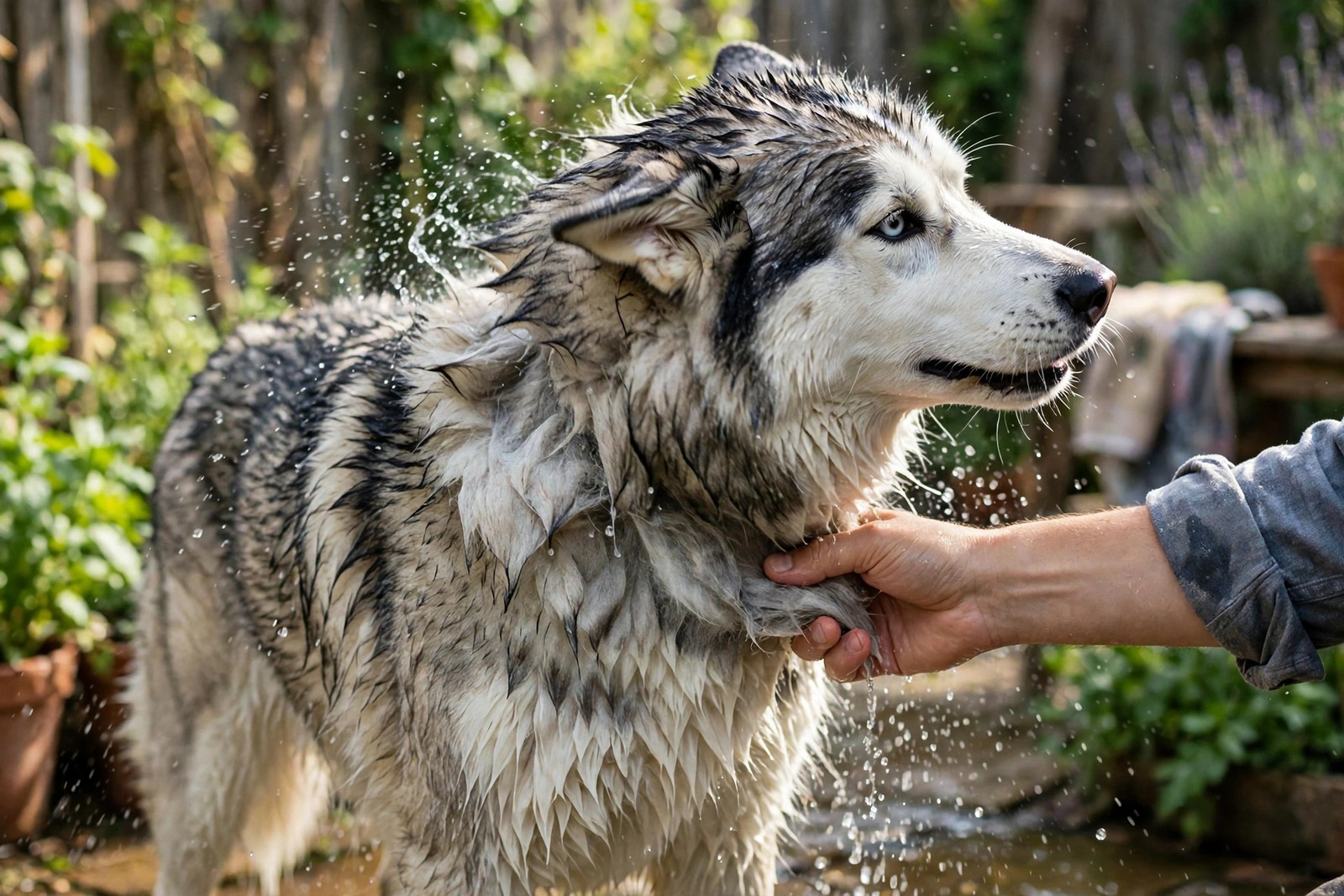
The smell owners blame on a dirty dog is often the smell of a clean dog dried badly. A thick double coat is two coats doing different jobs: straight guard hairs on top that shed water, and a dense, soft undercoat beneath that traps air for insulation. Bath water soaks that undercoat like a sponge, and a surface that feels dry can hide a layer against the skin that stays damp for hours, turning musty while the dog looks freshly groomed.
Towel, Then Open the Coat Up
Press towels into the coat rather than skimming them across the top, working over the whole dog and swapping to a dry towel once the first is heavy. Then begin with the dryer on a cool or warm setting, moving it constantly and parting the coat with your free hand or a brush so air travels down through the undercoat instead of flattening the guard hairs over it. Work in sections you can keep track of — one flank, the chest, the neck ruff, each hindquarter — and brush the undercoat open as you dry, lifting and separating the dense layer so warm air reaches the skin it covers. Drying against the lie of the coat, ruffling it backward with the airflow, exposes undercoat that a polite pass in the direction of growth never touches.
The Dry-to-Skin Test
Forget the clock and test with your hands. Push your fingers through the coat until they rest on skin, at the three places undercoat lies deepest: the neck and ruff, the chest, and the trousers down the backs of the hind legs. Skin and undercoat should feel dry and roughly room temperature. Coolness is the giveaway; a patch that feels cool against your fingertips is still evaporating water, however dry the surface above it feels, and that patch goes back under the dryer before you move on. Part the hair and look as well as feel: undercoat that clumps into damp ropes or sticks together in webbed sheets needs brushing open and more air, while fully dry undercoat stands fluffy and separates freely.
Add the collar zone and the base of the tail to your route. Collars hold moisture against the neck, and the dense hair over the hips dries last on many heavy-coated dogs, so both earn a deliberate finger test rather than an assumption.
Why the Smell Builds, and How to Beat It
A dog put away damp does not merely smell for an evening. Undercoat that stays wet against warm skin holds that stale, sour odour into the fibres, and the next bath seems to fail because the new damp layer revives it. Breaking the cycle means drying completely on bath day, then combing through to the skin once the dog has cooled, because combing lifts any undercoat that settled and clumped while it finished drying. An hour after you finish, run the finger test again at the neck, chest, and trousers: a coat that passed at the table can reveal a cool core once the outer layers stop feeling warm from the dryer, and five more minutes of air at that point saves the whole job. Between baths, a dog who swims or is caught in heavy rain needs the same skin test, since a soaked undercoat from a lake dries no faster than one from a bath.
Pacing a Long Job
A full dry on a heavy double coat is the longest part of bath day, so plan the dog's patience as carefully as the water. Alternate sides so no patch of skin takes warm air for long, keep the dryer moving, and offer standing breaks with water and a shake. A dog who learns that bath day ends in an endless, noisy hour starts resisting the bath itself, while a dog dried in comfortable stages, with pauses, tolerates the routine for years. Care Teams within KinsLe assigns that later recheck to whoever is home, rather than leaving damp trousers to memory.