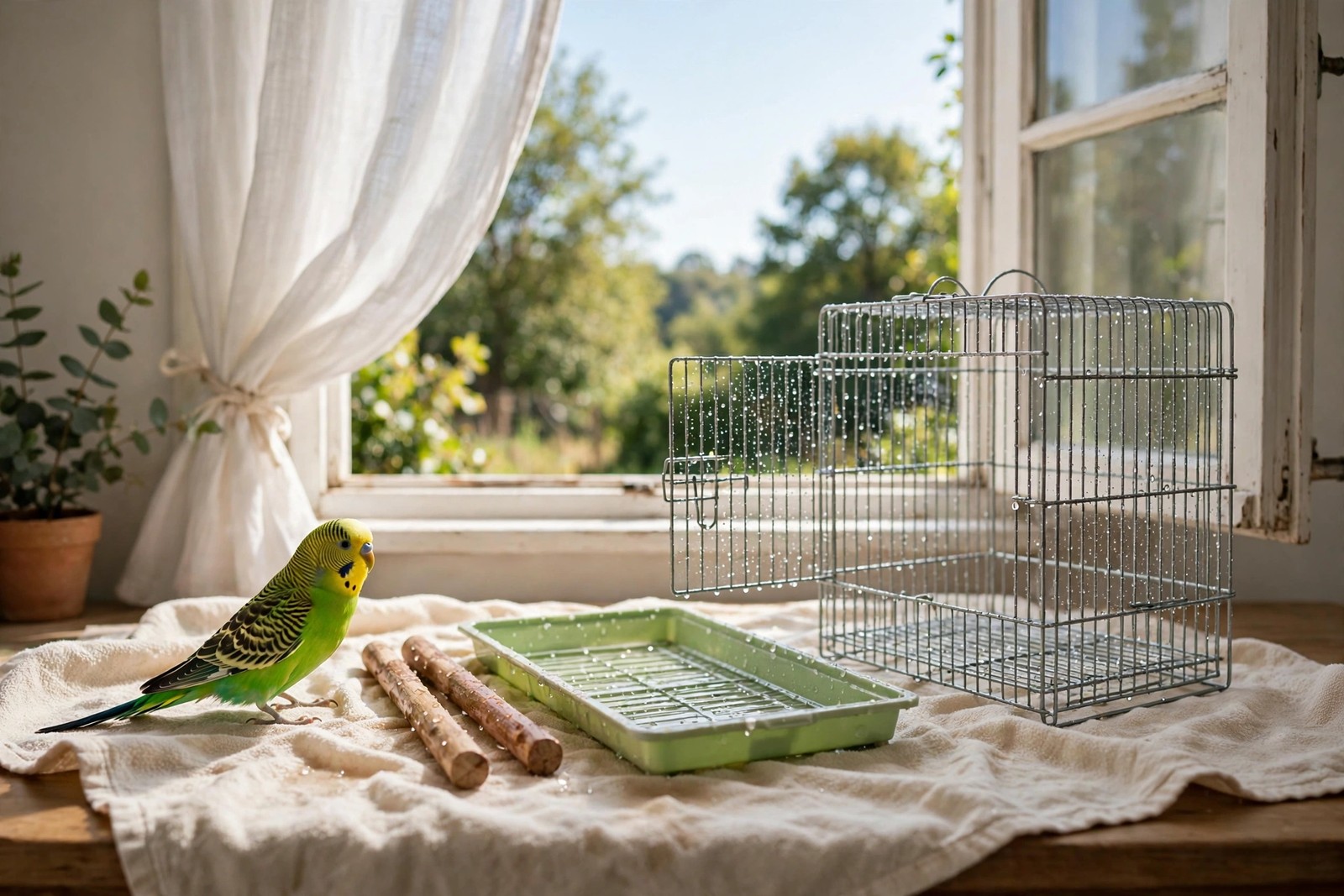
A small bird can safely go back into a freshly washed cage the same day, but only if two things are completely finished: the rinsing and the drying. Birds breathe far more efficiently than we do, which is why fumes and residues that seem trivial to you matter to them, and damp corners undo your cleaning by feeding mildew and bacteria within hours. The method below builds in enough margin for a morning wash and an afternoon return.
Rinse longer than feels necessary
The drying stage cannot rescue a badly rinsed cage, so start here. After scrubbing, rinse every part — bars, tray, grate, seed guards, food cups, and perches — under running water until it runs clear and your fingers feel no slickness on the metal or plastic. Pay attention to the tray runners, the welds where bars meet the frame, and any rolled edges, because cleaner pools in exactly those seams and dries into residue a bird will later chew. Then sniff the cage at close range: if you can still smell cleaner, rinse again. If you used anything scented or antibacterial, extra rinsing is not optional for a budgie, finch, or canary-sized bird.
Towel first, then moving air
Shake off excess water outdoors or over a sink, then towel-dry thoroughly with a clean, unscented cloth, working along the bars and into corners. Towelling does two jobs: it removes most of the water instantly, and it wipes off any last film the rinse loosened. Next, stand the cage somewhere air genuinely moves — beside an open window, on a sheltered balcony, or in bright, dappled sun. Direct mild sun speeds drying and is a useful natural disinfectant for the empty cage, but never leave a plastic-based cage baking in fierce midday heat, and never speed things up with a hairdryer blowing hot, stale air through dusty vents. Wooden and rope perches are the slow part, because they soak water deep into the grain; if a perch still feels cool and heavy with moisture, swap in a dry spare perch today and let the washed one finish drying overnight.
The return test
Before reassembly, run three checks. Look: no visible droplets anywhere, including under the tray and inside hollow frame tubes, which can drip later. Feel: joints, corners, and perch centres should feel dry and room-temperature, not cool with hidden damp. Smell: lean in to bird level and breathe — the cage should smell neutral, of nothing. Line the dry tray with fresh paper, refill food and water containers only once they are dry too, and let the reassembled cage stand in its usual spot for a short while before your bird goes back, so any lingering odour has somewhere to escape to. If any check fails, your bird stays in its travel cage or on its play stand a little longer; an extra hour of airing is always cheaper than a respiratory problem.
Build the wash into the day
Washing in the morning is what makes a same-day return realistic, because it banks several hours of airing time instead of racing the evening routine. Keep a spare set of perches and cups so nothing has to go back damp for the sake of bedtime, and note which parts dried slowly so you allow for them next time. Logging the wash, the rinse, and the completed airing in KinsLe's Care Teams — with a timestamp for the final check — means a partner or family member can see at a glance that the cage is genuinely ready, rather than guessing from the fact that it looks clean.