
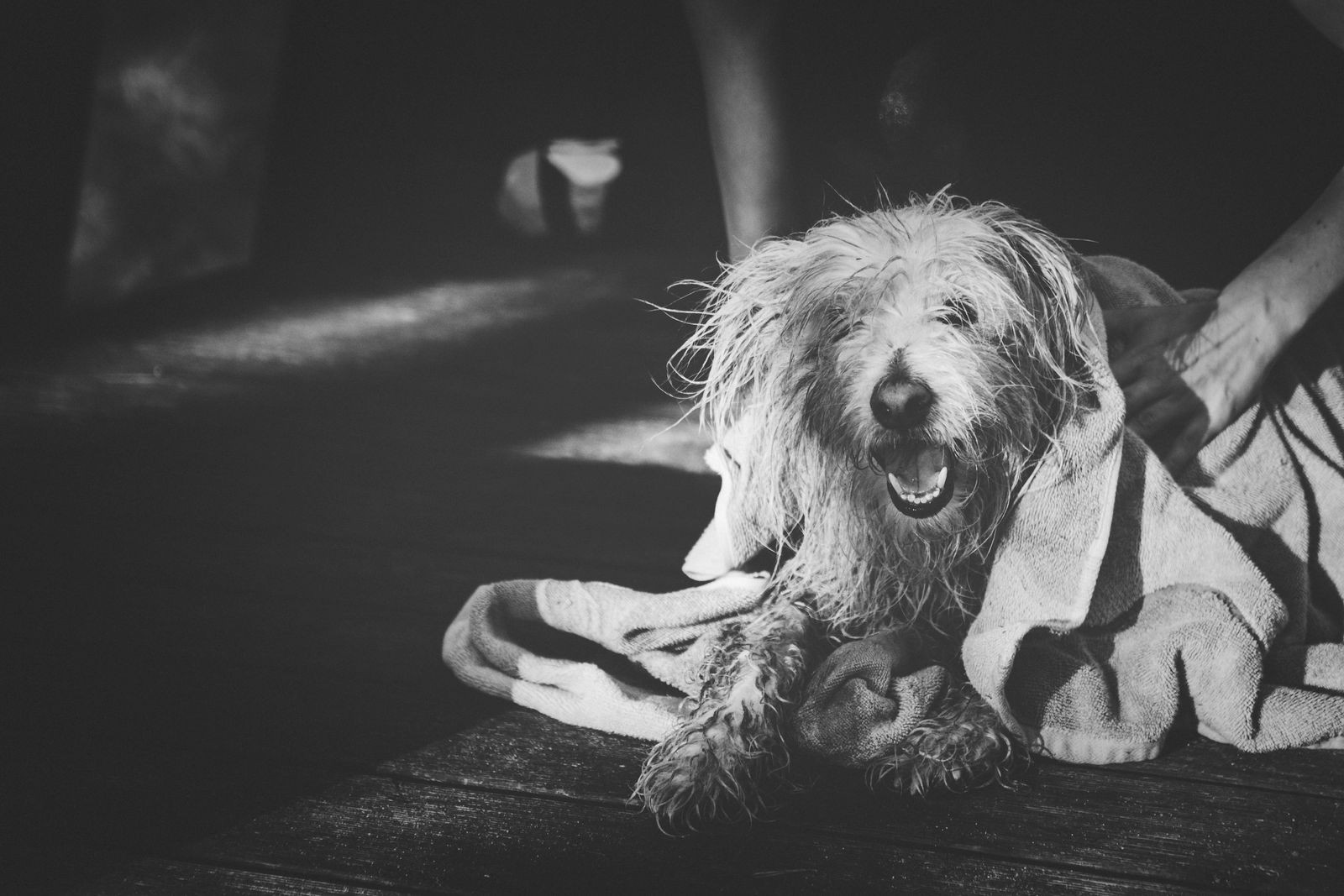
Dry off and settle a muddy dog by using the same landing-station routine at the door every time: towels, paw wipes or a shallow paw-rinse tray, and a mat, worked through in a fixed order before your dog comes further into the house. Dogs learn sequences quickly, so a dog who is always wiped, rinsed, and rewarded in the same spot stops racing mud through the house and starts waiting at the station — often within a week or two of consistent practice. Follow the clean-up with a chew in a set spot and the whole rainy walk ends calmly.
Set up the landing station
Choose the door you actually use after walks and stock it before you need it: two absorbent towels (one for paws, one for body), paw wipes or a shallow tray or bucket of clean lukewarm water for rinsing, a washable mat or old rug to define the spot, and small treats in a sealed jar. A hook for the muddy lead and a bin for used wipes complete the setup. In an apartment, a washable mat just inside the front door works the same way. Replenish the station as part of your weekly routine — the system fails the first time you come home to no clean towels and a dripping dog making decisions alone.
For long-coated dogs, keep a brush at the station too. Mud combs out more easily once dry, so do paws and legs now and brush properly later.
Teach the order, step by step
Use the same sequence every time: stop on the mat, paws first — wipe or dip and dry each paw — then legs and belly, then a towel rub over the back, then a treat and release to the settle spot. Talk your dog through it in a calm voice and reward cooperation, especially stillness while paws are handled. Start teaching on a dry day with tiny mud or none at all, so the first rehearsals are easy and well paid. A dog who has practiced the station when dry will hold together when genuinely muddy and excited.
Puppies need shorter, gentler versions with more treats and less standing around. Dogs who dislike paw handling should get extra patience and high-value rewards here — this routine involves paws every day, so it is worth building positive associations slowly rather than wrestling. If your dog guards or snaps during handling, work with a qualified trainer and mention it at your next veterinary visit.
From clean-up to calm settle
The routine should not end at the door. Lead your cleaned-up dog to a set settle spot — a bed away from the wet entrance — and deliver a chew or lick mat there every time. That final step teaches your dog that the post-walk sequence is: station, clean, settle, chew. Within a few repetitions, many dogs head to the settle spot on their own. While your dog chews, rinse the paw tray, hang towels to dry, and wipe the station floor so it is ready for the next outing. Check paws as you clean: look for cuts, cracked pads, grit between toes, and any limping afterward. Rinse salt and grit off in winter as well as mud in spring. Persistent licking of one paw, redness, or swelling deserves a veterinary look rather than repeated home treatment.
Identification while collars are off, with KinsLe's QR profile
Bath time and collar-off drying are exactly when a door-dash can leave a dog unidentified, which is why KinsLe's Verified QR ID Pet Profiles matter: every pet profile carries a unique QR ID, so your dog's identification lives on his profile even when his collar and tags are off for cleaning. Keeping that profile current means anyone who finds your dog can reach the right information quickly once he is safely caught. Finish drying, pop the collar back on, and your routine is complete. Verified QR ID Pet Profiles on KinsLe do identification work because a finder scanning his code reaches his current profile and can confirm who he is after a door dash.