
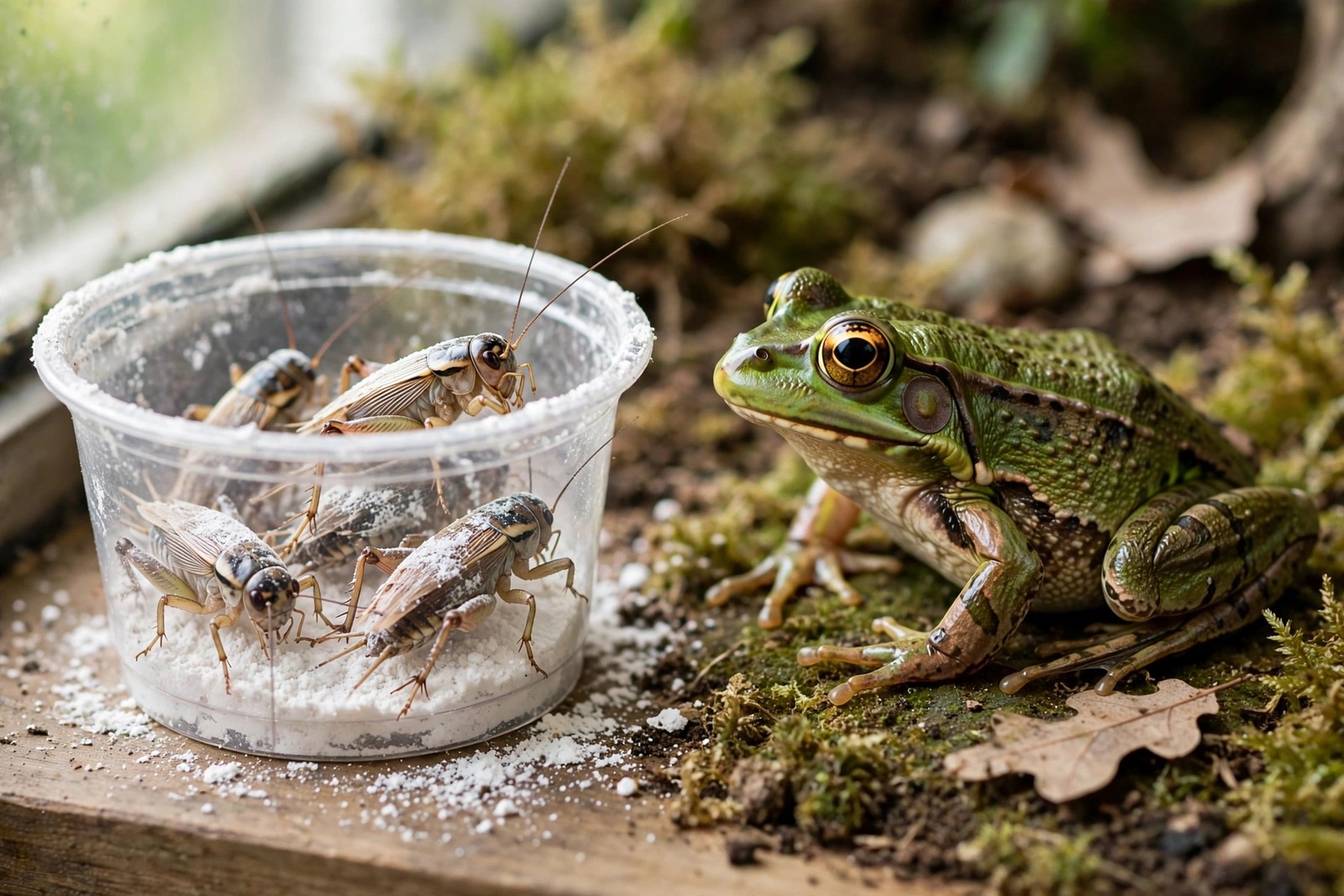
Dusting feeder insects means coating them lightly with calcium powder — and on a rotating schedule, a vitamin supplement — just before you offer them to your frog. Put the insects in a small bag or cup with a pinch of powder, shake gently until they look lightly frosted, and feed them out right away. The reason is simple: captive feeder insects are naturally low in calcium, and without supplementation, frogs can develop weak, poorly formed bones over time.
You only need a few basics: a plain calcium carbonate powder, a reptile multivitamin powder for rotation days, a small bag or lidded cup, and feeding tongs. Many keepers use calcium with vitamin D3 for frogs kept without strong UVB lighting, and plain calcium otherwise — your veterinarian or a trusted care guide for your species can confirm which version suits your setup. Keep the powders dry and check expiry dates; old supplements lose potency.
The Dusting Technique, Step by Step
- Count out the insects for this feeding and place them in the bag or cup.
- Add a small pinch of powder — less than you think. A light, even coat is the goal, not a thick crust.
- Seal and shake gently until the insects are lightly coated.
- Offer them immediately. Insects groom powder off themselves within minutes, so a pre-dusted batch made hours ahead delivers far less.
- Remove uneaten feeders after the feeding window so powder-covered strays do not linger in the enclosure.
Building the Rotation
A common pattern is calcium at most feedings and a multivitamin once or twice a week for juveniles, less often for adults — but the right rhythm depends on species, age, and lighting. Pacman frogs, White's tree frogs, and dart frogs do not all share one schedule. Write your rotation down in plain language — "calcium Monday, Wednesday, Friday; vitamins Saturday" — because the most common dusting failure is not technique, it is simply forgetting which powder day it is.
Common Mistakes to Avoid
Over-dusting is real: insects caked in powder get refused, and excess fat-soluble vitamins are not harmless. Under-dusting through forgetfulness is even more common. Other traps include dusting hours in advance, using a supplement meant for a different type of animal, and skipping gut-loading — dusting supports, but does not replace, feeding your insects well before they are eaten.
When Something Looks Off
Powder alone cannot fix a frog that is already in trouble. Weak limbs, a soft or rubbery jaw, tremors, or a frog that stops eating deserve prompt attention from a veterinarian who treats amphibians. Bring your supplement schedule and lighting details to the appointment — they are the first things a vet will ask about.
Remembering Powder Days With KinsLe
This is a job built for a reminder system. Kinny, the built-in AI assistant in KinsLe, can nudge you on supplement days so the calcium-versus-vitamin rotation never gets muddled, and its reminders help whoever is frog-sitting follow the same pattern. Pair that with your frog's free profile and the schedule lives with the pet, not in your memory. Kinny on KinsLe answers follow-up questions about calcium versus vitamin timing for your frog, with replies drawn from the KinsLe Answers library.