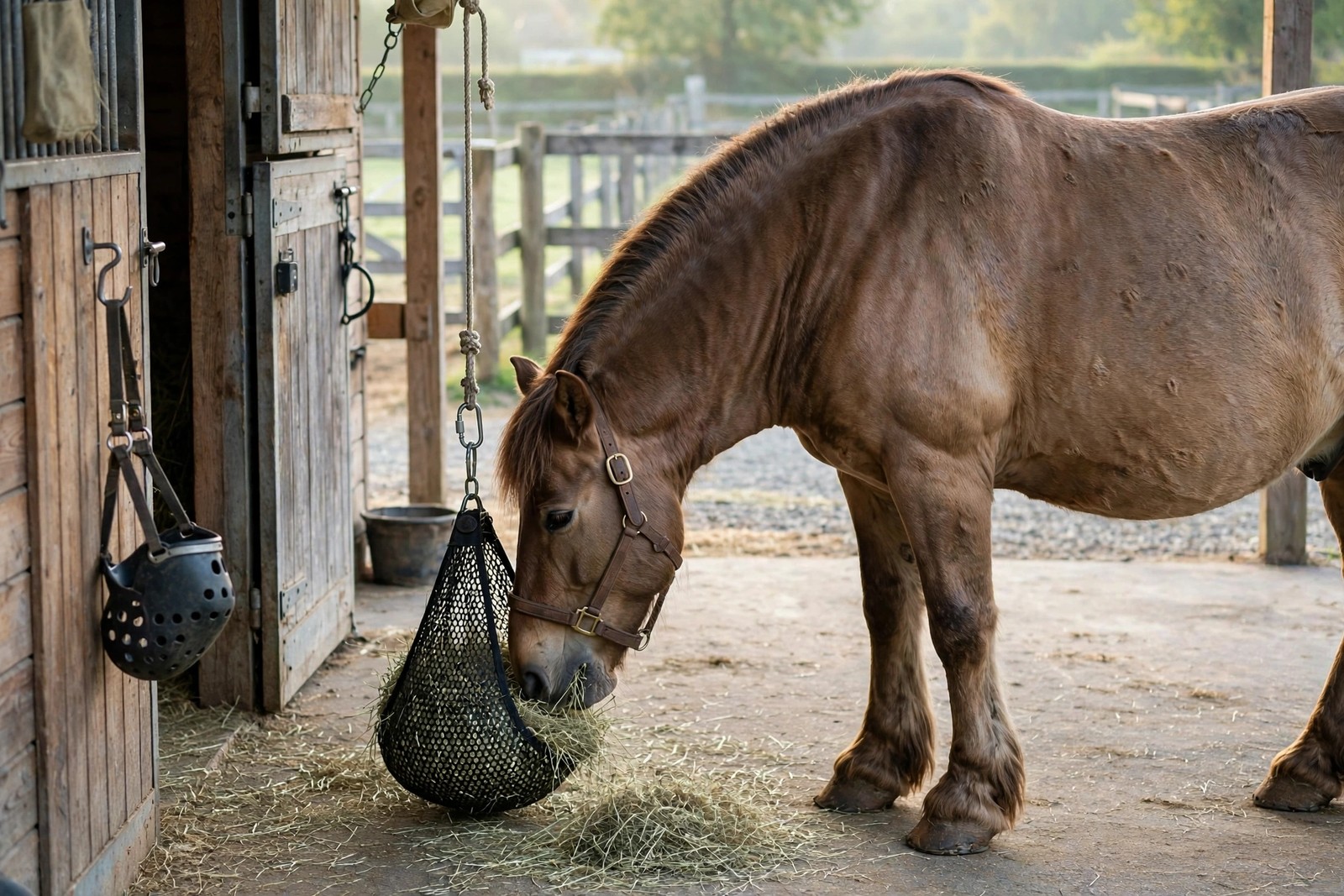
An overweight horse still needs a full gut, a busy mouth, and hours of chewing, so the answer is restriction with structure, not an empty stable. Build the new ration around forage, measure everything, and change it slowly enough that the hindgut and your horse's mood can keep up.
Start With Forage, Weighed Not Guessed
Forage stays the foundation. Many vets use around 1.5 percent of current bodyweight in total forage per day as a starting guide for a horse on a reducing diet, split across the full 24 hours rather than served as two large nets. Weigh the hay on a luggage scale for a week until your eye learns what that amount actually looks like, because a flake from one bale can weigh twice as much as a flake from another. Use small-hole slow-feeder nets so the ration takes longer to eat and your horse is not left standing hungry for long stretches, which is miserable and unhelpful for digestion.
Never drop forage sharply or leave a horse with nothing to eat for long periods in the hope of faster loss. Horses are trickle feeders, and long empty gaps are hard on the stomach and temperament. If your horse is a good doer on very little, ask your vet to help set the floor for your individual horse, especially for ponies, donkeys, and horses with a history of laminitis, metabolic concerns, or a thick cresty neck and fat pads over the ribs and tailhead.
Lower the Sugars and Remove the Extras
Soaking hay in clean water and draining it before feeding can reduce some of its water-soluble sugars, which is why it is a common tool for weight-loss rations. Soak, drain thoroughly, feed promptly rather than leaving wet hay to heat up, and in warm weather be especially careful about hygiene. It does not remove the need to weigh the hay, and it can also reduce some minerals, which is another reason to discuss a suitable vitamin and mineral balancer with your vet rather than guessing.
Cut concentrates first. Most overweight leisure horses do not need a bucket of hard feed for energy they are not spending. Replace the scoop with a small amount of low-calorie chaff or soaked fibre as a carrier for a balancer if your vet advises one, and stop the extras that creep in: handfuls of mix from neighbours, large carrots, apples by the bag, and rich treats passed over the fence. One treat after work is a gesture; a pocketful every visit is a second diet.
Manage Grass Like a Feed, Because It Is One
Turnout is valuable for movement and mental health, but lush pasture can undo a careful hay ration in a few hours. Options include shorter grazing periods, a track or strip-grazing system that keeps your horse moving over a leaner area, a bare or sparse paddock with weighed hay, and a properly fitted grazing muzzle that your horse has been introduced to gradually and checked daily for rubbing. A muzzle only works if it fits, stays on, and still allows drinking, so watch closely for the first sessions and never treat it as set-and-forget equipment.
Go Slowly and Measure the Trend
Safe loss is slow. Weigh-tape at the same time of day, in the same place, every week or two, and body-condition score once a month, feeling for fat over the ribs, neck, shoulders, and tailhead rather than trusting a photograph. Keep exercise appropriate to soundness, building walking in hand or under saddle gradually if your vet is happy, because movement helps, but do not work a sore or laminitic horse through pain to burn calories.
Call your vet promptly if weight falls quickly, appetite changes, your horse becomes reluctant to move, develops a stronger digital pulse, or shows new fat deposits or a hard crest. In KinsLe, Care Teams turns this plan into named daily jobs — soaking and weighing hay, fitting and checking the muzzle, recording the weigh-tape result — so the reducing ration is delivered exactly the same way on the days you cannot be at the yard.