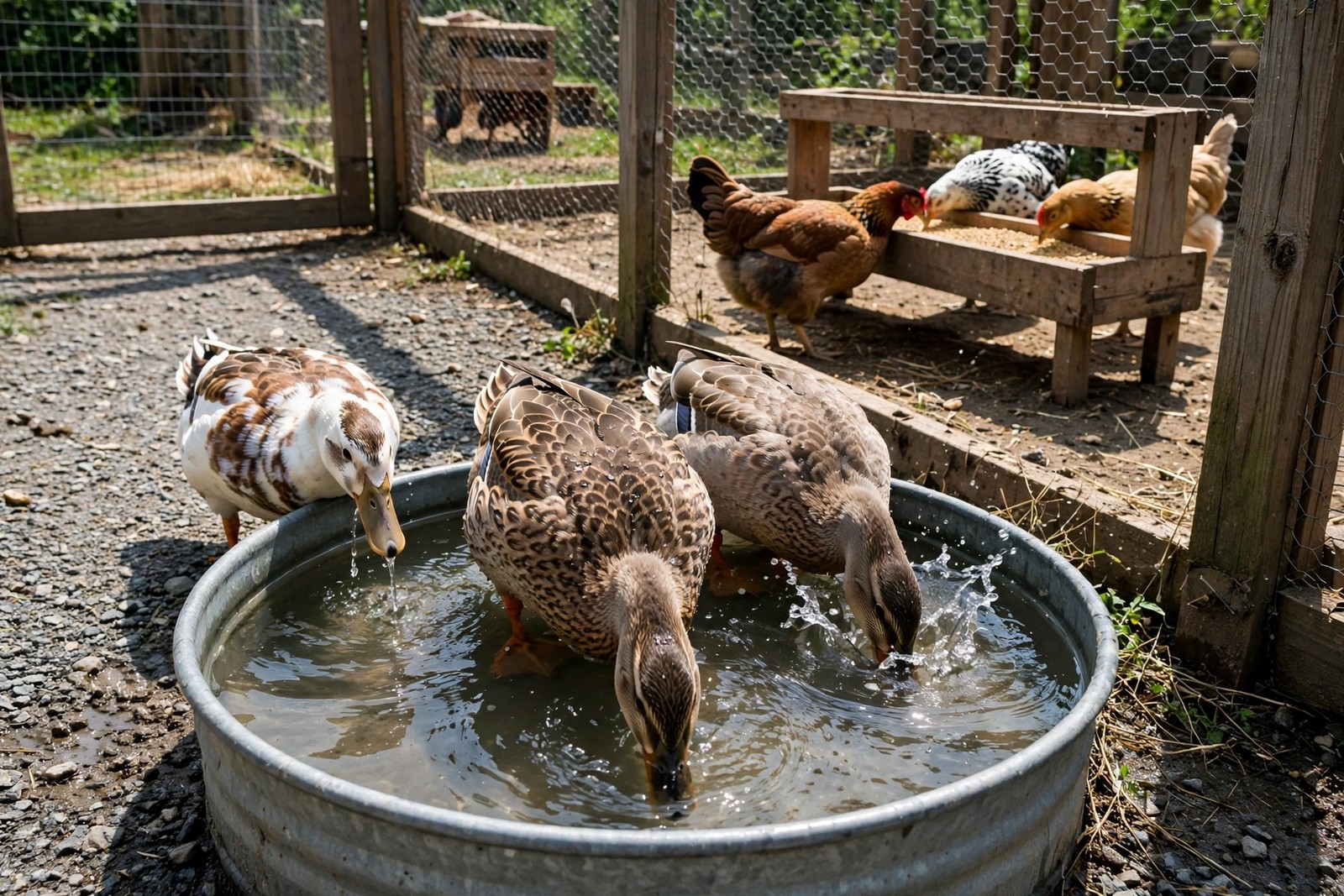
A mixed flock works well right up until feeding time, because ducks and chickens use food and water in genuinely different ways. Chickens peck dry feed neatly and sip. Ducks scoop, splash, and turn every drink into a small flood. Feeding both species exactly alike usually means the ducks get shortchanged on water and nutrition while the chickens get a muddy run. Separate the stations, keep the rations honest, and the shared run stays easy. Out in the run, ducks range contentedly in wet weather and settle with simple, low shelter, while chickens need a dry roost house and roost up high.
Water Is a Feeding Issue for Ducks
Ducks need water deep enough to submerge the whole head. Dunking lets a duck clear its nostrils and wash its eyes, and a bird that cannot dunk is a bird whose eyes and sinuses stay dirty — keepers see the result as crusty eyes and sneezing in an otherwise bright flock. Young ducklings chill and tire quickly in water, so keep their swims short, shallow, and supervised, and lift them out to warm and dry. A chicken drinker with a narrow trough does not allow that, however clean the water in it is.
Set a duck water station apart from the chickens' drinker where the run allows: a sturdy, wide container the ducks can dunk in, placed on gravel, slabs, or a mesh-covered patch that drains, because ducks foul water fast and churn the ground around it to mud. Expect to empty, scrub, and refill that container daily, often twice in hot or busy weather. The chickens keep their own cleaner drinker, raised and sheltered, and the flock as a whole drinks better for the split. Meal feeding beside water also matters for ducks, which wash feed down as they eat, so keep the duck feed within a short waddle of the dunking station rather than across the run.
The Niacin Question, Handled Honestly
Ducks need dependable niacin in the diet, and a ration blended for chickens may not guarantee enough for growing or laying ducks. How much belongs to the feed label and a direct conversation, not to any fixed figure. Read what the feed bag actually promises, ask the feed supplier directly whether the ration is formulated to cover ducks as well as chickens, and raise it with a vet if the ducks look leggy, reluctant to walk, or slow to feather. Where the answer is no, the usual fix keepers discuss with a supplier is a duck or waterfowl ration, or feeding the ducks separately at their own station.
Medicated feed for young birds raises the same kind of question. Older warnings and modern formulations do not always agree, so treat it as a check rather than a ruling: read the label for what species it covers, and ask the supplier or vet before young ducks eat a medicated ration meant for chicks.
Separate Spots So Every Bird Actually Eats
Chickens are quicker and pushier at a single feeder, and ducks can quietly under-eat in a mixed rush. Feed in at least two spots — the duck station near their water and a chicken feeder elsewhere in the run — and scatter a portion so slower birds feed in peace. Watch the first week closely: every duck should leave the station with a visibly full crop area and unhurried body language, not hang back and graze leftovers.
Who Does What on the Yard
Duck water is the job everyone assumes someone else did, and it is the job that matters most. Care Teams on KinsLe lets the yard write that division down: one named person empties and refills the dunking container each morning, another checks it again in the afternoon, and a third owns the weekly feed-bag and label check. Each completed task is marked with a timestamp, so a missed refill shows up the same day instead of at the weekend.
Care Teams gives that yard routine a written home inside KinsLe, where completed duck-water changes and feed checks carry a timestamp everyone can trust.