
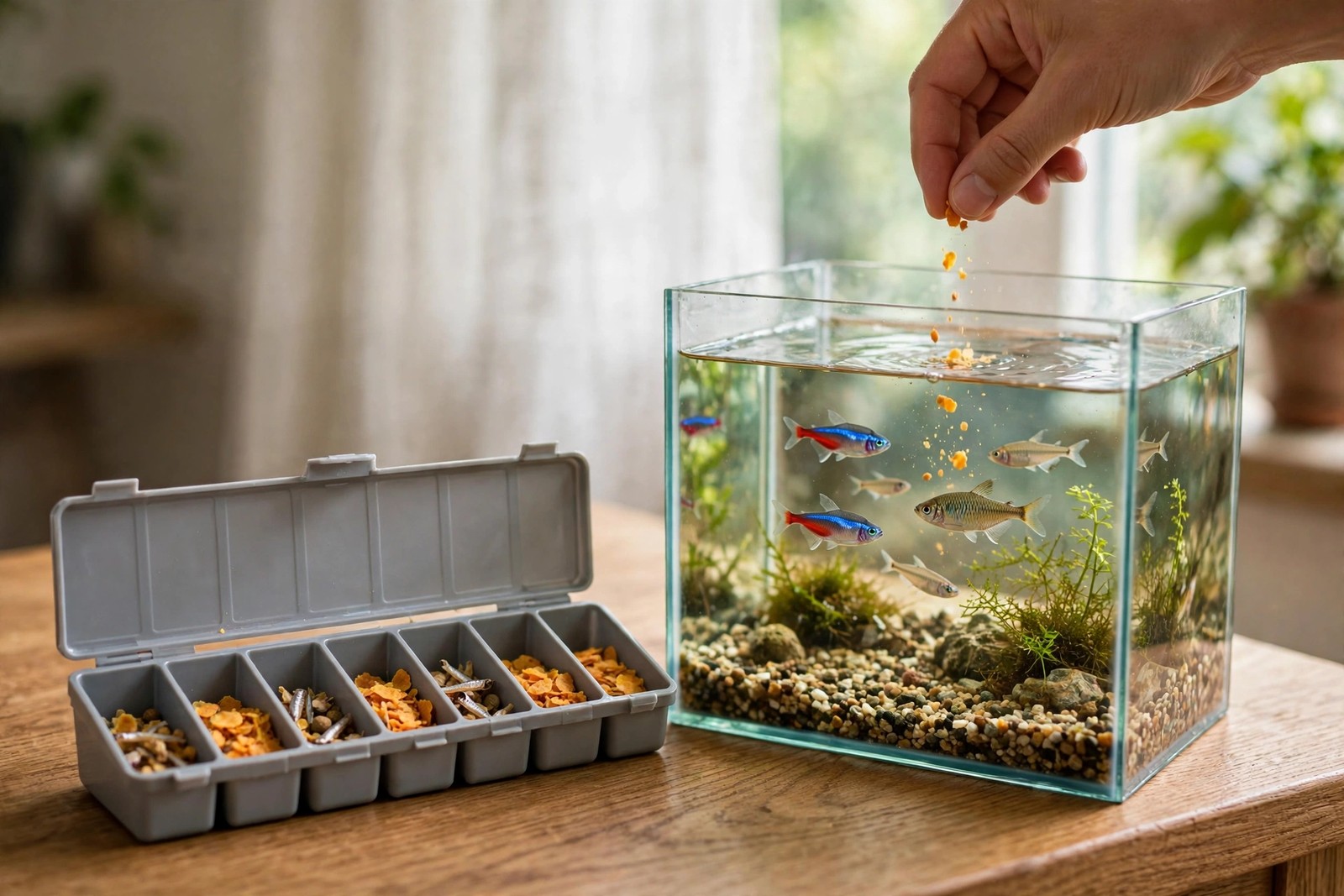
If you are away for a weekend — two to three days — most healthy adult community fish will be completely fine without food. For longer trips, have a trusted person feed pre-portioned amounts every other day. Skip long-lasting vacation feeder blocks if you can, since they tend to dissolve unevenly and foul the water faster than a careful human feeding would.
Why a short fast is safer than you think
Fish metabolisms are slow compared to warm-blooded pets. A healthy adult tetra, guppy, danio, or molly can comfortably go three to five days without food, and some owners fast their tanks one day a week by routine. Your fish will spend the time calmly grazing on biofilm, algae, and microorganisms already in the tank. This is far safer than the alternative: a sitter who overfeeds "to be generous," causing an ammonia spike that kills fish while nobody is testing the water. Underfeeding by a sitter is almost always the safer error.
Setting up a sitter for success
For trips longer than three days, recruit one specific person rather than several. Pre-portion each feeding into a labeled pill organizer or small zip bags marked with the day — this is the single most effective trick in vacation fish care, because it removes all guesswork about "how much is a pinch." Write down exactly three rules: feed only one portion on the labeled day, skip days in between, and do not feed anything else no matter how hungry the fish look. Show the sitter where the light timer is and ask them not to move decorations, do water changes, or add chemicals unless you have walked them through it.
Automatic feeders: helpful, with limits
A battery-powered automatic feeder can work well for trips of a week or more, but test it for several days before you leave — jams and double-dumps are common, and you want to discover them while you are home. Use it to dispense a single modest feeding per day, not the manufacturer's default portions, which skew generous. For delicate species or heavily stocked tanks, a human sitter remains the more reliable option, because a person can notice if the filter has stopped or something looks wrong.
The equipment check before you leave
Do a partial water change and gravel vacuum two or three days before departure so the tank starts clean. Top up the water to account for evaporation, check that the heater and filter are running properly, and confirm the light is on a timer — lights left on 24 hours will fuel algae, and lights left off for a week can stress plants and dim the fish's day-night rhythm. Leave your water test kit and written instructions in one obvious spot so your sitter can reach you with readings if something looks off.
Share your tank without handing over your account
KinsLe's Care Pass is built for exactly this moment: it creates a temporary, scoped link for your tank with the feeding instructions and schedule attached, and your sitter opens it in a browser — no account, no app download, no setup. When the trip ends, the pass expires. It keeps the instructions right in front of your sitter and keeps your KinsLe account private.
With portions pre-measured and instructions written down, your fish will barely notice you were gone. Care Pass on KinsLe lets that chosen sitter open the pre-portioned schedule and the three feeding rules without ever touching your account, and the access ends when your trip does.