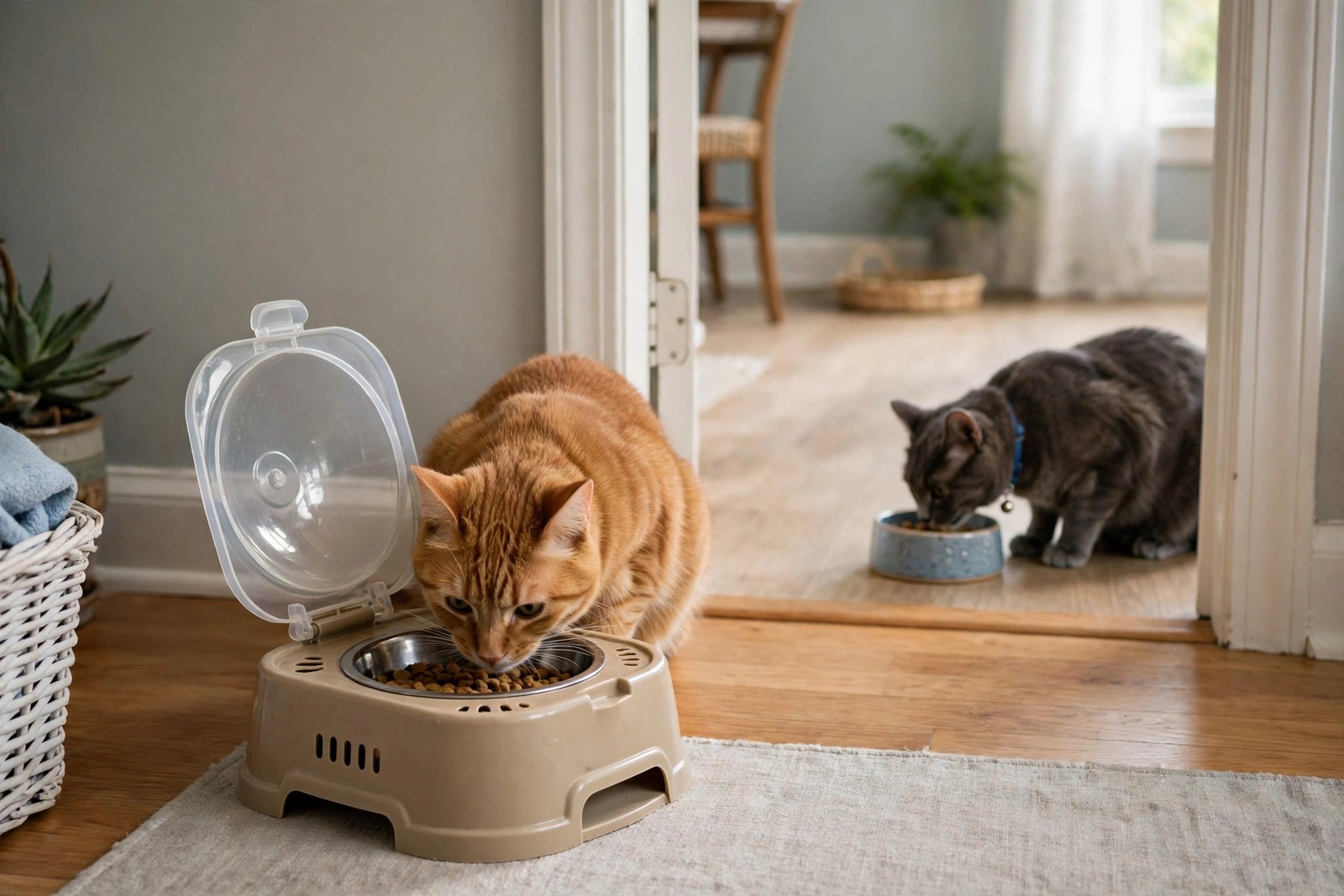
Two cats, two diets, one shared kitchen is a logistics problem, not a willpower problem. One cat on a kidney diet and another on kitten food, or a slim cat living with a professional bowl-thief, will swap food within minutes if eating is unsupervised. The fix has three layers: scheduled meals instead of grazing, real physical separation while they eat, and hardware that recognises the cat if you need flexibility later.
Layer One: Replace Grazing With Scheduled Meals
Free-feeding — food down all day — makes separate diets impossible, so the first change is timing. Move both cats to two or three set meals a day, at fixed times, and lift anything uneaten after twenty to thirty minutes. Most cats adapt within a week, especially if meals arrive where their grazing bowl used to be. This step matters doubly when one diet is a vet-directed therapeutic food: those diets only work if they are essentially all the cat eats, and a daily top-up of the other cat's tastier food can quietly undo the point of feeding it.
Layer Two: Feed Behind Closed Doors
Serve each cat in his own space — one in the kitchen, one in a bathroom, hallway or spare room — with the door actually shut, not just a hopeful few metres between bowls. Stay nearby for the first several meals, note how much each cat eats, and release both cats only once the bowls are lifted and put away, because leftovers on a worktop or in the sink are still a swap waiting to happen. Feed the slower, more anxious cat first and give him the quieter room; confident cats tolerate the busier spot. If one cat eats the other's food because he finishes in ninety seconds and prowls, feed him from a puzzle or slow-feeder bowl to stretch his meal to match his housemate's pace.
Layer Three: Let a Chip Feeder Guard One Bowl
Once the routine is established, technology can return some freedom. A feeder that reads a microchip, or a tag on the cat's collar, opens its lid only for the cat it is registered to and closes when he walks away. That setup suits the natural grazer — often the cat on the special diet who eats little and often — while the other cat's food stays on the scheduled, separated plan. Introduce the feeder with its lid fixed open for a few days so the cat learns it is safe, then let it start opening and closing for him alone.
Watch Weights, Not Just Bowls
Judge the system by the cats, not by how tidy it feels. Weigh each cat every few weeks on the same scales, note appetite changes, and tell your vet if the cat on a therapeutic diet is losing or gaining unexpectedly — it may mean he is still sourcing a second menu somewhere. Expect a transition week of complaints at the old grazing spot, and hold the line: cats lobby hardest just before they accept a new routine. Assigning each meal, room and food to a named feeder in KinsLe's Care Teams, with completion timestamped, closes the most common loophole of all — a second household member helpfully putting the wrong bowl down an hour later.