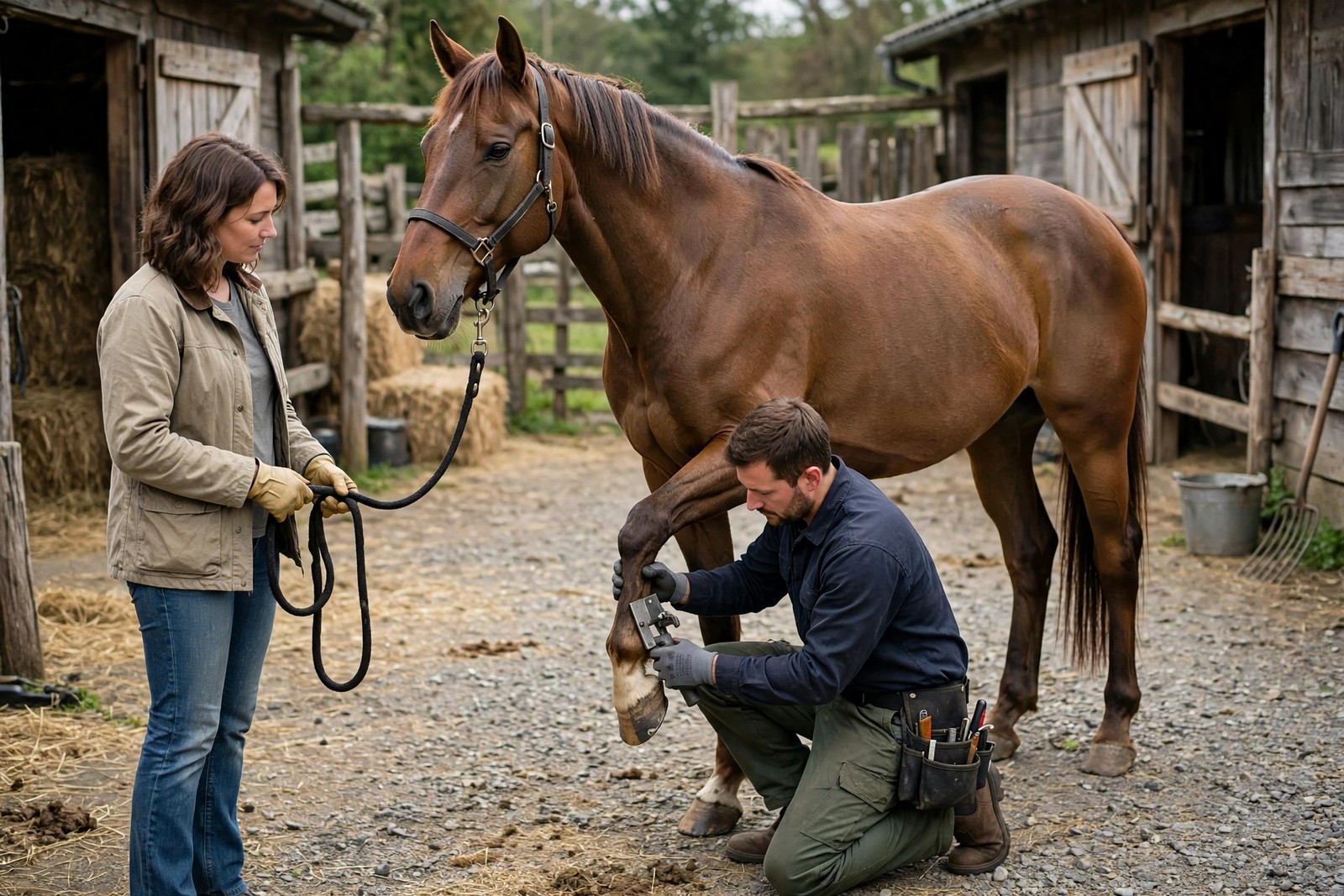
A barefoot trimmer shapes how your horse moves, lands, and stays comfortable, and because trimming happens every few weeks for the horse's whole life, choosing the person matters more than choosing almost any other service. Work in three stages: gather names from people who see the results daily, question each candidate properly, and judge one trial trim before you sign up for a standing rota.
Where Good Names Come From
Ask your equine vet first; vets see which local horses stay sound barefoot and which trimmers they end up working alongside on problem feet. Ask owners at your yard and neighbouring yards, and weight their answers by relevance — an owner whose horse hacks out on roads and stony tracks and stays comfortable is a stronger witness than one whose horse lives on soft arena footing, if your own horse works on hard ground. Look at the horses behind the recommendation, not just the words: balanced feet, no flaring walls cracking away, frogs in good contact with the ground, and a horse that strides out freely. Feed merchants, riding clubs, and local equine groups are useful extra sources for names, and a trimmer with a waiting list of long-standing local clients is rarely a bad sign.
Questions That Separate Training From Guesswork
Ask what training they completed, how it covered hoof anatomy and horse handling, whether they apprenticed or worked under an experienced trimmer, and how long they have been trimming for paying clients. Formal training routes vary in this field and there is no single licence to demand, so judge the substance: a good candidate explains their approach in plain language, describes how they handle a horse transitioning out of shoes, talks about trimming in cycles of roughly four to six weeks rather than letting feet overgrow, and is honest about cases beyond them. Ask for two or three references and actually contact them. Ask also whether they carry insurance, keep notes on each horse, and take before-and-after photographs — record-keeping is part of how gradual change gets spotted.
What to Watch at the Trial Trim
Book one trim and be present. A good trimmer asks about the horse's work, diet, turnout, and any history of soreness or laminitis before touching a hoof, watches the horse walk and turn on hard ground, and handles the feet calmly and safely. The trim itself should be conservative: excess wall and flare addressed, the foot balanced, and no aggressive removal of sole or frog that leaves the horse walking away tender. A horse that is foot-sore for days after a routine trim, beyond mild sensitivity in the first days out of shoes during a transition, is a result to question openly. Afterwards the trimmer should tell you what they found, what they changed, and what to watch before the next visit — and should welcome working with your vet or a farrier if the horse ever needs that input.
Red Flags Worth Walking Away From
Be wary of anyone who guarantees to fix lameness, dismisses veterinary imaging or diagnosis, insists every horse must manage barefoot regardless of workload or conformation, or criticises every other professional you mention. Barefoot keeping suits many horses very well, but the honest professionals are the ones who say so with limits attached.
When you have names to check, KinsLe's Pet Services Directory helps you gather local equine service providers in one shortlist, so your referrals, references, and trial-trim notes start from an organised list instead of scattered recommendations.