
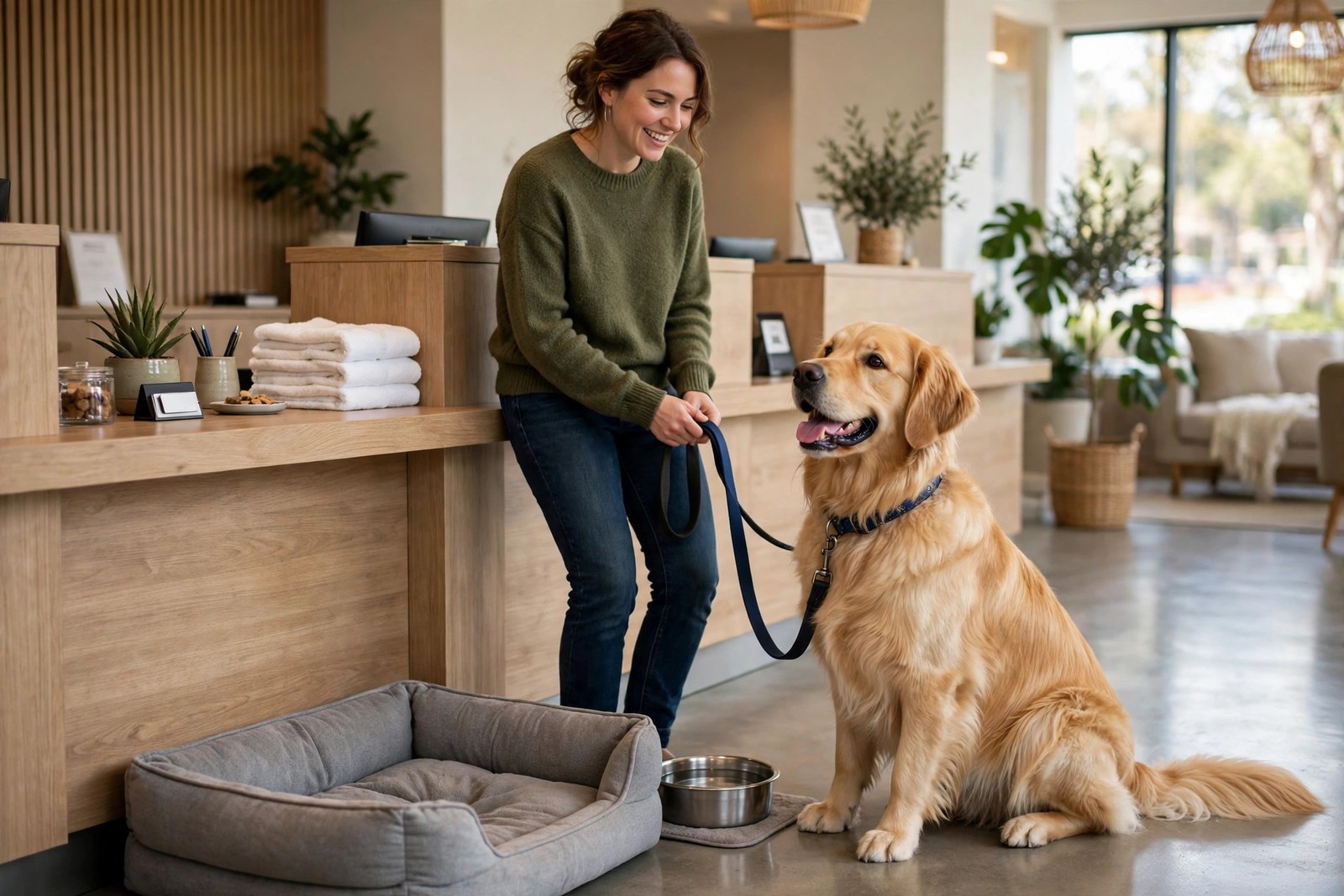
A hotel is truly pet-friendly when its actual rules fit your actual dog — and that fit is rarely visible in the words 'pets allowed.' Properties use that label for everything from a grudging tolerance of one tiny dog in a smoking room to a genuine welcome with beds, bowls, and a relief lawn. Your job is to uncover which version you are booking before your dog is standing in the lobby.
Interrogate the policy, not the label
Start with size and numbers. Ask the maximum weight, whether that limit applies per dog or to all dogs combined, how many dogs may stay in one room, and whether any breeds are excluded, asking in plain terms if your dog is large — a property delighted by a small spaniel may quietly refuse a big shepherd type. Then untangle the money, because pet charges are structured in incompatible ways: some hotels charge per night, some charge once per stay, and some take a refundable deposit instead. The structure matters as much as the amount, since a modest nightly charge quietly outgrows a one-off fee over a long stay, while a refundable deposit costs you nothing if the room is left clean. Finally, ask where your dog may and may not go, whether dogs may be left alone in the room or must be crated when housekeeping enters, and what happens if another guest complains about barking.
Call the property, not just the platform
Treat third-party listing pages as a lead, not a promise. Pet policies change, fees are revised, and 'pet-friendly' is often a checkbox nobody at the property reviewed, so a short call to the front desk is the only reliable confirmation. Use it well: confirm the policy as it applies to your dog's size and breed, ask for a ground-floor room near an exit to make night-time toilet trips short and quiet, and note the name of the person you spoke to in case check-in staff quote different terms. Ask where the nearest proper grass is for relief — a designated dog area with waste bins is a good sign, while 'there is a car park out back' tells you how much thought dogs have been given. Confident, specific answers are themselves evidence that this hotel hosts dogs often and handles them well.
Judge the room and the streets around it
Policy cannot rescue a bad setup. Rooms beside lifts, ice machines, and lobby doors mean corridor noise all night, which keeps many dogs alert, restless, and vocal — the fastest route to the complaint you were warned about. A hotel on a fast road with no pavement makes after-dark walks stressful and unsafe, however warm the welcome. Before booking, look at the immediate streets on a map, favour quieter rooms away from communal noise, and check that doors and windows close securely. On arrival, do a brief dog-proofing sweep: lift bins out of reach, look under furniture for dropped food or medication from previous guests, and set up your dog's own bed and water in one consistent corner so the strange room gains a routine quickly.
Line up local help before you need it
Even the best hotel stay can produce a muddy dog who needs a groomer, a minor worry that needs a local vet, or an evening out that needs a sitter. Finding those from a hotel room, under time pressure, in an unfamiliar town is the worst version of the task. Searching KinsLe's Pet Services Directory before you travel lets you shortlist groomers, vets, and sitters near your hotel, so help is a phone call away instead of a hopeful search at the moment something goes wrong.