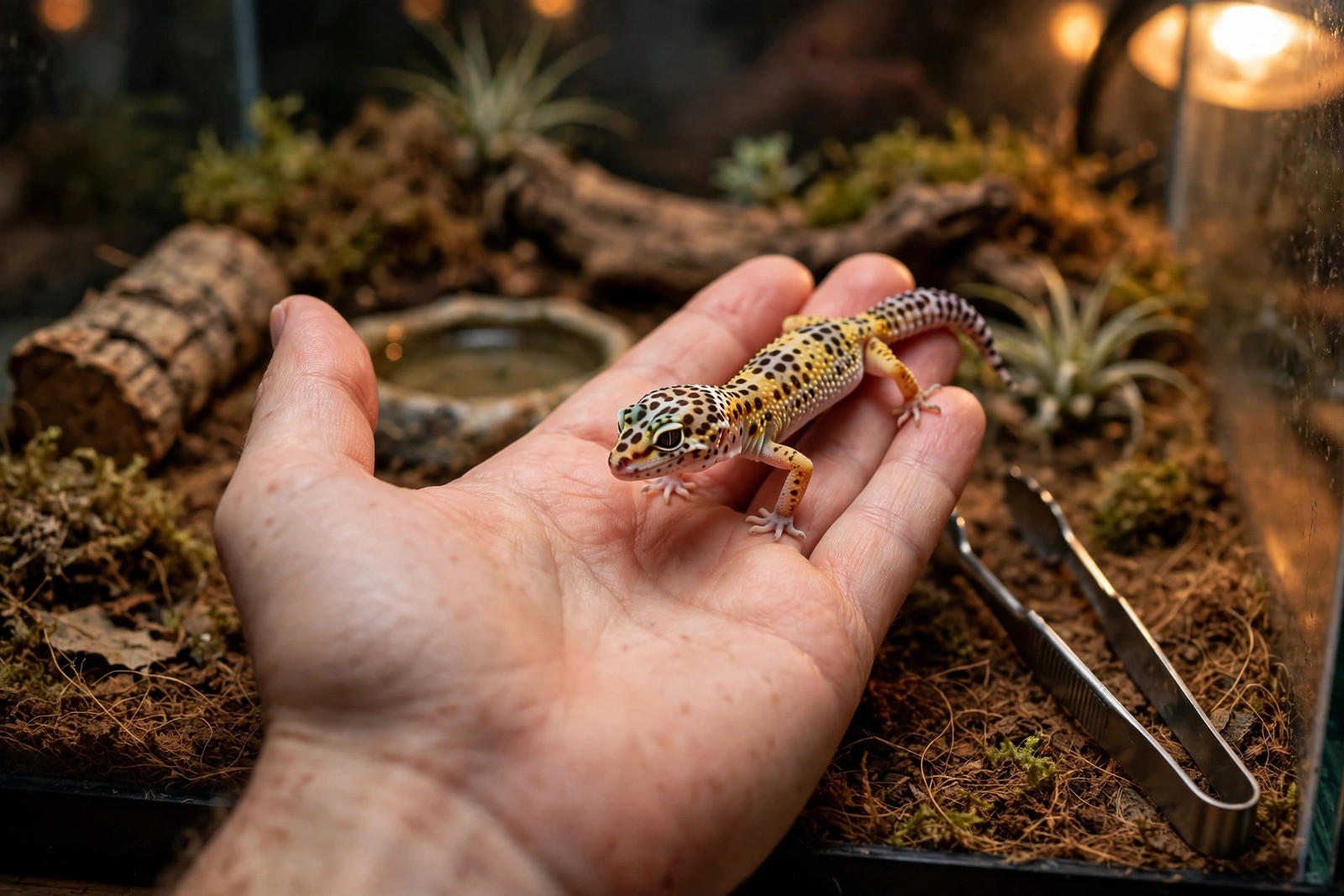
A baby gecko does not need to be taught that hands are nice in its first week home — it needs to learn that its enclosure is safe, food arrives reliably, and nothing grabs it. Handling built on that foundation goes smoothly. Handling rushed in the first few days creates a gecko that bolts, squeaks and drops its tail, and then has to be re-tamed from a worse starting point.
Stage One: Let It Settle Before You Touch It
Leave a new baby completely alone for at least the first week, and ideally until it has eaten several meals in a row and uses its hides confidently. Keep the enclosure somewhere calm, maintain its warm and cool ends and humidity properly, and limit your contact to feeding and spot-cleaning, done slowly. A gecko that is not eating is not ready for handling, full stop — appetite returning is your green light. This patience also protects a tiny animal that may weigh only a few grams and for whom every giant approaching hand reads as a predator until experience says otherwise.
Stage Two: Build Trust Inside the Enclosure
Start with presence, not picking up. Rest your flat hand, palm up, inside the enclosure for a minute or two at feeding time and let the gecko investigate or ignore it. Tong-feed some of its insects near, then from just above, your still hand, so hands become linked with food arriving. After several sessions, slide your fingers slowly under its chest and belly and let it step onto your palm by choice. Always scoop from below at its own level: a hand descending from above mimics a bird strike and triggers exactly the panic you are trying to undo. Never lift by, or grab at, the tail — many geckos can shed it as an escape move, and a dropped tail is stressful, takes energy to regrow, and comes back a different shape.
Stage Three: Short, Low, Frequent Sessions
Once your gecko walks onto your hand calmly, begin proper handling in tiny doses: two to five minutes, once a day at most for a baby. Let it hand-walk — stepping from one flat palm to the other at its own pace — while you sit on the floor or over a bed, so a sudden leap is a few centimetres onto something soft, not a fall to hard flooring. Handle in the evening, when most pet geckos are naturally waking up, rather than dragging a sleeping baby from its hide at midday. End every session before it gets frantic, and put the gecko back calmly; the last moment of each session is what it remembers.
Reading the Gecko and Knowing When to Stop
A settling gecko explores slowly, licks its surroundings and breathes steadily. A stressed one freezes rigidly, breathes fast, holds its tail stiffly raised or waving slowly, squeaks, opens its mouth, or makes frantic dashes. Any of those signs means the session is over for today — shorten the next one rather than pushing through. Skip handling entirely while the gecko is in shed, for a day around feeding if yours is prone to regurgitating, and whenever it stops eating. Wash your hands before and after, keep sessions away from cats and dogs entirely, and once your gecko is calm with you, log each session in KinsLe's Care Teams so family members share the handling gently instead of everyone picking the baby up whenever they pass the tank.