
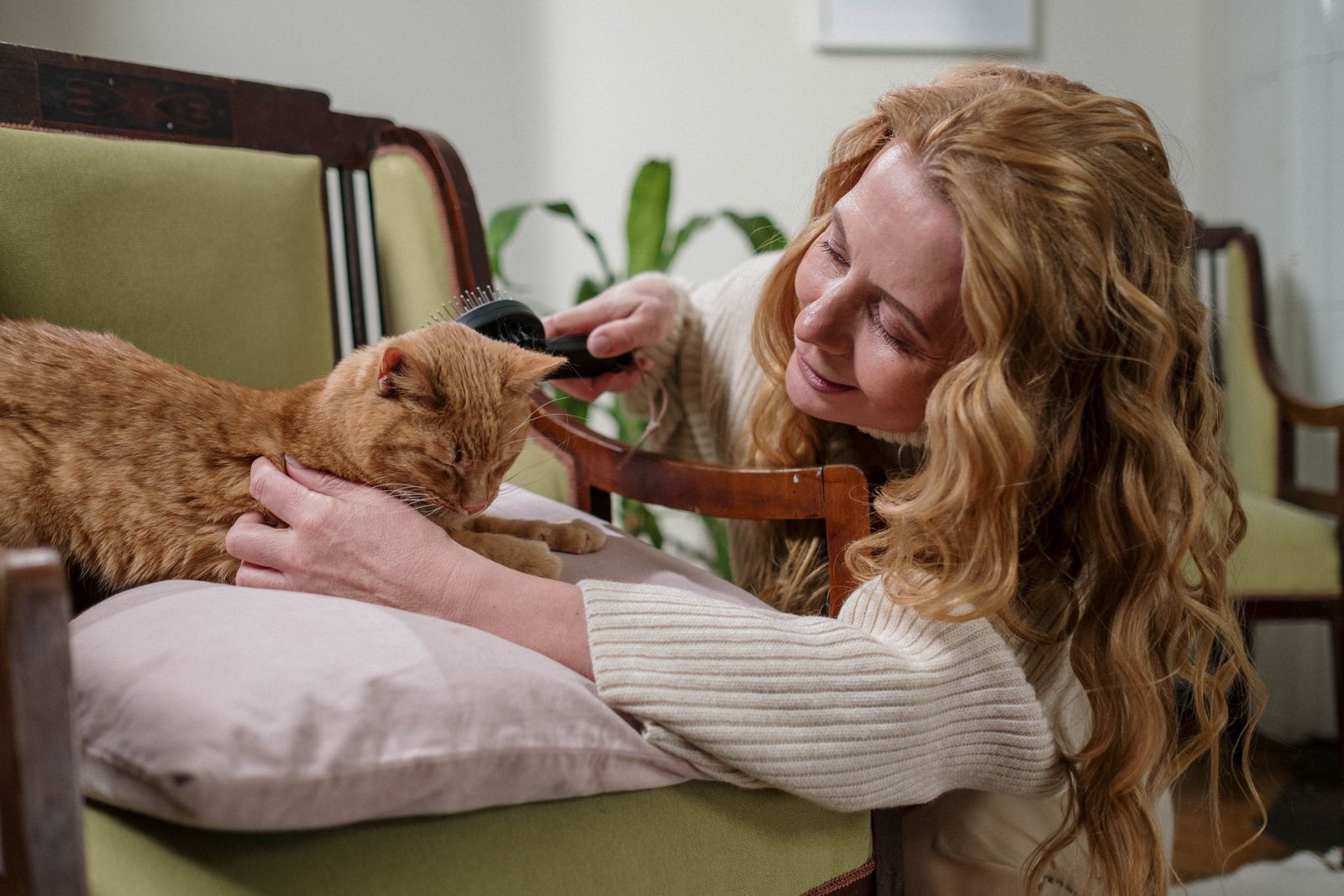
The way to get your cat used to being groomed is to start with very short sessions while she is already calm, pair the brush with treats and praise, and always stop before she gets annoyed — then gradually lengthen sessions over days and weeks, adding gentle paw and face touches as her confidence grows. The goal is a cat who sees the brush and thinks of snacks and strokes, not restraint.
Start smaller than you think
Most failed grooming starts too big: new brush, full body, ten minutes. Instead, begin with a single stroke. Choose a moment when your cat is drowsy and settled — after a meal or during her usual evening lap time — and keep the first sessions to thirty seconds or so. Let her sniff the brush first, stroke once along the back or cheek (most cats love cheek and chin contact, where their scent glands are), offer a treat, and put the brush away. Ending while she is still happy is the whole trick; a session that ends early teaches her grooming is safe, while one that ends in a struggle teaches the opposite.
Tool choice matters. A soft grooming mitt or rubber brush feels close to being stroked and suits brush-shy cats far better than a metal comb. Long-haired cats will eventually need a comb that reaches the undercoat, but you can work up to it once the routine itself is accepted.
Build the routine in layers
Once brief back strokes are boring, add one new element at a time:
- Longer sessions — add a minute or two every few days, not every session.
- New areas — sides, then chest, then (briefly) the belly only if she tolerates it; many cats never love belly brushing, and that is fine.
- Paw touches — a gentle press on each paw during grooming prepares her for nail trims later.
- Face and ear touches — soft strokes around the cheeks and ears make future eye and ear checks far easier.
- Lifting and holding positions — brief, supported, and always released before she squirms.
If she flattens her ears, lashes her tail, or moves away, you have found today's limit. Note it, reward her anyway, and try a shorter session tomorrow. Kittens usually take to this in days; an adult cat with years of brush battles behind her may need several patient weeks, and progress is rarely a straight line.
Troubleshooting common sticking points
Some cats accept grooming everywhere except one spot — often the lower back, hips, or anywhere that hurts. A cat who suddenly objects to an area she used to allow may be sore there, so mention it to your veterinarian rather than pushing through. Mats deserve special care: never pull or cut close to the skin with scissors (cat skin is thin and tears easily), and work small tangles out gently with fingers and a comb from the ends, or leave stubborn mats for a professional.
Keep sessions separate from play-fighting and never chase a cat around the house with a brush. Consistency helps too — same place, same time of day, same treat — because cats are creatures of routine and predictability lowers stress.
Keeping the routine going when you're away
All that patient work can unravel if a sitter wrestles your cat with the wrong brush on day one. KinsLe's Care Pass is a temporary, scoped link you can share with a sitter — no account or app needed on their end — so your cat's grooming preferences, favourite tools, treat routine, and stop-signals travel with her care instructions and the routine stays consistent while you are away. Before you leave, set up a Care Pass on KinsLe for your named sitter alone, time-boxed to the trip, so that sitter can follow the brush type, treat pairing, and stop signals she already trusts.