
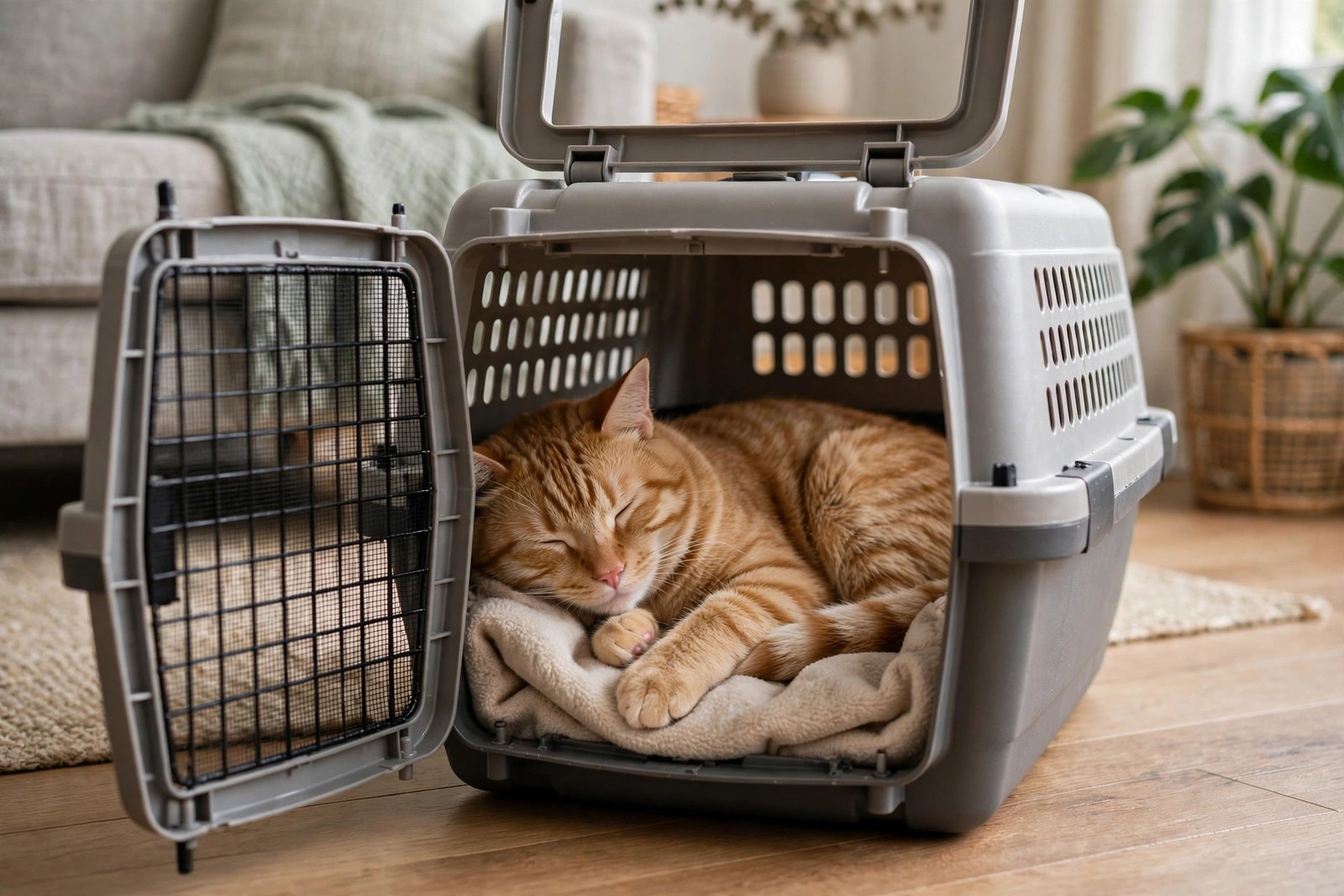
Leave the carrier out all the time, with the door open and a soft blanket inside, until it becomes ordinary furniture your cat naps in by choice. Then build up slowly: treats near it, treats and meals inside it, the door closed briefly, being lifted, and finally short car rides that end back home with dinner. Done over a few weeks, this turns the carrier from a warning sign into the least interesting object in the house.
Why Cats Hate the Carrier (It's Not the Carrier)
Most cats see the carrier only twice a year: once for the vet and once for a trip. The box predicts being grabbed, chased around the sofa, stuffed inside, and driven somewhere unpleasant. By adulthood the association is total — some cats vanish at the sound of the carrier cupboard opening. Training works by breaking that prediction. When the carrier is always there and good things happen around it on ordinary days, it stops meaning anything. That is the goal: not a cat who loves the box, but one who is bored by it.
The Step-by-Step Routine
- Days 1–3: Carrier out, door open or removed, blanket inside that smells of home. Sprinkle treats near it daily. Do not lure or place her inside — let curiosity work.
- Days 4–7: Treats and then regular meals served just inside the entrance, moving the bowl deeper as she relaxes. Play sessions with a wand toy can end near the carrier too.
- Week 2: Once she walks in freely, close the door for a few seconds while she eats a treat, then open it. Build to a minute or two, then to lifting the carrier briefly and setting it down.
- After that: Short car rides — around the block, then ten minutes — that end at home with a meal. Nothing bad happens; the car becomes a boring prelude to dinner.
If she stalls at any stage, drop back one step for a couple of days. Progress is measured in weeks, and rushing to "test" her with a real trip too early can undo the work.
Tricks That Make It Easier
Spray or wipe the carrier with a feline pheromone product before practice sessions if your vet recommends it. Put a worn T-shirt of yours inside; your smell is the point. Keep your own behavior dull — no coaxing voices, no hovering, no apologetic fuss. On real trip day, stay with the same routine: carrier already out, treat inside, door closed, go. Cats read our tension accurately, so the calmest tool is a relaxed owner.
Common Mistakes to Avoid
Do not store the carrier in a garage or attic where it gathers dust, spiders, and alarming smells — wash it and keep it in the living space. Do not chase and corner your cat to force her in on trip day unless it is a genuine emergency; if you must, stay calm, use the top opening, and rebuild the training afterwards. And do not feed a big meal right before a real journey, even if meals were part of training — a light stomach travels better.
Keeping the Whole Household Consistent
Training fails when one person follows the routine and another grabs the cat "to save time" on the morning of a trip. Everyone in the home needs the same steps, the same patience, and the same rule: the carrier is furniture, not an event. Consistency is what convinces a cat the world has actually changed.
Sharing Her Profile With Family Through KinsLe
KinsLe Family Sharing does one thing here: it shares her profile, so the family members you choose have access to it. The carrier routine itself stays a household habit — whoever is home runs the same step, treats inside, door closed briefly, short lift, with the same patience every time. That consistency is what gets a cat genuinely relaxed before travel day. On KinsLe, Family Sharing puts her profile in the hands of relatives you pick, and the access you grant goes to them alone.