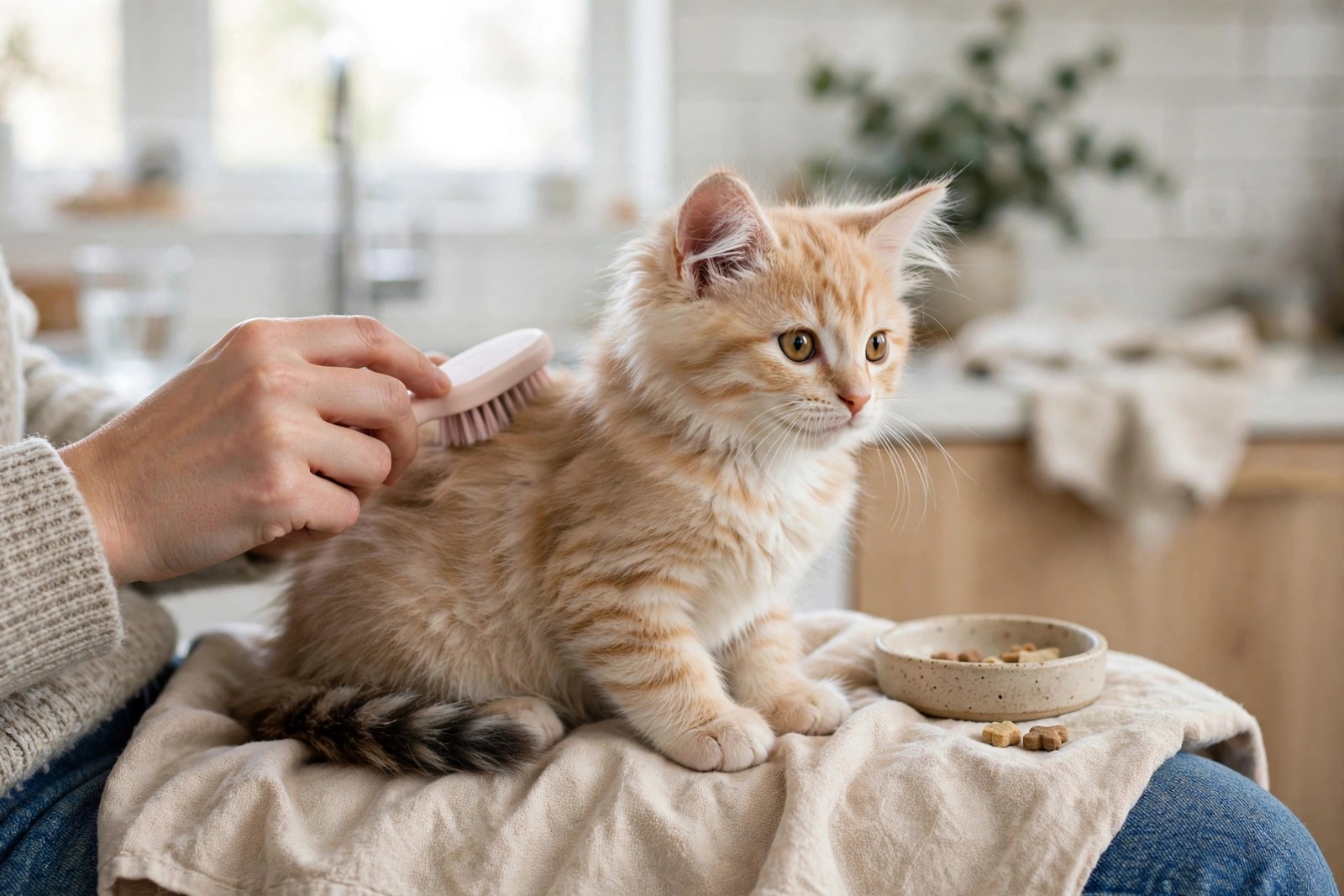
The goal with a kitten is not a perfect coat today. It is an adult cat who, in two years, lies relaxed while you brush out a tangle, check an ear, or trim a claw. That future is built in dozens of tiny, pleasant sessions now, while handling still feels like part of play and cuddling.
Handle First, Brush Second
Before any brush appears, spend a few days simply handling the places grooming will later touch. Stroke the back and cheeks, then briefly touch each paw, lift an ear flap to peek inside, raise the lip for a second, and run a fingertip along the tail and hind legs. Pair each new touch with a small treat or a favourite game. Keep your kitten on a towel on your lap or on a stable surface at a comfortable height, never pinned down, and let her leave when she wants to — being free to go is what makes staying feel safe.
Pay attention to individual preferences. Many kittens adore chin and cheek rubs and dislike belly touching, so use the liked areas as your warm-up and your reward, and approach the sensitive areas briefly and last.
Choose a Kitten-Sized Brush
Start with a soft-bristled brush or a gentle rubber grooming mitt rather than a firm slicker, which can scratch delicate kitten skin and overwhelm a fine, fluffy coat. For a longhaired kitten, a wide-toothed comb used after the soft brush helps you find early tangles behind the ears, in the armpits, and around the hindquarters, where mats form first. Brush in the direction the coat grows at first, in strokes of just a few seconds, and work up to brushing against heavy shedding areas only once the kitten is relaxed.
If you meet a small tangle, hold the base of it close to the skin so it does not pull, and tease it apart with your fingers or the end teeth of the comb. Never tug through it. One painful pull can teach a kitten that the brush hurts, and that lesson sticks.
Add Paws, Ears, and Mouth in Miniature
Grooming acceptance is bigger than brushing. Once or twice a week, gently press each paw pad so the claw tips extend, look at them, and release — no clipping until that routine is boring. Look inside the ears for wax or debris without poking anything into the canal. Lift the lips and touch the teeth with a clean finger. Each check takes seconds at this age, and each one makes future nail trims, ear treatment, and dental care dramatically easier for you and for veterinary staff.
Keep Sessions Short, Frequent, and Rewarded
Sixty to ninety seconds daily beats a ten-minute session on Sunday. End while your kitten is still happy, ideally after a success such as five calm brush strokes, and follow with play so grooming predicts fun. If your kitten bites the brush, redirect to a toy rather than scolding; if she becomes overstimulated — tail lashing, skin twitching, ears turning back — stop and try again after a nap. Kittens tire and flood quickly, and a session that ends early is still a successful repetition.
As weeks pass, lengthen sessions gradually, introduce the tools your adult cat will actually need for her coat type, and practise on different days and in slightly different places so the skill generalises. In KinsLe, Care Teams can assign each family member a specific mini-task — one person does paw handling on Monday, another does the soft brush on Wednesday — with completions timestamped, so your kitten gets steady practice without anyone repeating the same handling three times in one day.