
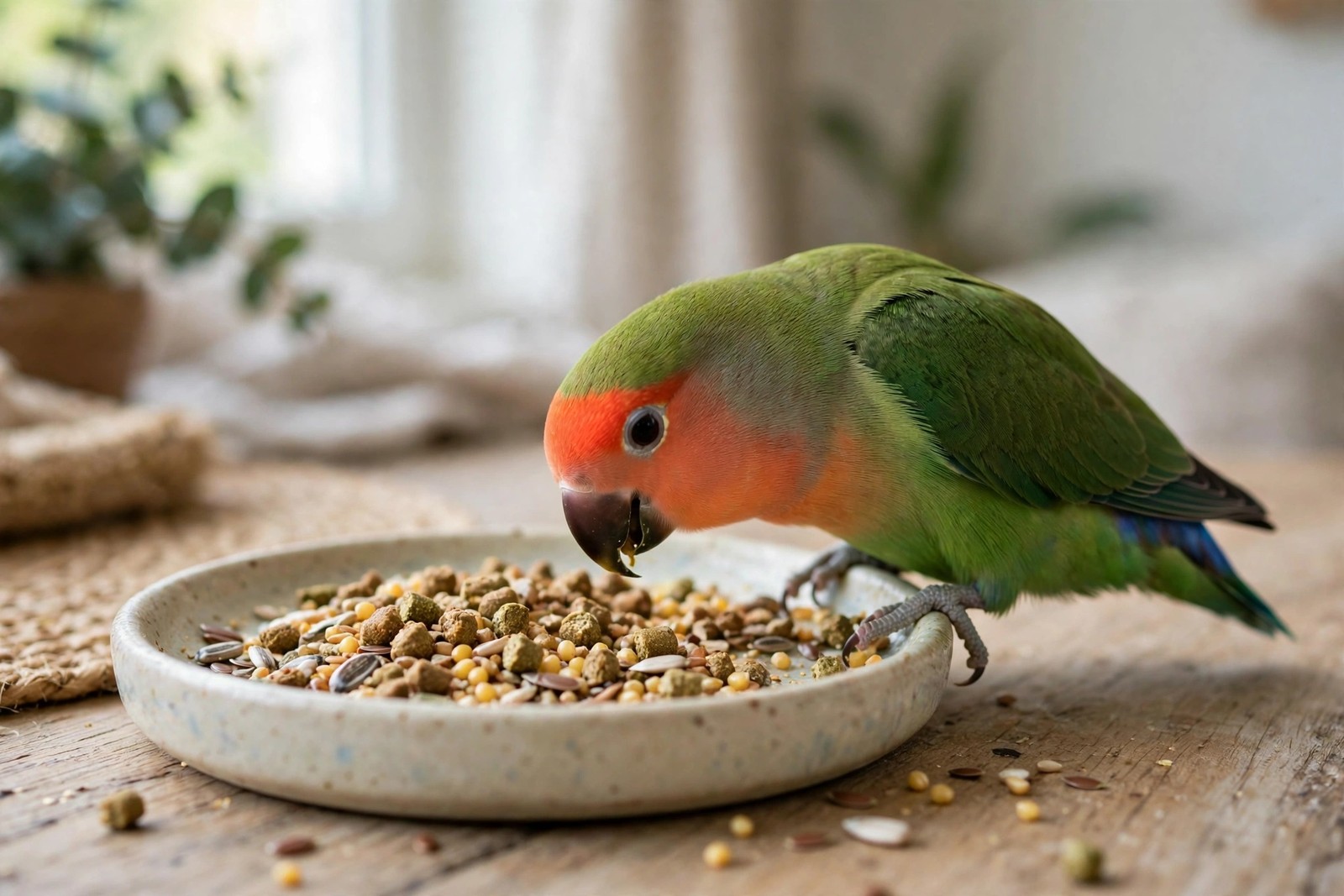
Yes, most seed-only lovebirds can be converted to pellets — the trick is patience, because a sudden swap usually fails. Mix a small number of pellets into the familiar seed, increase the proportion gradually over days or weeks, and watch closely to be sure your lovebird is still eating well throughout the change.
Why Lovebirds Resist New Food
Lovebirds are cautious by nature, and many genuinely do not recognize a pellet as food at first — it does not look, smell, or crunch like a seed. Wild birds learn what is edible by watching their flock, and a pet lovebird who has eaten one diet since weaning has had no teacher for anything new. There is also honest preference to overcome: seed is fatty and delicious, the bird equivalent of being asked to swap crisps for plain rice cakes. Understanding that the refusal is instinct, not stubbornness, makes the slow approach much easier to stick with.
A Gradual Conversion Plan That Works
- Week one: about ten percent pellets mixed through the usual seed, so the new food picks up familiar smells
- Following weeks: raise the share step by step — a quarter, then half, then mostly pellets — only moving on when the dish is being eaten well
- Offer the freshest mix first thing in the morning, when appetite is strongest
- Choose a small pellet size suited to a lovebird's beak, and try a second brand or shape if the first is ignored
- Bridge foods help: sprouted seed, finely chopped vegetables, and pellets softened slightly with warm water all widen what counts as food
Some keepers grind a few pellets and dust them over seed, so every familiar bite carries the new taste along.
How to Tell It Is Working — and When to Slow Down
Weigh your lovebird weekly on a gram scale during the conversion; lovebirds are small, and losses show up in grams before they show in behavior. Watch droppings, energy, and the crop area at day's end — a bird eating well feels full there by evening. If weight drops noticeably, droppings shrink and darken, or your bird goes quiet and fluffed, step back to the previous ratio and add seed back. A lovebird who refuses food outright needs an avian vet's advice the same day; never let a hunger strike run to prove a point.
Tricks From Experienced Bird Keepers
Eat a pellet yourself — or mime it enthusiastically — in front of a bonded lovebird; flock copying is powerful. Offer pellets from your fingers as if they were prized treats. Hide a few in a foraging cup stuffed with shredded paper, so discovering them feels like a win. Bake ground pellets into a simple bird bread with mashed sweet potato for the truly unconvinced. And once a second bird in the household eats pellets, let the student watch — no teacher beats a colleague.
Keeping Every Caregiver in the Loop
A conversion collapses the first time someone else 'helpfully' refills the dish with pure seed because the pellets looked untouched. KinsLe Messenger, the per-pet communications hub on your lovebird's profile, keeps everyone caring for her in the loop: note the current pellet-to-seed ratio, log what she actually ate, and share which tricks worked, so the plan survives every handoff. Steady, shared effort is what gets a seed-only bird eating well. KinsLe Messenger keeps the conversion on track by holding each week's pellet ratio, morning appetite notes, and gram-scale weight where anyone feeding her can follow the latest mix instead of refilling pure seed.