
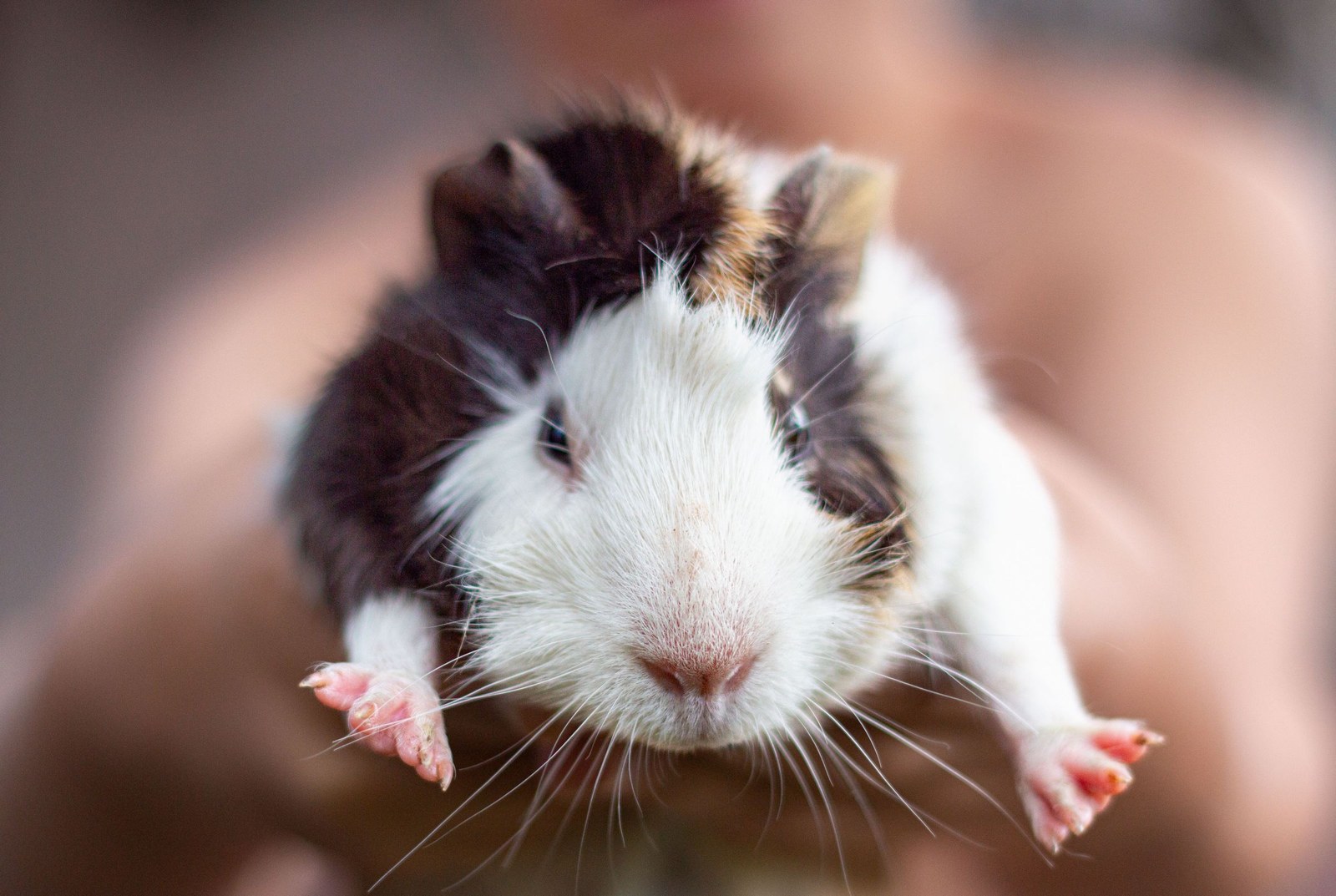
The way to earn a shy guinea pig's trust is to become predictable and safe: sit near the enclosure and talk softly, offer favorite vegetables by hand without grabbing, and let the pig approach you at their own pace. Trust with a prey animal builds over days and weeks of small, calm repetitions — not in a single handling session.
Understand what shy actually means
Guinea pigs are prey animals, and freezing, bolting for a hideaway, or teeth chattering at your approach are survival instincts, not rejection. A new pig — especially a rescue pig or one who was rarely handled — may need several days just to eat while you are in the room. That is progress, even if it does not feel like it.
Judge trust by small milestones: eating hay while you sit nearby, taking food from your fingers, staying out of the hide when you enter, and eventually wheeking at your voice. Each step is earned, and rushing to the next one can set you back to the start.
A daily routine that builds confidence
Spend time near the enclosure every day at roughly the same times. Read, work, or chat beside the cage so your voice and scent become background, not an event. Talk before you appear — a soft announcement avoids the shock of a shape suddenly looming over the cage, which to a pig looks exactly like a predator arriving.
Then start hand-feeding:
- Rest your hand still inside the enclosure, holding a favorite vegetable — a strip of bell pepper, a herb sprig, or a small piece of cucumber.
- Let the pig take it and retreat if they want. Do not follow them with your hand.
- Over days, hold the food a little longer before releasing it, so your hand means lingering good things.
- Progress to a gentle stroke on the shoulder while they eat, stopping if they flinch away.
Short, successful sessions beat long ones. End while things are calm, and keep food the hero — guinea pigs are famously persuadable through their stomachs.
Handling without breaking trust
Avoid chasing a pig around the enclosure or scooping from directly above, which triggers every prey instinct they have. Instead, guide them gently into a hide, tunnel, or snuggle sack and lift the whole thing, or cup them securely with two hands at floor or lap level once they tolerate touch. Keep early handling sessions on your lap with a fleece, a hide to retreat into, and vegetables on offer.
Children should be part of the plan, supervised, sitting on the floor, and following the same no-grabbing rule — one frightening grab can undo a fortnight of patience.
What slows progress down
Inconsistent handling between family members is the biggest culprit: one person hand-feeds patiently while another grabs the pig for cuddles teaches the pig that people are unpredictable. Loud play next to the cage, sudden enclosure rearrangements, and reaching in during the pig's rest times also chip away at confidence. Keep the enclosure in a living area with gentle traffic — total isolation slows socialization just as surely as chaos does.
Sharing what works through KinsLe Messenger
KinsLe Messenger is the per-pet communications hub, and it is ideal for a trust-building project: family members can share which vegetables tempted the pig out today, which approach spooked them, and how far handling got, so everyone handles the shy pig the same gentle way. Small notes, added daily, become a clear record of progress on the days it feels slow. KinsLe Messenger keeps that shared approach steady by letting each person log which vegetable worked, how close the pig ventured, and whether a shoulder stroke was accepted that day.