
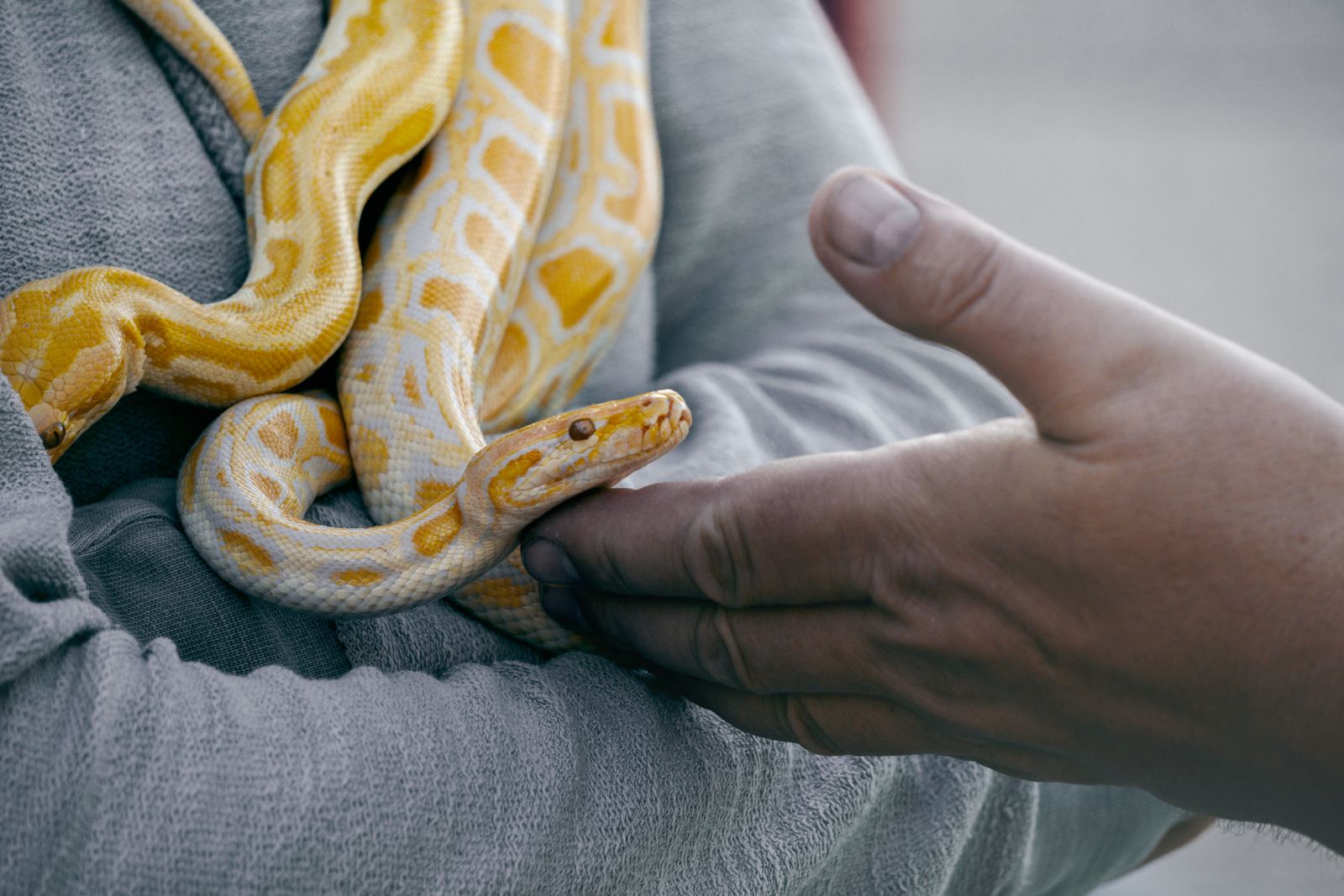
You get a snake used to being handled with short, calm, predictable sessions a few times a week — supporting its whole body, letting it move through your hands at its own pace, and ending before it gets overwhelmed. Most snakes are not aggressive by nature; they are cautious, and trust builds when every session teaches them that hands mean safety, not grabbing, squeezing, or sudden drops.
Read the Snake Before You Reach In
Timing matters as much as technique. Skip handling for at least a day or two after a meal, since a full snake is more likely to regurgitate and more likely to want to be left alone. Avoid sessions when your snake is in shed — eyes cloudy, colors dull — because its vision is poor and it will feel vulnerable. A snake hiding quietly is not an invitation either; gentle confidence works better if you start when it is already awake and moving.
Wash your hands first. If you have handled rodents, other reptiles, or even the family dog, you may smell like food or like a threat, and a defensive nip often starts with a scent you did not notice.
A Simple First-Sessions Routine
Try this progression:
- Open the enclosure and let the snake notice you for a minute before touching it.
- Scoop or lift from the side and underneath, never swooping down from above like a predator.
- Support the body in two places; let it glide hand over hand rather than holding it still.
- Keep the first sessions to five minutes or so, a few times a week.
- Return the snake calmly to its enclosure and leave it in peace afterward.
If your snake musks, hisses, or strikes, do not punish or immediately give up forever — shorten the session next time, move more slowly, and consider a small snake hook to lift it from the enclosure, since many snakes are only defensive at the moment of pickup and relax once they are out.
Building Confidence Over Weeks, Not Days
Consistency beats marathon handling. The same person, the same unhurried movements, and a quiet room will teach a nervous corn snake, ball python, or kingsnake that handling is routine. Gradually lengthen sessions as body language softens: steady tongue-flicking, relaxed movement, and exploring rather than frantic escape attempts are good signs. A snake balled tightly, breathing fast, or repeatedly trying to flee is telling you to wrap up.
Children should be supervised, seated, and taught the same support rules, and anyone new to the snake should hear your notes before their first session rather than learning by trial and error.
Safety for Snake and Handler
Work over a lap, sofa, or table so a sudden dart does not become a fall. Never drape a snake around your neck, never handle after drinking, and always return it to a secure, latched enclosure — snakes are gifted escape artists. Wash hands again after handling, as good hygiene around reptiles protects everyone in the household.
One Profile, One Shared Temperament Log
It helps when everyone in the house works from the same notes: which snake is shy at pickup, which one just ate, which one is due for a calmer, shorter session. Each KinsLe pet profile carries a unique QR ID for that individual pet, and keeping your handling log and temperament notes on your snake's profile means family members see the same guidance before they open the enclosure. That consistency is exactly what a nervous snake needs to improve. Verified QR ID Pet Profiles on KinsLe let a handler verify exactly which snake is curled inside, revealing whether a recent meal or cloudy eyes from a shed make today a leave-alone day.