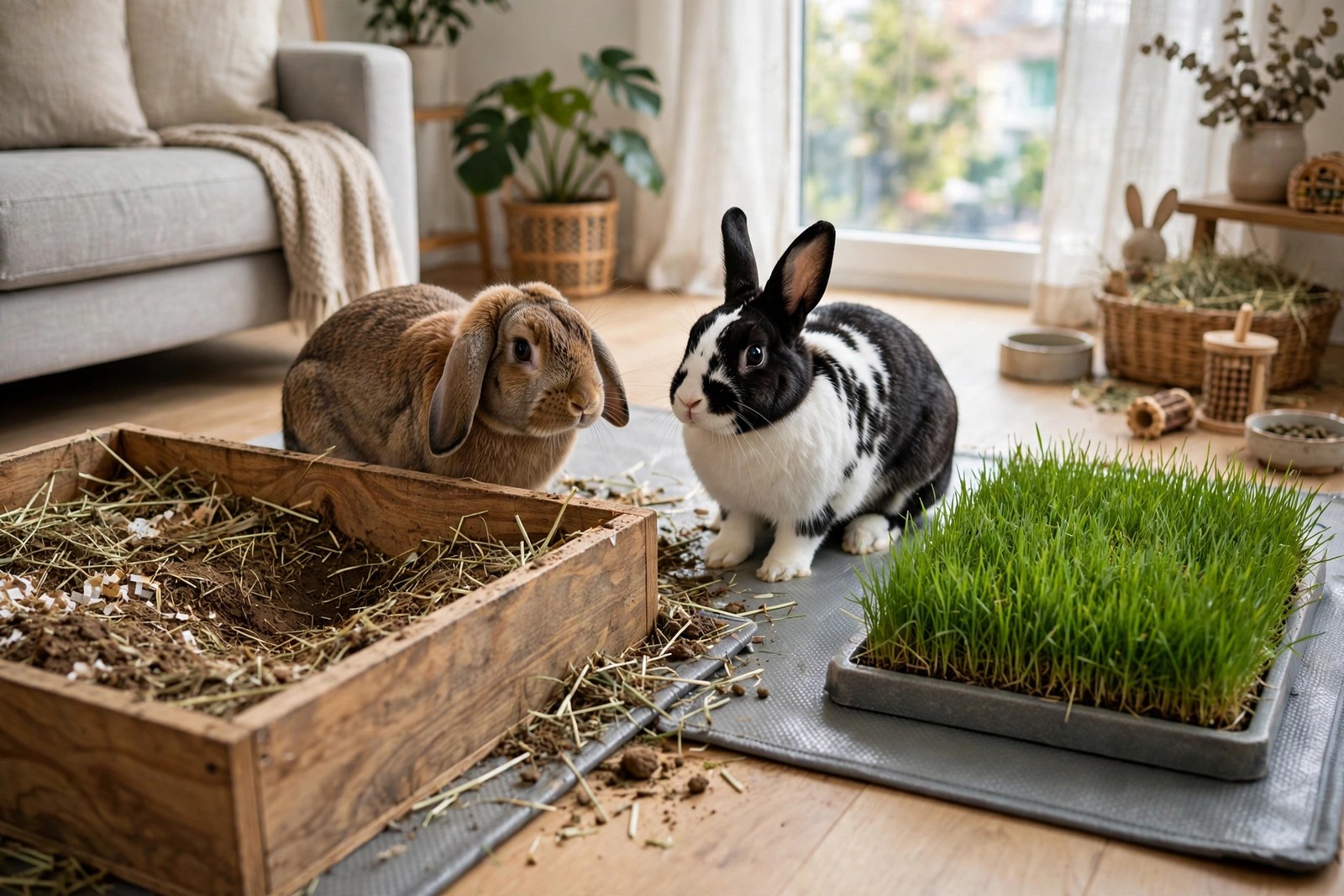
Rabbits are built to dig and to graze, and an apartment removes neither instinct, only the ground that usually serves them. The answer is to bring both activities indoors in forms you control: a dedicated digging box they are allowed to excavate, and real grass grown in trays they are allowed to eat. Set up well, the pair of them satisfies two deep drives without surrendering your floors or your deposit.
The Digging Box: Real Excavation, Contained
Choose a wide, low-sided box or a large storage tub the rabbits can enter easily and turn around inside, and fill it deeply enough for genuine digging rather than token scratching. Clean, chemical-free soil gives the closest thing to outdoor excavation and holds a burrow shape briefly, which rabbits find deeply satisfying; shredded paper is the lighter, cleaner alternative for owners who prefer it, and it can be fluffed back up between sessions. Expect material to fly. Rabbits dig with enthusiasm and no regard for tidiness, so site the box accordingly and accept a scatter zone around it.
Refresh the filling before it becomes compacted, damp, or soiled, and check it for anything the rabbits have buried and forgotten. Offer the box during supervised exercise time at first, so you can see how each rabbit uses it and whether the sides contain the digging or need raising.
A Grass Tray: Grazing Grown Indoors
Grow grass from seed in shallow trays of plain, untreated compost or soil: sow thickly, keep the tray in daylight, and let the grass reach a good grazing length before offering it. Untreated matters, so use seed and growing medium with no added chemicals, and grow it yourself rather than trusting an unknown source. Put a fresh tray down and watch it be eaten down over the session or the day, then rotate it out to recover or replace it entirely as it thins, since a grazed tray rarely regrows evenly indoors.
Run two or three trays in rotation so one is always growing while another is being grazed. The grazing posture itself, head down, working along the tray, is part of the value: it occupies rabbits the way a patch of ground would.
Floor Protection and Apartment Practicalities
Everything sits on protection. A washable, waterproof-backed mat or a sheet of washable flooring offcut under the digging box and grass trays catches scatter, moisture, and the occasional accident, and it defines the activity zone for the rabbits as clearly as it protects the floor for you. Place the setup inside the rabbits' normal exercise area, away from cables, door swings, and baseboards they might test while excited, and keep sessions supervised, because a rabbit absorbed in digging is a rabbit not watching where it backs up.
Hay remains the constant alongside both activities. Digging and grazing trays are enrichment, not diet: fresh hay stays available at all times for the rabbits to eat and forage through, including during these sessions, and a handful scattered near the box encourages natural foraging movement between activities.
The Household Agreement
An apartment setup survives only if everyone in the home treats it the same way, so agree in advance where the box and trays live, who refreshes the digging material, who waters and rotates the grass, and who cleans the mat and the scatter afterward. Written down, those small jobs stop being one person's silent burden and the setup stops quietly disappearing. Family Sharing itself does something narrower: through KinsLe you share the rabbits' profiles with the family members you choose, giving those relatives access to them.
Start with one box and one tray, watch what gets used hardest, and expand from evidence. A pair of rabbits with a place to dig and grass to graze has an indoor life that answers its instincts, not one that merely tolerates them.
On KinsLe, Family Sharing is how their profiles reach relatives you pick — access handed to family you have chosen, and to nobody else.