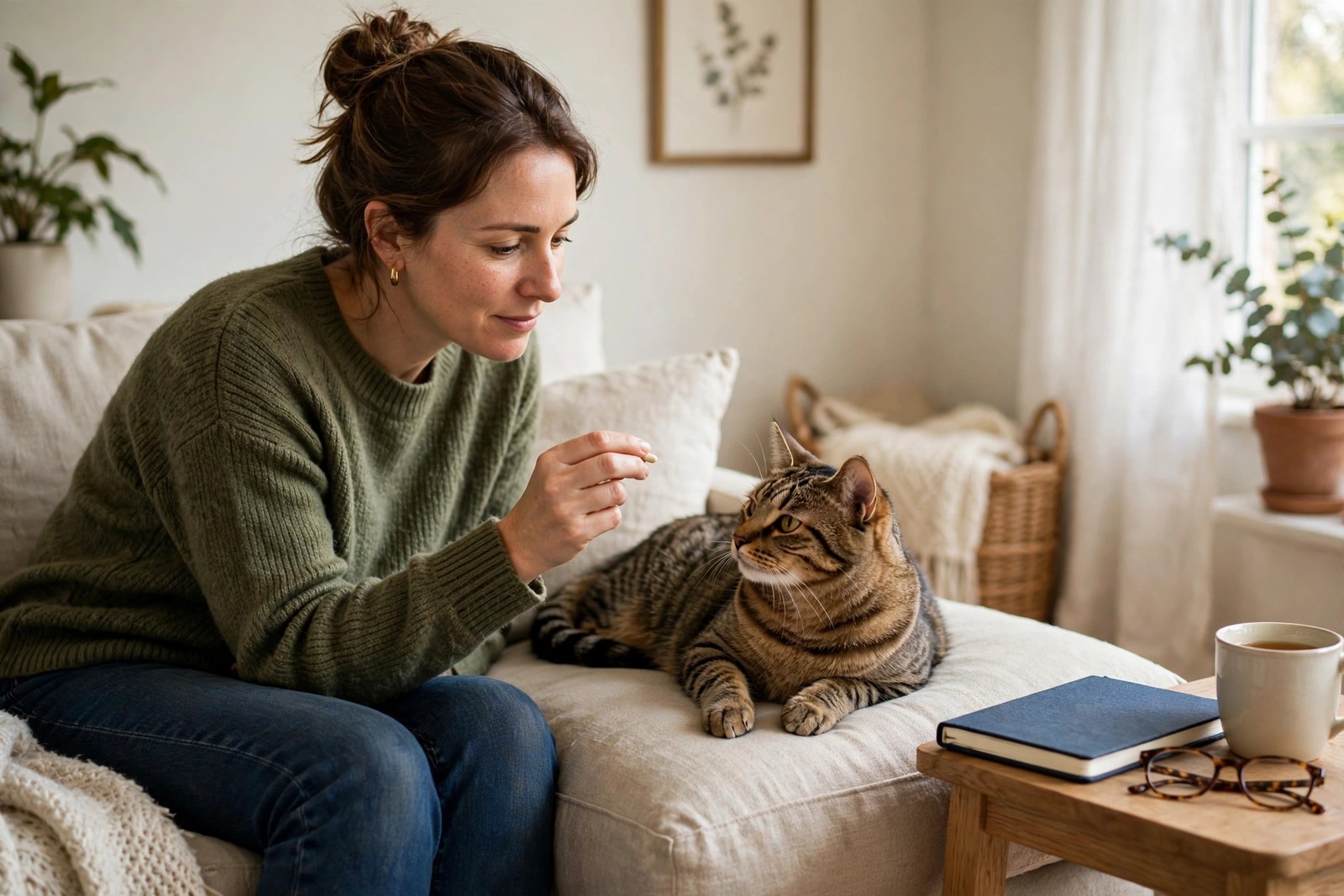
The least stressful pill is often the one you never have to administer directly. Before technique enters the picture, your veterinary practice has several decisions that can change the whole task: the form of the medicine, whether food is allowed with it, and whether the tablet must remain intact. This article deliberately does not give step-by-step administration instructions, because the safe method depends on the specific medicine and your specific cat, and that demonstration belongs to the vet or nurse who prescribed it. What follows is how to set the process up so it stays calm and workable.
Ask These Questions at the Clinic
First, can this medicine be given with food, and if so, with how much? Some medicines absorb poorly on a full stomach, while others are gentler with a small amount of food, and only the prescriber can tell you which applies. Second, is there a liquid, paste, or flavoured version of the same medicine? Many cats that fight a tablet accept a flavoured liquid readily, and practices can often order an alternative form or discuss compounding options where appropriate.
Third, may the tablet be split or crushed? Some coatings protect the stomach or control how the medicine is released, and crushing those can change how they work or create a bitter taste that puts a cat off its food entirely. Never crush, split, or move a medicine into food unless the vet or the medication leaflet confirms it is acceptable for that product. Finally, ask what to do if a dose is refused or spat out, and whether re-dosing is ever appropriate. Guessing is how cats get too much or too little.
Let the Practice Show You
If direct administration is the route your vet recommends, ask them to demonstrate their approach on your cat during the appointment and talk you through what they are doing and why. Clinic staff do this daily, with cats of every temperament, and watching a calm, brief demonstration teaches more than any written description. If the practice offers nurse appointments, booking one for the first dose is a reasonable request, especially for a nervous cat or a new medication.
While you are there, ask what signs should prompt a call: persistent drooling or foaming, which often reflects a bitter taste but should still be reported if it continues, vomiting after doses, refusal of food, hiding, or a clear change in behaviour around medication time. Also tell the practice honestly if doses are being missed. Vets would far rather adjust the plan than discover at a recheck that half the course never went in.
Make the Routine Around It Boring
Give medication at the same times each day, in the same quiet place, with everything prepared before you bring the cat in. Keep the session as short as the vet's method allows, follow it with something your cat values, such as a meal, play, or a favourite resting spot, and avoid chasing the cat around the house beforehand, which teaches it to hide earlier each day. If another person helps, agree in advance who does what so the cat is not passed between people mid-session.
Track each dose as you give it: date, time, whether it was taken, and anything unusual afterwards. A written record stops double-dosing in multi-person households and gives the practice precise information if the plan needs adjusting. If the struggle is getting worse rather than easier after a few days, that is useful information too, and a reason to phone rather than persist.
A calmer record makes those conversations easier, and KinsLe's Pet Passport keeps your cat's medication list, vet instructions, and visit history together in one portable packet, so the practice, a nurse, or a helper at home is always working from the same written plan.