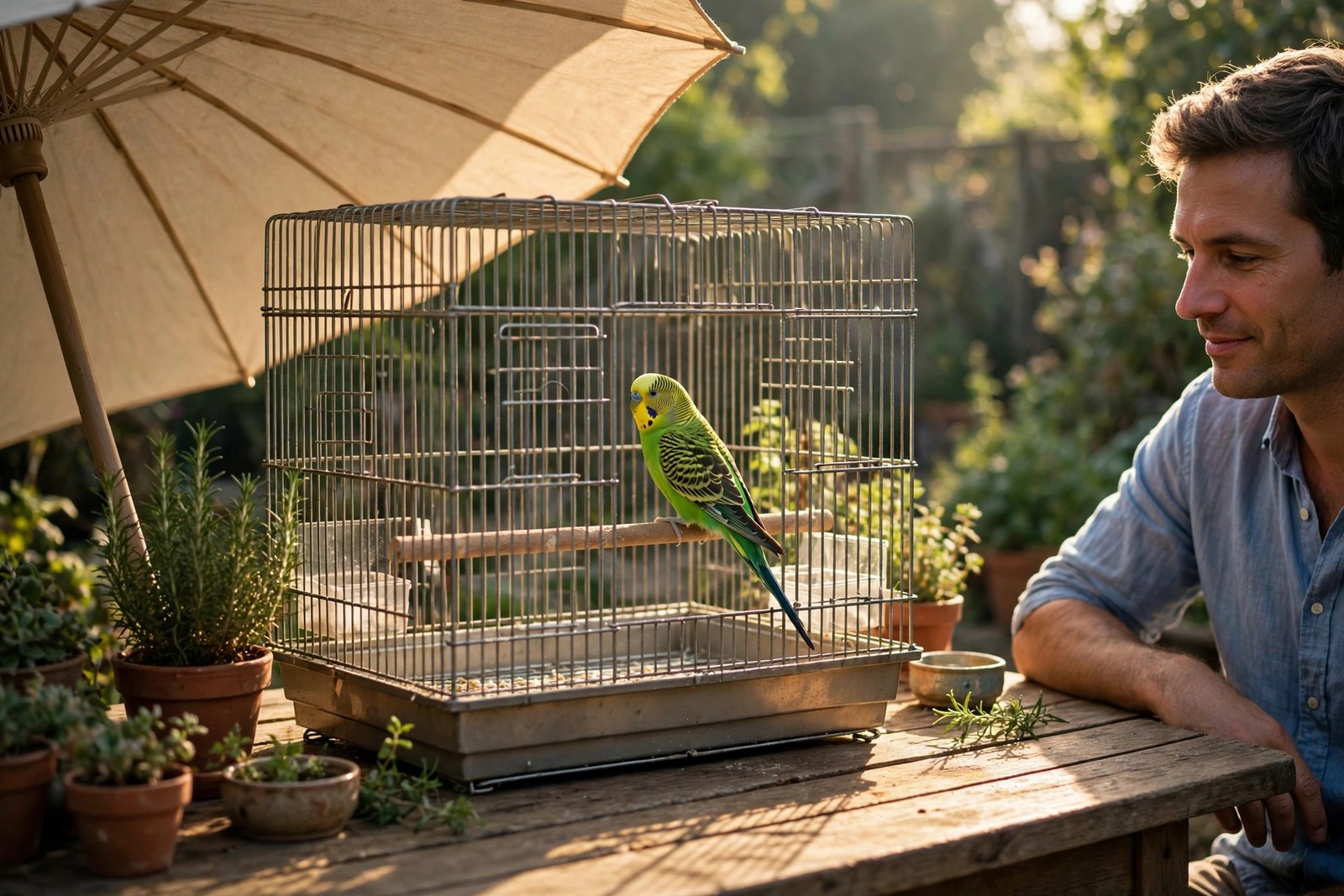
Sunshine matters to indoor birds for more than a change of scenery: the ultraviolet light in unfiltered sun supports vitamin D production, feather condition, mood and a healthy day-night rhythm. The catch is that the sunshine has to be real, the bird has to be able to get out of it, and a small body in a cage overheats far faster than owners expect.
The Windowsill Does Not Count
Ordinary glass blocks UVB, the part of sunlight birds use, so a cage parked in a sunny window gives your bird brightness and warmth but not the benefit you are aiming for — and it can still overheat him, because glass traps heat while offering no breeze. An open window with a secure mesh screen is a halfway option some owners use, but the reliable route is the cage itself going outside. If outdoor time is impossible for long stretches, such as deep winter, a full-spectrum avian light over the cage, used for a set period each day, is the accepted alternative — position it as its instructions direct, since too close is as unhelpful as too far.
Set Up Outdoor Time Properly
Choose a mild, calm day — not the hottest afternoon of the year and not a windy one, since wind chills and frightens birds. Carry the whole cage out rather than taking the bird out loose, lock its doors, and set it on a stable surface where it cannot be knocked over. The non-negotiable rule is split light: position the cage so roughly half sits in sun and half in shade, with a perch in each zone, so your bird chooses his own exposure minute by minute. Provide water, because a bird in sun drinks and bathes more, and stay with him the whole time — an outdoor cage attracts cats, dogs and wild birds, and a predator lunging at the bars can injure or terrify a bird it never touches. Start with twenty to thirty minutes and build up gradually over days.
Read the Bird, Not the Clock
Your bird tells you when sunshine stops being pleasant. Comfortable looks like relaxed feathers, singing or calling, active preening and moving between the sunny and shady perches. Overheating shows as wings held away from the body, beak held open, panting, and feathers slicked flat — any of those means bring the cage in immediately, into a cool, quiet room, and offer water; a bird who is weak, fluffed and unresponsive after heat needs an avian vet urgently. Watch the weather as closely as the bird: conditions change quickly, direct midday summer sun is far stronger than morning sun, and a cage that was half shaded at ten o'clock may sit in full sun by eleven as the shade moves.
Make It a Routine, Not an Event
Regular short outings beat rare long ones: several supervised sessions a week through the milder months keeps the benefit steady and the experience ordinary rather than alarming. Note which times of day and temperatures your particular bird enjoys — a budgie, a cockatiel and an African grey do not read heat identically — and skip sessions entirely during a moult-heavy, unwell or newly arrived settling-in period. His profile, meanwhile, is what KinsLe's Family Sharing shares: the relatives you pick get access to it, and nobody beyond them is let in.