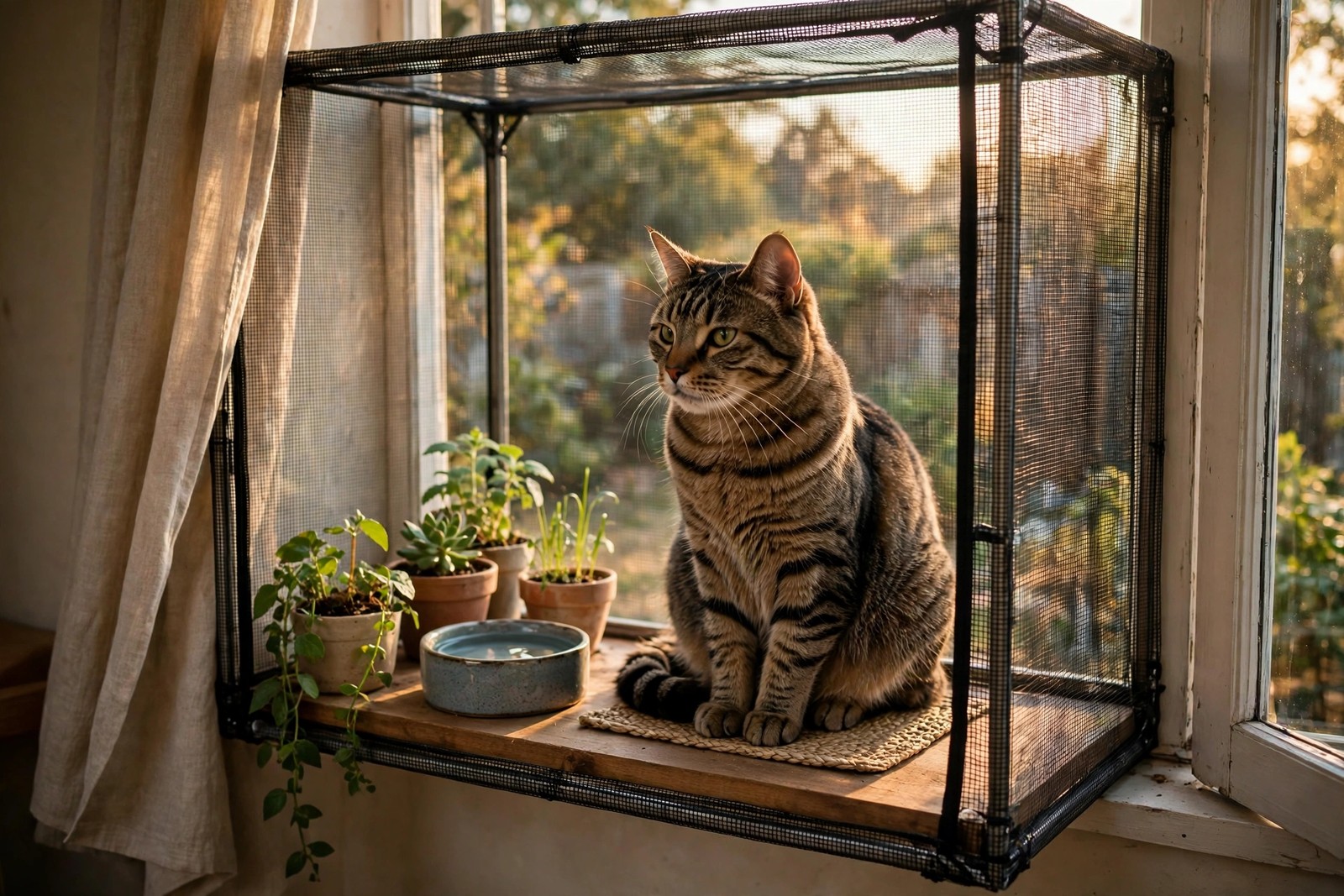
An indoor cat can enjoy outdoor air, smells, and bird-watching without ever roaming: the trick is to bring the outside to her inside a barrier built for a cat's strength and determination. Three options cover most homes — a catio, a window enclosure, and harness walks — and they can be combined, starting with whichever your space and budget allow.
The Catio: A Room With Outdoor Air
A catio is an enclosed outdoor space, from a purpose-built patio pen to a balcony wrapped in strong welded mesh over a solid frame, with a roof or fully meshed top because cats climb and jump far better than most owners expect. Fit shelves or ramps at different heights so your cat can survey from above, add shade that lasts all day as the sun moves, a water bowl, and a scratching post or log, and connect it to the house through a window or a cat flap in a door panel so she can come and go while you are home. Check the mesh and fixings weekly: fixings work loose, mesh tears at corners, and a gap a cat's head fits through is a gap her body may follow. On a balcony, enclose the whole space to the ceiling rather than relying on netting strung between rails, and never assume a high floor makes escape harmless — a fall from a balcony can injure a cat badly.
Window Boxes and Screens That Actually Hold
For a flat or a single favourite window, a window box — a mesh-fronted enclosure mounted outside the window frame so the cat can sit in the open air — gives the full breeze-and-birdwatching experience in a square metre. The cheaper version, opening the window itself, demands respect for screens: an ordinary insect screen is designed to stop flies, and it can tear or pop out of its frame under the weight of a cat leaning on it to watch a bird. If your cat will sit at an open window, fit a sturdy pet-resistant screen properly secured in its frame, add window restrictors so the opening itself stays narrower than your cat, and still supervise, because a screen alone is a lighter barrier than a built enclosure.
Harness Walks, Done Gradually
Some cats take happily to a harness and lead, which turns fresh air into a shared outing. Choose a snug, escape-resistant walking jacket or harness that your cat cannot back out of, let her wear it indoors in short sessions paired with treats and play until she moves normally in it, and only then attach the lead and step outside somewhere quiet. Follow her route rather than dragging her along yours, keep sessions short at first, and pick her up and go in if dogs, traffic, or her own flattened ears say the outing is over. Never tie a lead to a post and leave a harnessed cat unattended: a startled cat tangles, strains, and can wriggle free or injure herself, and a lead only works with a person on the end of it.
Comfort Checks for Any Outdoor-Air Setup
Whichever option you build, provide shade and water, bring your cat in if she pants, hides, or keeps trying to leave, and check her over when she comes back inside. Outdoor air on a harness or balcony can still mean contact with parasites and with other animals through mesh, so keep routine preventive care current and mention the setup at vet check-ups.
Once your setup is built, KinsLe's Family Sharing lets you share which windows may be opened, which door leads to the catio, and who supervises harness outings, so your indoor cat's fresh air stays safe under every member of the household.