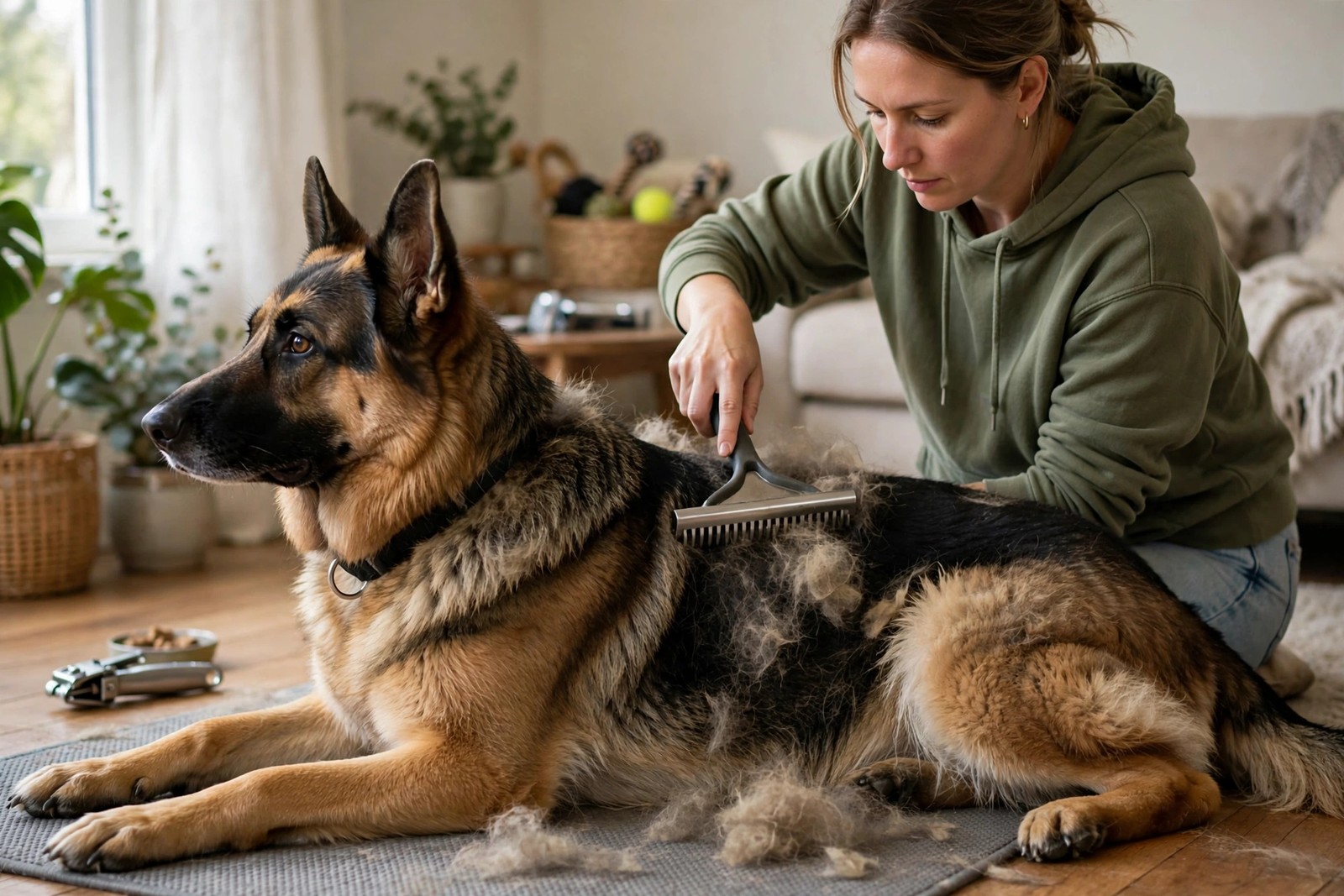
To groom a double coat properly at home, work in small sections with an undercoat rake or slicker brush, brushing down to the skin in gentle strokes so you actually remove loose undercoat instead of skimming the shiny top layer. A bath helps loosen undercoat first, but only brush a fully dry coat afterward, keep sessions short and frequent, and never cut mats out with scissors — that is how skin gets nicked.
The Tools That Actually Do the Job
You do not need a drawer full of equipment, but the right basics matter:
- Undercoat rake — long teeth reach through the topcoat to pull out loose undercoat without tearing guard hairs.
- Slicker brush — good for working section by section and fluffing out loosened fur.
- Steel comb — your honesty check; if it glides through to the skin, the section is truly done.
- Detangling spray (optional) — a light mist can ease friction on a dry, static-prone coat.
Skip the temptation to rely on de-shedding blades every session; used too often or too hard they can damage the topcoat. And whatever the tool, let it do the work — pressing harder does not remove more coat, it just scrapes skin.
A Section-by-Section Routine That Works
Set up somewhere easy to clean, because there will be fur. Start by running your hands over the whole dog to find tangles, then work one area at a time — a shoulder, a hip, one side of the neck. Use line brushing: lift a small section of coat with one hand and brush the layer beneath it in short strokes, gradually working through the section until your comb passes cleanly to the skin. Take the same approach around the tail, the trousers at the back of the thighs, and behind the ears, where undercoat packs tightest.
Ten to fifteen minutes a few times a week maintains most double coats. One marathon session every month does not — it exhausts the dog, overwhelms you, and still misses the layers that matter.
Bathing to Loosen Undercoat — and the Dry-Coat Rule
A bath mid-shed is a secret weapon: warm water and shampoo loosen undercoat so it brushes out far more easily. Bathe with a dog shampoo, work it down to the skin, rinse until the water runs completely clear (leftover shampoo makes coats sticky and itchy), and towel or blow-dry on a cool setting. Then wait until the coat is fully dry before the big brush-out. Brushing a damp double coat drags, breaks hair, and misses the deep layer entirely.
If you find a true mat — a tight, felted clump against the skin — do not cut it out. Scissors sit flush against skin that is pulled up into the mat, and cuts happen constantly. Tease small tangles apart with fingers and a comb; solid mats go to a groomer, who can remove them safely with clippers.
Splitting Coat Care Across the Week
Double-coat care fails when it lands on one person as one giant chore. KinsLe's Care Teams break it into small assigned sessions: you can schedule grooming duties alongside feeding, walks, and medications, share them across the family, and each completed session is marked off with a timestamp. Tuesday's rake-out, Thursday's comb check, Sunday's bath — spread thin, the coat never builds up into a weekend project. Rotate the weekly rake-out, comb check, and bath-day brush-out among household members using the Care Teams schedule on KinsLe, and the workload stays light for everyone.