
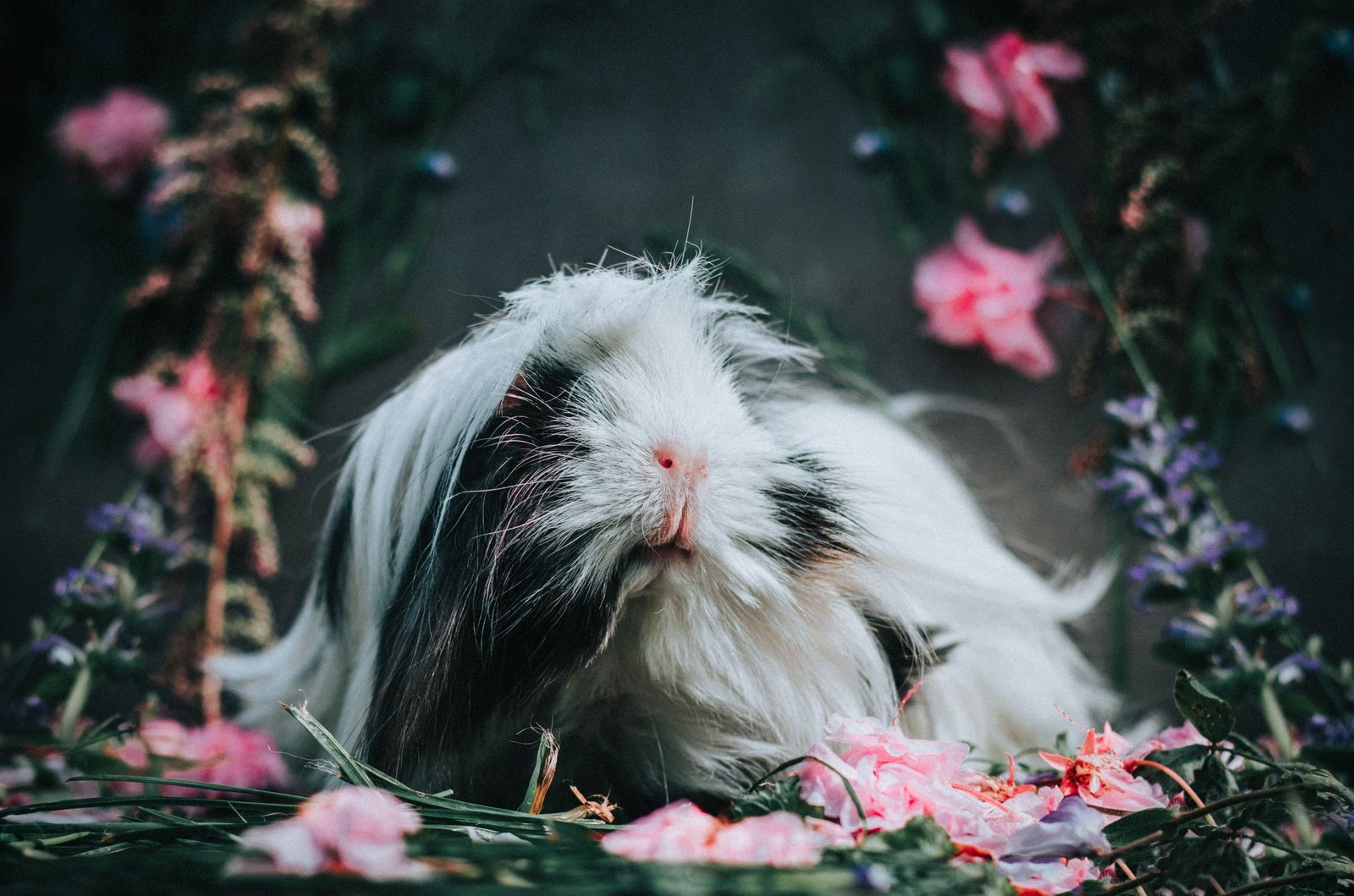
Long-haired guinea pigs need gentle brushing every day and occasional trims to stop the coat matting, while a rabbit in a heavy molt needs regular, gentle brushing to lift out loose fur before it is swallowed during self-grooming. The two animals share a need for patience, but they should never be brushed the same way: a guinea pig's long skirt tangles from the ends inward, and a rabbit's skin is thin, delicate, and easily nicked or torn if a brush drags.
Brushing a Long-Haired Guinea Pig
Peruvians, Silkies, Texels, and coronets can grow coats that sweep the floor, and that hair picks up hay, bedding, and moisture fast. Set your pig on a towel on your lap, work in small sections, and use a soft pin brush or wide-tooth comb starting at the very ends of the hair and moving upward. Ten calm minutes daily beats one long wrestling session once a week, because small tangles removed early never become felted mats.
Many owners keep the rear end and belly trimmed shorter, where soiling is worst, and some wrap show-length coats in soft paper wraps — for a pet, a practical shorter cut is kinder and easier. Support the hair with your fingers at the root while you comb so you are not pulling on the skin, and talk quietly the whole time; most pigs learn to wheek through grooming if it never hurts.
Helping a Rabbit Through a Molt
Rabbits shed in cycles, sometimes in dramatic patches, and because they groom themselves like cats but cannot vomit up hair, swallowed fur is a real digestive concern. During a molt, brush two or three times a week — daily at the peak — with a soft brush or a rubber grooming mitt, following the direction of growth. You can also dampen your hands and gently stroke and pluck loose tufts that are already releasing; if it resists, it is not ready.
Never use the fur-removal tools marketed for dogs and cats with cutting blades on a rabbit. Their skin tears with frightening ease. Work on a non-slip surface, keep sessions short, and finish with hay — a rabbit who associates brushing with a favourite herb tolerates it far better.
Dealing With Mats Safely
Never pull a mat apart with force. Hold the base of the mat against the skin with one hand, tease it apart lengthwise with your fingers or a mat splitter, and only then comb through. If a mat is tight to the skin, slide blunt-tipped scissors or small clippers underneath only when you can clearly see and protect the skin — with rabbits especially, clipping by a professional is often the safer call. Always check the skin under a mat: redness, dampness, or a sour smell can mean irritation or flystrike risk in warm weather and deserves a vet's look.
Neither animal needs routine bathing. Spot-clean a soiled guinea pig rear with a damp cloth, and never immerse a rabbit, who chills easily and can panic badly in water.
When a Professional Coat Is the Kinder Option
Some coats, some molts, and some wriggly animals are simply beyond comfortable home care, and there is no failure in that. KinsLe's Pet Services Directory can help you find local groomers and other pet services, so you can ask specifically whether a groomer has experience with small-pet coats before you book — that one question filters out most of the risk. A groomer who knows guinea pig skirts and rabbit skin can clear a seasonal coat safely and show you a maintenance routine matched to your pet's actual hair. When home brushing reaches its limit, search the Pet Services Directory on KinsLe for a nearby groomer experienced with guinea pig skirts and delicate rabbit skin before booking.