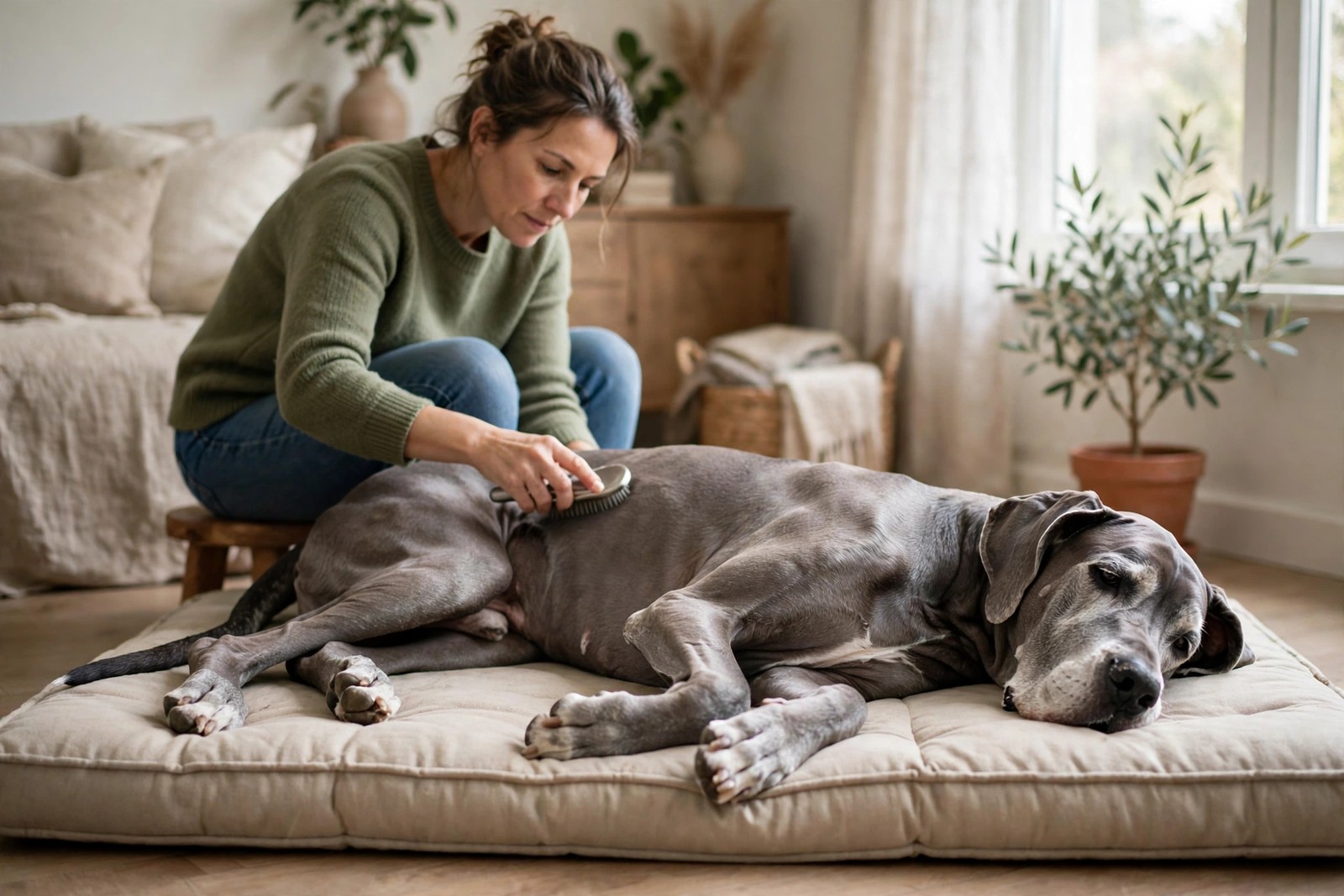
Scale changes everything about grooming an old Great Dane. He may weigh as much as a grown person, his head reaches your chest when he stands, and a hindquarter that tires cannot be propped up by goodwill. When standing through a full groom stops being fair, the answer is not shorter standing sessions squeezed into his decline; the answer is a different groom entirely, rebuilt at floor level around a dog who works lying down.
Set the Floor Station
Choose the room where he already likes to rest, and lay a thick, padded surface with a non-slip base — a large washable mat or layered bedding that will not skate across hard flooring when a very heavy dog shifts his weight. Bring everything to him: brushes, clippers or file for nails, ear-cleaning supplies as your vet has advised, towels, treats, and a low stool for you, because grooming a Dane from the floor means working at his level for a while and your own knees and back are part of the safety calculation. Keep the room warm and free of through-traffic, let him choose his moment to lie down rather than being manoeuvred into place, and start sessions with a few minutes of the stroking and scratching he enjoys, so the mat predicts comfort before it predicts procedures.
One Side, One Job, Then Stop
Work whichever side faces you and resist completing the picture. Brush that side through, check the skin your hands pass over, clean the ear you can reach without asking him to roll, and tidy the hygiene areas accessible from that position. The other side waits for his next natural roll, later that day or tomorrow, and a groom spread across two sittings at floor level costs him nothing compared with one long stand. Split by job across the week as well: brushing one day, nails and paw care the next session, ears and hygiene on a third. Little and often is not a compromise here; it is the design, because no single encounter ever grows long enough to leave him stiff, sore, or dreading the mat.
For nails, work with the paw resting in its natural lying position and take small amounts across frequent sessions rather than chasing perfect length in one sitting. Long nails on a dog of his weight alter how the foot lands and load tired joints badly, so the little-and-often rhythm protects more than appearance.
Handling a Dog Too Heavy to Correct
Never haul, drag, or roll a senior Dane by force, and never lift a hind end that has gone down by pulling on legs or tail. If he needs help rising, support him as your vet or a physiotherapist has shown you, with a broad support under the chest or hips, and let him set the pace of the lift. Watch his breathing, his willingness to bear weight as he stands, and how he moves an hour afterwards and the following morning; a groom that leaves him reluctant to rise the next day was too much, however gentle it felt at the time, and the next session shrinks accordingly. Non-slip runners on the routes between his bed, the door, and the garden quietly protect the joints every session is trying to spare.
Note anything your hands find at floor level — new lumps, skin changes, a sore spot he flinches from, weight creeping off his frame — and raise changes with your veterinarian, since a slow groom with your hands over the whole dog is often where such things surface first. Care Teams on KinsLe shows at a glance which side was brushed yesterday, sparing an old Dane a repeat session he does not need.