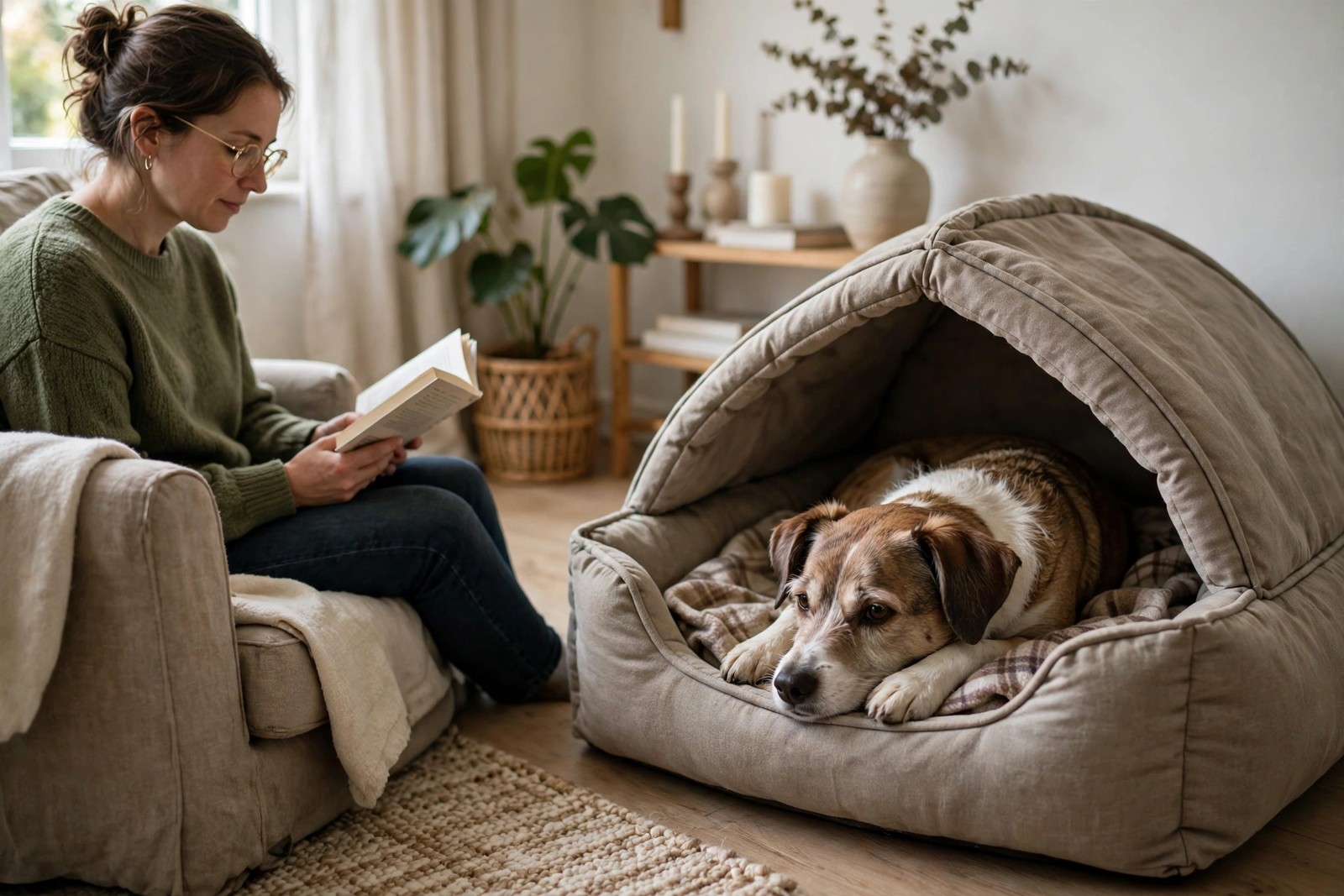
A shy adopted dog does not need to meet the world; he needs to recover from it. The first weeks in your home are decompression, not socializing — a deliberate period of low demand in which his stress drains away and he learns, through repetition, that this house follows rules he can predict and that nothing in it ambushes him. Owners often rush this stage out of kindness, inviting friends to meet the new dog and carrying him around to show him his new life, and each well-meant event teaches a frightened dog the opposite lesson. Safety, to a shy dog, is not excitement survived. It is boredom accumulated: the same calm days, in the same order, until his body stops bracing for the next surprise.
A Den of His Own and a Predictable Day
Set up a quiet den that is his alone before he arrives: a corner or spare room with a bed, water, and something that smells of the shelter or foster home if you can get it, placed where household traffic passes at a distance rather than through his space. That den is a refuge, never a place he is dragged from — if he retreats there, the house rule is that he is left in peace until he chooses to come out. Around the den, build a predictable daily routine: feeding, toilet trips, and short outings at the same times, in the same order, announced by the same calm cues. Predictability is the curriculum. A dog who can forecast his day stops spending energy on vigilance, and you will see the change in his body first — sleeping more deeply, eating with less snatching, exploring a room's edges on his own initiative during quiet hours.
Contact on His Initiative, Always
Let every interaction be his idea. Sit near him without facing him head-on, read or work quietly, and let him close the distance when curiosity beats caution — then reward that bravery without grabbing at it: a soft voice, a treat placed on the floor beside you rather than offered from a reaching hand. Do not lunge after him, pursue him, or back him into a corner, including for affection, harnessing, or photographs; being cornered by a giant who then does something kind still teaches that giants corner. Keep visitors away in the first weeks entirely, and when visits resume, guests ignore him completely unless he approaches, and never feed him from their hands to lure him closer than he wants to be. Children need the rule stated plainly and supervised: the dog decides, every time. Confidence built this way looks slow from the outside and is actually the fastest route there is, because nothing has to be unlearned.
Small Wins Over Weeks, and a History That Travels
Expect progress in small wins over weeks, not a breakthrough afternoon: the first voluntary approach, the first play bow at a toy he previously ignored, the first time he chooses the living room rug over the den while people are present. Note the wins down, because on a hard day the written record reminds you the line is still moving. You are not starting from zero knowledge, either — the shelter or foster home observed this dog under stress and in quiet moments, and those notes describe what frightens him, what settles him, and what he already does well. That is the value of the Transferrable Profiles feature in KinsLe: the notes and history from his shelter stay attached to him, so what is already known survives the handover and your decompression plan builds on observed fact rather than guesswork. Given time on his terms, most shy dogs do not just tolerate the house — they claim it, one room and one trusted person at a time. His shelter notes, his fears, and his small wins stay together from adoption day onward because the Transferrable Profiles file in KinsLe travels wherever he goes next.