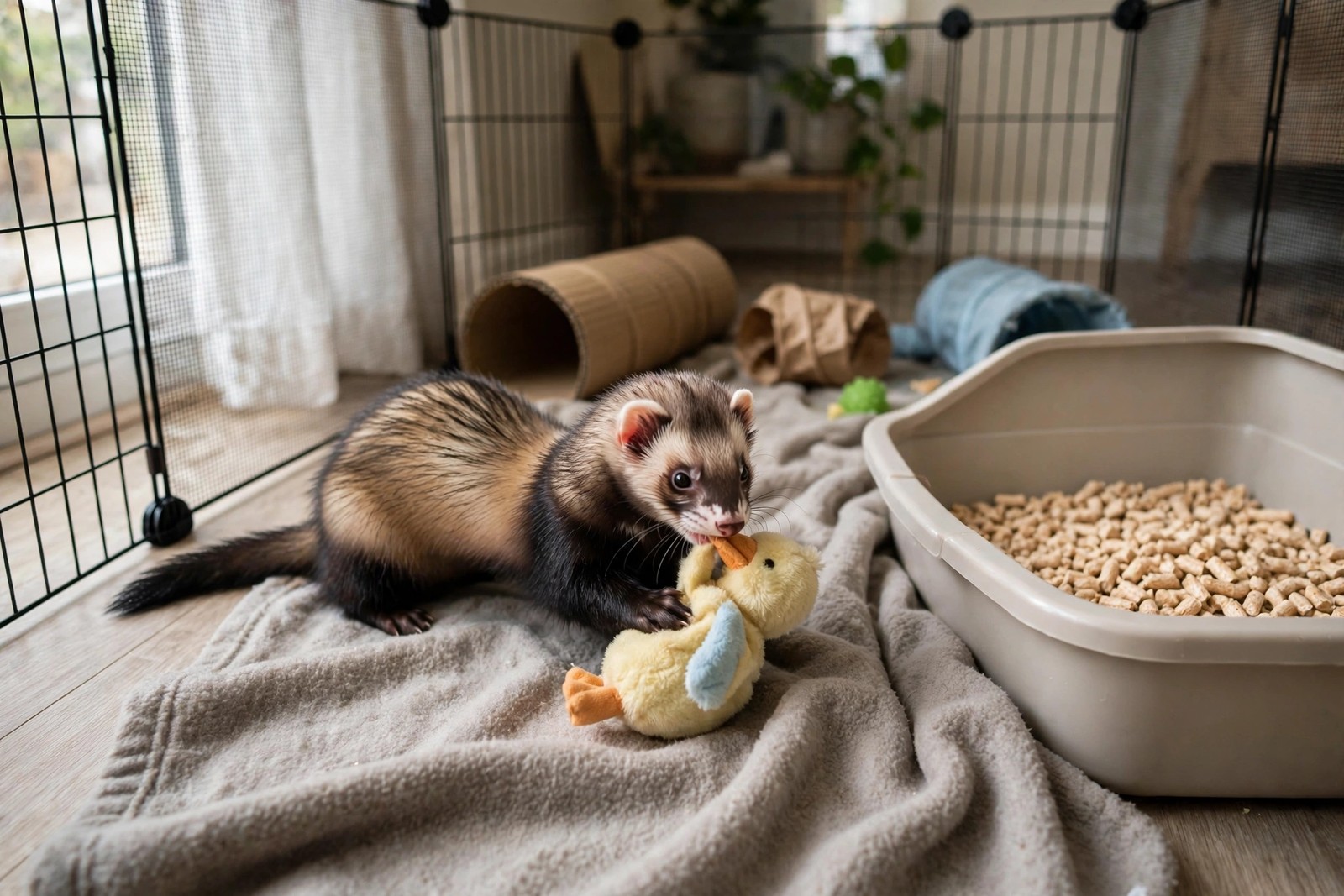
Ferret manners are not miniature dog manners. A kit explores the world mouth-first, backs into corners to toilet, and learns through short bursts of frantic play followed by deep sleep. Work with those instincts and a young ferret becomes a polite, handleable adult surprisingly quickly; fight them and you get a frustrated biter who toilets wherever it pleases.
Nip Training: Redirect, Do Not Wrestle
Kits nip to invite play and to test what things are, and the skin of another ferret is far tougher than yours, so the kit genuinely does not know it hurts. When teeth land on your hand, resist the reflex to pull away, because a snatched hand looks like an exciting toy and teaches harder biting. Go still, let the kit release, then immediately offer a toy it is allowed to bite and praise the switch.
If biting continues through a play session, end the game calmly: place the kit in an empty, boring carrier or playpen for a minute or two, then let it out and try again. Time-out works only because it is brief and dull, not frightening. Never flick a ferret's nose, and avoid rough scruffing as a punishment, which tends to wind kits up further. Most kits soften their mouths markedly over a few weeks of consistent responses from every person who handles them.
Litter Training Follows the Corners
Ferrets choose corners, back into them, and will not travel far from play to toilet, so the box goes where the ferret has already decided. Put a low-sided litter box in the chosen corner of the cage and at least one more in the play area, place a few fresh droppings in each box so the smell marks the spot, and set the kit in the box straight after waking, after meals, and every hour or so during play, when kits most often need to go.
Reward hits immediately with a tiny treat and warm praise. For misses, clean the spot thoroughly so it stops smelling like a toilet, and consider adding a box there rather than battling over geography. Expect accidents from a young kit and judge progress over weeks: reliable in the cage first, then in one room, is a normal order.
Handling During the Social Window
Handle the kit every day in short, kind sessions while it is young and most open to learning that people are safe. Support the whole body with two hands, let it walk from hand to hand and explore your lap, and touch ears, feet, and mouth gently so future nail trims and vet examinations are unremarkable events. Keep sessions to a few minutes and always end before the kit gets wound up or overtired.
Let the kit sleep undisturbed between sessions. Young ferrets sleep for long stretches and wake up bursting with energy; manners lessons land during play, not when you drag a sleepy kit out for cuddles. Children should handle the kit seated on the floor, supervised, so a wriggle and drop never becomes a fall or a fright that sets handling back.
Ferret-Proof the Stage
Good manners are easier in a room set up for success. Block gaps behind appliances and furniture, remove rubbery items the kit can bite pieces from, lift houseplants and cables out of reach, and offer legal outlets for digging and stashing, such as a box of clean packing material and toys the kit is allowed to drag away and hide. A kit with approved mischief available is far less inventive about forbidden kinds.
Consistency across the household is what turns these lessons into habits, and KinsLe's Care Teams helps by letting you assign play, handling, and litter-training sessions to family members, each logged with a timestamp, so the kit hears one set of rules from everyone.