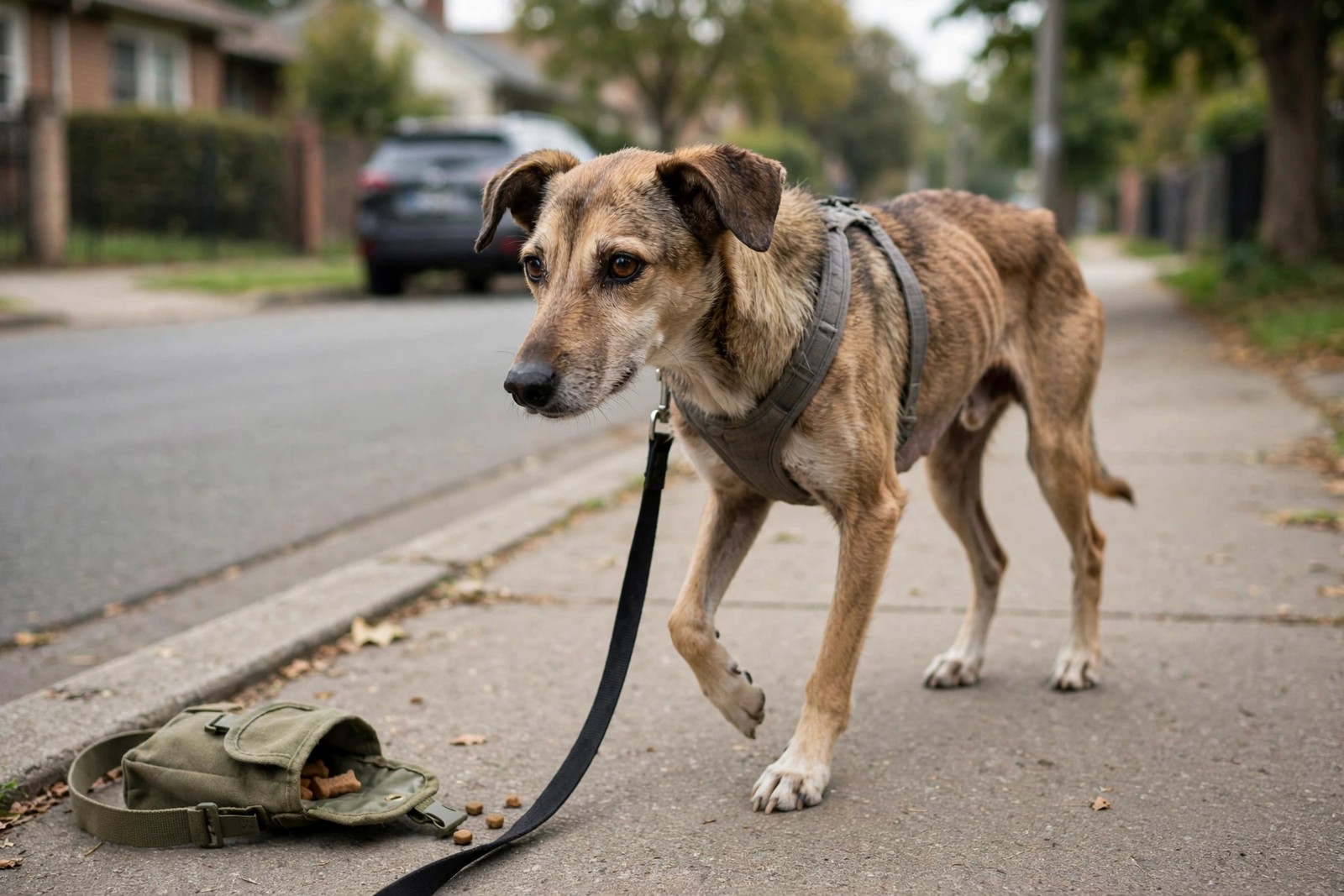
Start with a vet visit before you change the food. A rescue dog who arrives thin may simply have missed meals, and a vet may also need to investigate other possibilities such as intestinal parasites, sore teeth that make chewing painful, or an underlying illness. That first check gives you a starting weight, a body condition score, and a target range to work toward. It also protects the dog from the well-meant mistake of offering huge meals to a stomach that has adapted to very little.
Feed Little and Often at First
A shrunken stomach and a gut that has handled scarce food cope poorly with a sudden feast. Rich, oversized meals often trigger loose stools or vomiting, and each setback costs condition you are trying to build. Small meals spread across the day work better. Many owners begin with three or four modest meals at set times, and each portion holds a complete food that covers the full nutrient profile rather than a mix of scraps and extras.
Increase portions in small steps. As a worked example to agree with your vet, a plan might hold the starting ration steady for several days, then add roughly a tenth more food every few days while stools stay firm and the dog stays comfortable. Your vet may suggest a different pace for a severely thin dog, and that tailored pace replaces any general example. If stools soften, hold the current amount until the gut settles before you add more.
Track Condition With Your Hands and the Scale
Weigh the dog weekly on the same scale, at the same time of day, and write the figure down. A safe trend looks gradual, with steady small gains across weeks rather than a dramatic jump across days. Pair the number with a hands-on check. Run flat palms over the ribcage and feel for ribs that sit under a light covering rather than sharp, exposed bone. Look for hip bones and spine that feel less prominent over time, a coat that gains shine, and energy that rises for walks and play.
Photographs help too. Take one side view and one view from above each week in the same light. Thin dogs can look unchanged day to day, and a dated row of photos reveals the waist slowly filling and the topline smoothing in a way memory misses.
Keep the Wider Routine Protective
Fresh water should stay available at all times, and the food should stay the same while condition rebuilds. Constant switching between foods muddies the picture, because you cannot tell whether a loose stool came from a portion increase or from a new recipe. Feed the rescue dog separately from other household dogs during this phase. A dog who expects food to vanish often eats tensely beside competitors, and separate feeding lets you measure exactly what this dog consumed.
Watch for warning signs and call the vet promptly if they appear. Refusal to eat, repeated vomiting, watery diarrhoea, marked lethargy, or weight that keeps falling despite careful feeding all deserve professional attention rather than a bigger bowl. A dog who gains for a while and then stalls also deserves a recheck, because the stall can signal that the original cause needs further investigation.
Rescue dogs also rebuild confidence alongside condition. Predictable meal times, a quiet feeding spot, and calm handling around the bowl teach the dog that food now arrives reliably. That sense of security supports appetite and digestion as surely as the food itself.
When several people share the work, consistency protects the plan, and KinsLe Care Teams helps by holding each feeding duty with a named owner and a completion time, so nobody doubles a meal or skips one by accident.