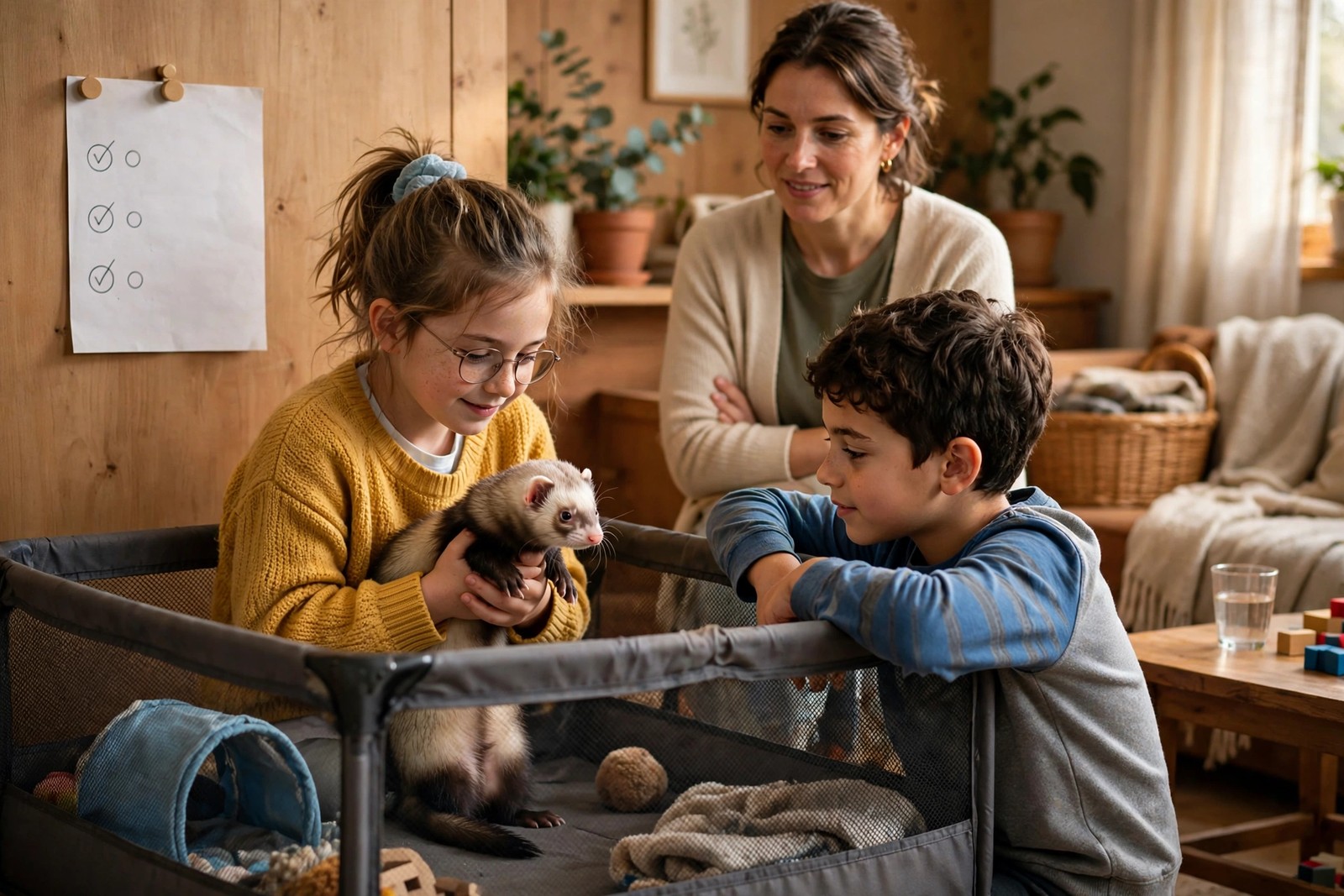
One ferret and several children is a recipe for a daily negotiation that the loudest child usually wins. The fix is not fairness speeches but structure: turns everyone can see, handling rules everyone follows, and shared jobs that rotate with the play, so the ferret's day is governed by a system the children helped build rather than by whoever grabs first.
Turns Written Where Everyone Can See Them
Write the playtime turns down and put the list where the whole family passes it, naming whose turn comes next and how a turn runs, in the descriptive terms children actually understand, such as one full play session in the play area rather than a stopwatch battle. A visible order ends the standing argument, because the next child can see a turn coming instead of fearing it will be forgotten. When a child misses a turn to homework, a club, or a friend's house, the order simply resumes; turns are a rhythm, not a debt ledger, and keeping them low-stakes keeps them kind.
Handling Rules
Fair turns only work if every child handles the ferret the same safe way. The rules are simple enough to say in one breath: two hands, support the whole body, never grab from above, and never pull a ferret out by a leg, the tail, or a scruff in play. A ferret is picked up awake and aware, scooped rather than snatched, and put down low and gently. Just as firmly, a sleeping ferret is never woken for a turn. Ferrets sleep deeply, in a stillness that can look alarming to a new owner, and that deep sleep is protected rest. A ferret startled awake may nip, which is a fair response to being grabbed out of a dead sleep and a lesson the household teaches once, kindly, rather than learning from a bitten finger.
An Adult Is the Standing Rule
Supervision is not a phase the family graduates from quickly. An adult supervises younger children during playtime as the standing rule, present in the room, watching hands and energy levels, and empowered to end a session that gets too wild. Older children can earn more independence by demonstrating the handling rules consistently, but the ferret's tolerance is the measure, not a birthday.
The Ferret's Own Vote
Every turn carries an exit clause, and the ferret controls it. A ferret that hides, leaves the play, or takes itself back to bed has said no, and that refusal ends the turn kindly, without coaxing, retrieving, or trading the missed minutes to the next child as a bonus. Teaching children to accept an animal's no is half the value of sharing a pet in the first place. Watch for the shape of refusals across a week, too: a ferret who starts declining evening play it once loved may be tired, unwell, or simply at a different rhythm, and a pattern of refusals deserves the same attention as any other behavior change.
Jobs Rotate With the Turns
Play is the prize, but care is the sharing that matters most. The ferret's shared jobs, including scooping the litter corner, refreshing water, and tidying the play area afterward, rotate on the same schedule as the turns, so the child whose playtime it is also holds that day's duty. That pairing teaches the household's real lesson, that the ferret is a family member with needs and not a toy with a queue. Keep the job list as visible as the turn list, and let children initial completed jobs so the rotation runs on evidence rather than memory and counterclaims.
With KinsLe Family Sharing, parents can share its profile with the family members they choose.
In KinsLe Family Sharing, a relative you pick gains access to that profile, alongside the children taking those rotating turns.