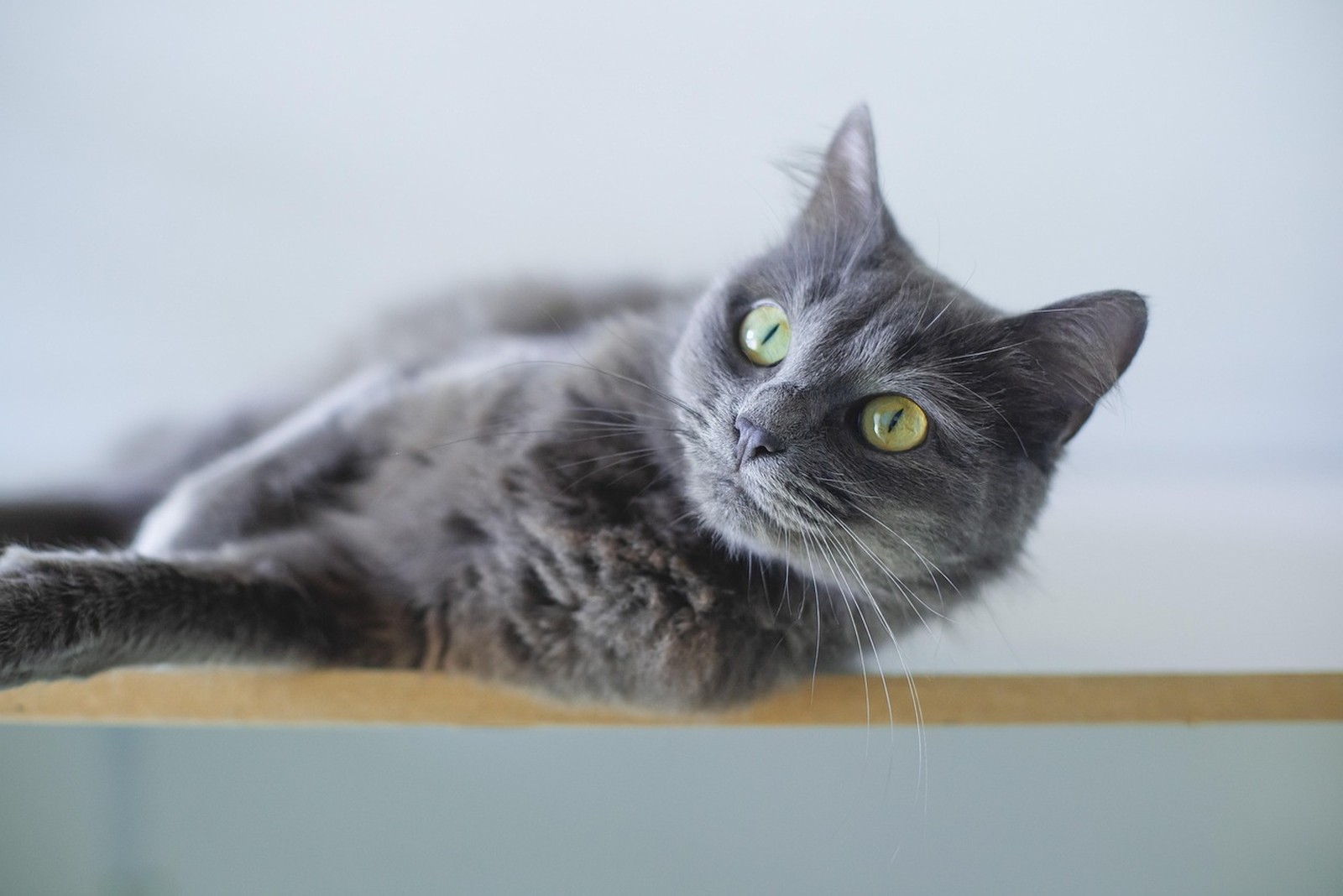
A young cat is a contortionist who washes her whole body daily. An older cat with stiff joints, extra weight, or sore teeth gradually loses the twist that grooming requires, and the coat tells the story first: dull, flaky fur along the lower back, tangles over the hips, a greasy chin, and hindquarters that are no longer kept clean. Stepping into those gaps kindly is one of the most practical comforts you can offer a senior cat.
Know Exactly Which Spots to Take Over
Start where her own tongue no longer reaches. The lower back and tail base are usually first, because reaching them needs a full spinal curl; you will often find dandruff-like flakes and loose, clumping fur there. Next come the hips and outer hind legs, the belly if she allows it, and the back of the rear legs, where litter and soiling can cling unnoticed. Under the chin is a different problem: chin glands and food residue build up, the area can become greasy or spotty, and she cannot wash it effectively because she cannot lick her own chin at all.
Work through these areas in a fixed order each time so nothing is skipped, and learn what normal looks and feels like for her — that baseline is how you will notice a new lump, a sore patch, or a mat forming next month.
Tools and Technique That Suit an Older Cat
Choose softness over efficiency. A soft-bristled brush or rubber grooming mitt suits tender senior skin far better than a firm slicker, and short strokes in the direction of growth over the back and hips will lift loose fur and flakes without dragging on tender joints. Support her on a towel on your lap, a low table, or her favourite cushion rather than lifting her somewhere new, and keep the room warm, because older cats chill quickly and will not relax while cold.
For the chin and any sticky areas, use a cloth dampened with warm water, hold it gently against the spot for a few seconds to soften residue, then wipe slowly. Check the rear end after litter-tray visits if she is struggling there, and clean soiling promptly and gently, because skin underneath becomes sore quickly. For mats, hold the base against the skin so it cannot pull, and tease hairs out a few at a time with your fingers or the end teeth of a comb. Never yank a mat out, and never cut one out with scissors close to loose senior skin; a tight mat that will not tease apart is a job for a groomer or veterinary nurse who can clip it safely.
Watch the Skin, Not Just the Coat
These sessions are also your early-warning system. Look and feel for redness, scabs, sores under mats, bald patches from over-grooming the areas she can still reach, fleas or flea dirt, and any new lump. A sudden drop in grooming, a strong smell, sores that do not heal, weight loss, or a coat change alongside increased thirst or appetite changes are all reasons to book a veterinary check rather than simply brush more, because in a senior cat the coat often reflects pain or illness elsewhere. Mention specifically that she has stopped reaching her back; that detail helps the vet.
Little and often wins: two or three short sessions a week, stopped before she tires, keep her comfortable without turning care into an ordeal. In KinsLe, Care Teams can note which areas were brushed, whether the chin needed cleaning, and any mat or sore found, with the date attached, turning these small grooming sessions into a clear comfort record for her next senior check.