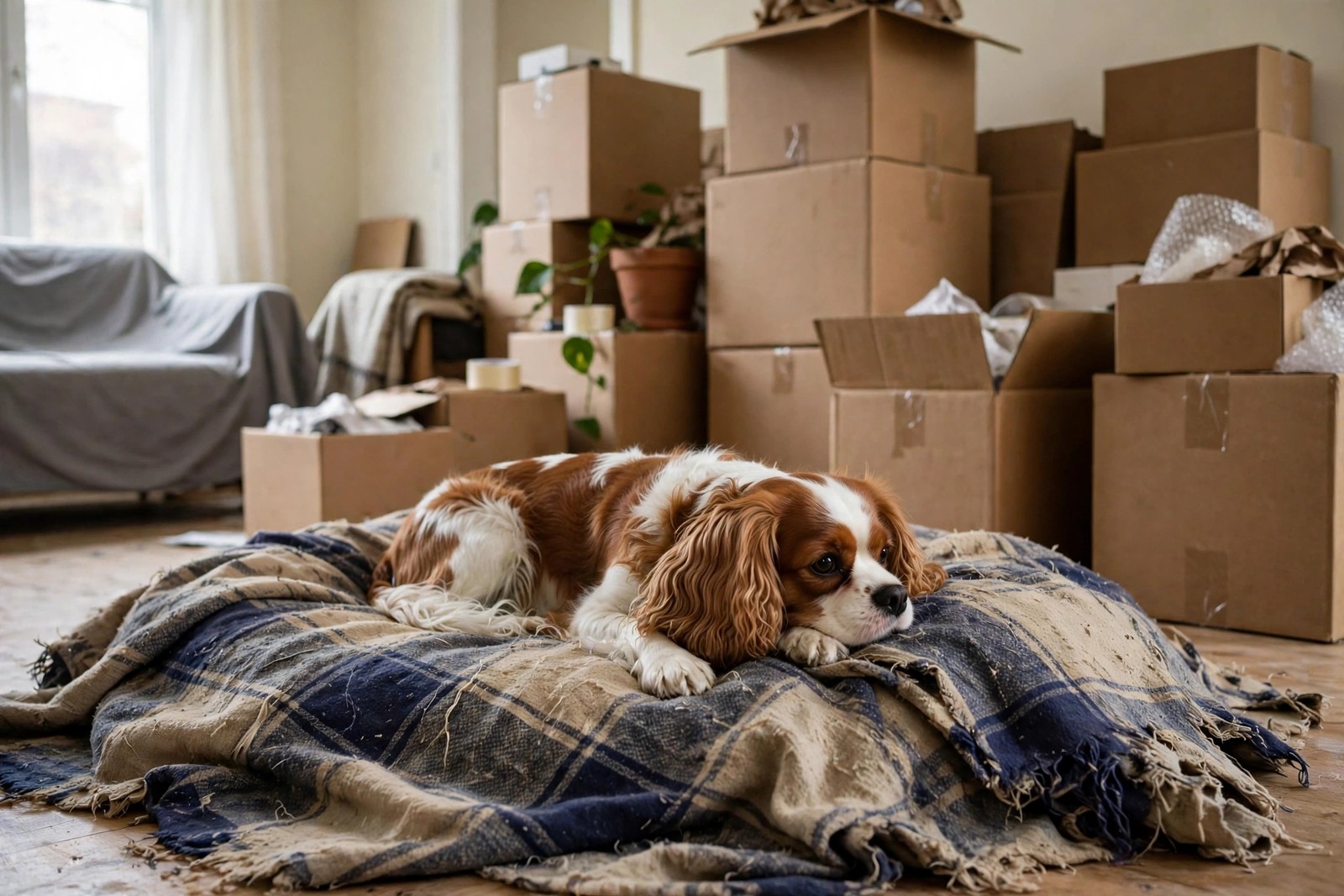
A dog does not understand a house move; they understand that every smell, sound, and resting place they trusted has vanished at once. The fix is not excitement about the new place, it is familiarity delivered in a controlled order: one safe room first, the old routine kept to the clock, and new spaces opened gradually rather than in one overwhelming tour on moving day.
Before Moving Day
Pack your dog's things last and unpack them first. Keep their bed, blanket, and favourite toys unwashed in the weeks before the move, because that worn-in smell is the strongest signal of home you can carry across. Update the address on the microchip record and collar tag before you leave the old house, not after, and take a clear recent photo in case your dog slips out in an unfamiliar street where they have no scent map back. If possible, walk the new neighbourhood with your dog a few times beforehand, letting them sniff pavements, gates, and the route to the nearest green space, so arrival day already contains familiar smells.
On moving day itself, keep your dog out of the chaos. A trusted friend's quiet house, or one closed, already-emptied room with water and a chew, is far kinder than weaving between movers, open doors, and stacked boxes.
The First 48 Hours
Set up the safe room before your dog enters the new house: bed and blanket in a corner, water bowl where it will permanently live if possible, toys, and something that smells of you, such as a worn jumper. Bring your dog in on the lead, let them sniff that one room thoroughly, feed the next meal there at the normal time, and keep the rest of the house closed off.
Open one additional room at a time over the following days, always with you present at first. Keep feeding times, walk times, play, and bedtime as close to the old schedule as the move allows; a dog who can predict meals and walks relaxes far faster than one whose whole day has shifted. Expect clinginess, a reduced appetite, or an accident from a reliably housetrained dog in the first few days. Clean accidents without scolding, take toilet trips out more often than usual, and treat it as disorientation rather than defiance.
The Garden and the World Outside
Supervise every garden visit on a lead at first, even in a fenced garden. Walk the boundary together, check fence bottoms, gate latches, and gaps behind sheds yourself, and remember that a stressed dog who would never dig at home may test a strange fence. Let your dog toilet, sniff, and settle in the garden several times before the first off-lead session, and keep early walks on familiar, short routes from the new door rather than exploring the whole area at once.
Most dogs show loose, exploratory confidence within one to two weeks; older dogs, rescue dogs, and anxious dogs may need a month or more, and that slower pace is normal rather than a failure. If appetite loss, pacing, or vocalising is still worsening after two weeks, a vet check rules out pain or illness adding to the stress.
Keeping the whole household to one settling plan matters more than any single tip here, and KinsLe Family Sharing puts the new address, walk routes, feeding times, and safe-room notes in one shared profile that every family member follows instead of improvising their own version.