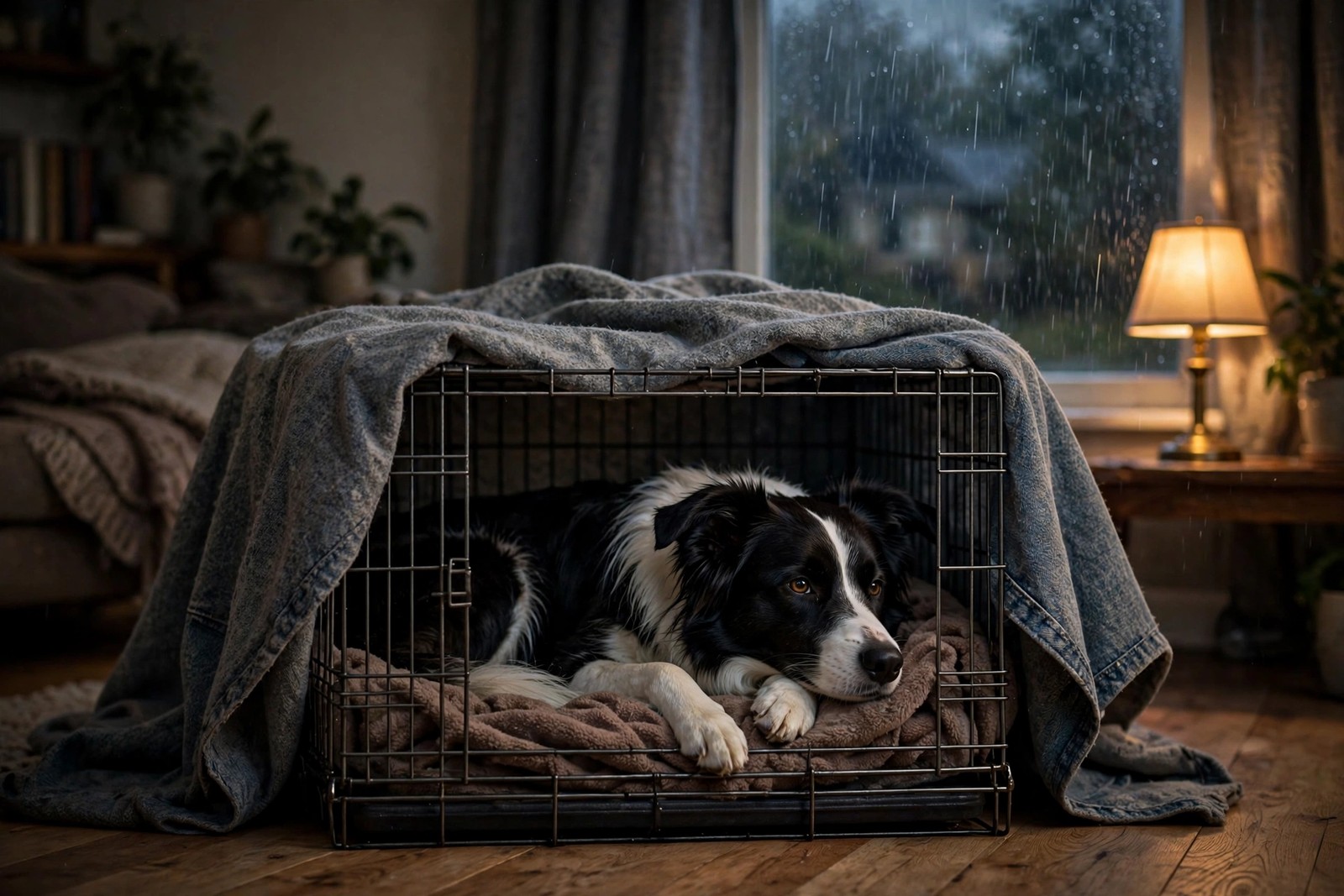
A storm-phobic dog is not being dramatic; thunder arrives with pressure changes, static, lightning flashes, and low rumbles your dog feels before you hear anything. You cannot stop the weather, but you can control three things that decide how bad a storm feels: where your dog can hide, how the humans behave, and how much of the noise and flash reaches them.
Build the Den Before the Sky Darkens
Choose the most sound-insulated spot your dog already gravitates toward: an interior bathroom, a space under the stairs, or a crate in the corner furthest from windows. Make it den-like in advance, not in a panic as the first rumble lands. Drape blankets over a crate to muffle sound, put familiar bedding inside, and leave the door open so entering and leaving stays your dog's choice. A dog who is shut in often panics harder; a dog who chooses the den settles faster.
Close curtains and blinds to cut lightning flashes, and switch on steady background sound such as a television, radio, or fan to blunt the contrast between quiet and each thunder crack. Some dogs settle noticeably in a snug-fitting body wrap; try it first on a calm evening so the wrap itself is familiar and linked with relaxation, not only ever produced when a storm is already frightening them.
During the Storm
Stay in the house if you possibly can, act unremarkably, and let your dog position themselves, including against your legs or behind your chair. Calm stroking and quiet company are fine and do not reward fear; fear is an emotion, not a behaviour you can reinforce into growing. What does add stress is frantic fussing, repeated anxious checking, or scolding a dog for pacing, panting, drooling, or scratching at a door.
Offer a long-lasting chew or a stuffed food toy early, before arousal peaks, since a dog already at full panic will usually refuse food entirely. Never drag a dog out of a hiding place to reassure them, and keep external doors firmly shut: a bolting, storm-blind dog is a genuine escape risk. If your dog wants the bathroom floor or the gap behind the sofa instead of the den you built, let them have it and improve that spot next time.
Between Storms and When to Get Help
Real change happens on dry days. Play recorded storm sounds at a volume so low your dog notices but stays relaxed, pair them with high-value treats and normal activities, and raise the volume in tiny steps over weeks, never days. Stop and drop back a level if you see lip-licking, yawning, ears pinned back, or restlessness.
Talk to your vet if your dog injures themselves trying to escape, panics for hours after storms end, or is getting worse season by season. That level of phobia deserves a proper behaviour plan and, where your vet judges it appropriate, medical support discussed with them directly rather than improvised at home.
A storm plan only works when every person in the house follows it the same way at 2 a.m., and KinsLe Family Sharing keeps your dog's den location, wrap routine, and calming steps in the shared profile so a partner, teenager, or house-sitter does exactly what you would do.