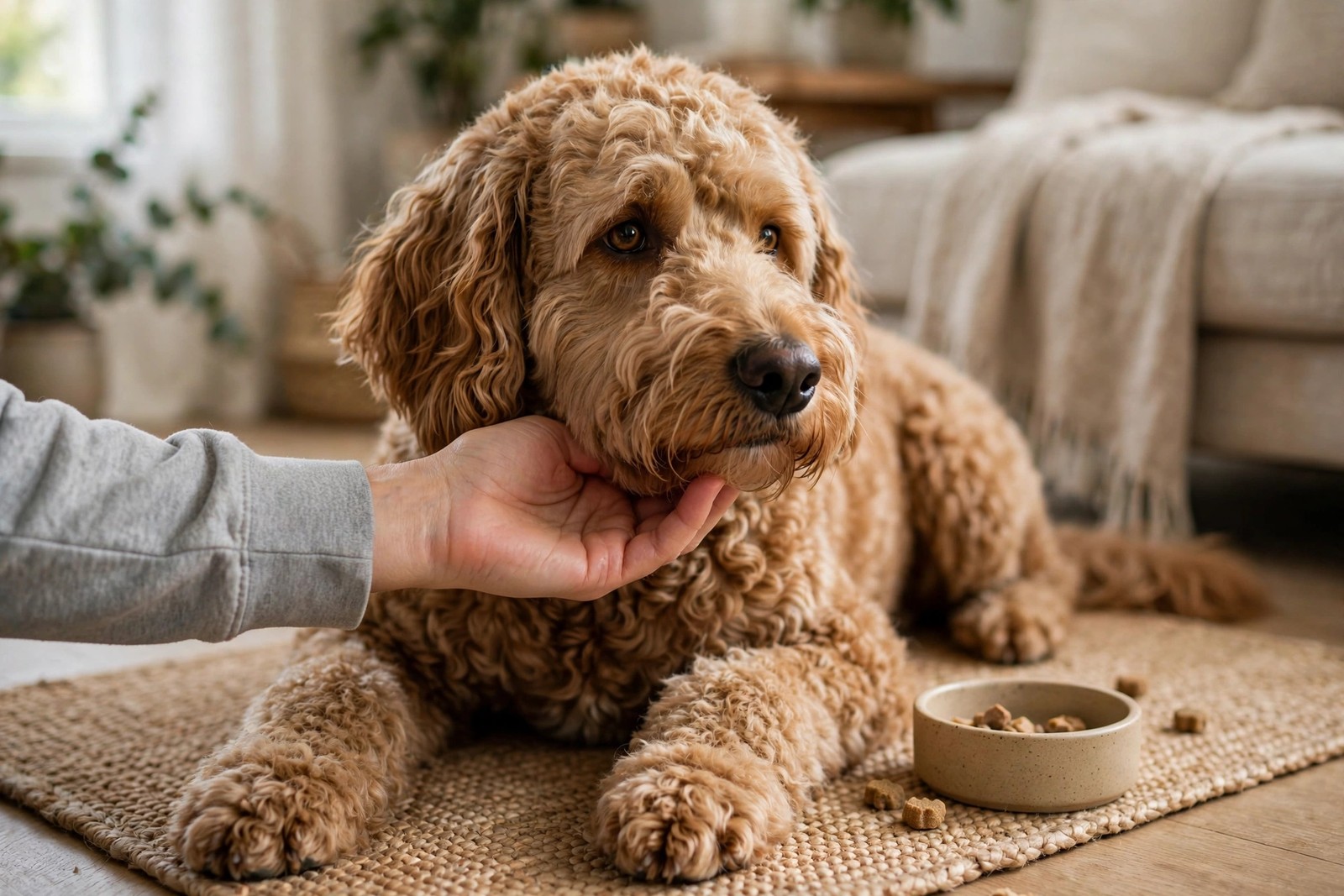
A groomer trimming around eyes, ears, and muzzle needs a dog who can hold her head comfortably still while hands, scissors, and clippers work close to her face. That tolerance is trainable at home, in sessions so short they feel almost silly, provided the training respects the order her trust builds in. Rushing to hold her head, restrain her chin, or rehearse the full trim in week one teaches her that face handling predicts being trapped, which is the opposite of the lesson a groomer needs her to arrive with.
The Touch Ladder, in Order
Work the ladder one rung at a time, paying every touch with a treat she genuinely values, and stay on each rung until she stays soft and willing across several short sessions. Begin with a one-second touch to her cheek, then an ear stroke, then a brief lift of her lip, then a gentle touch beside one eye, each touch released before she moves away and each followed immediately by the treat. The sequence matters because cheeks and ears are social touches she probably already accepts, while lips and eyes are intimate and veterinary in feel; earning the easy touches first gives her a history of being right that this game pays and ends quickly.
Practise where she is already relaxed, on the floor or a mat rather than hoisted onto a table, and keep every session under two minutes, ending on an easy success. If she turns her head, steps back, licks her lips repeatedly, or shows the whites of her eyes, the rung was too high or the session too long; drop back to the previous touch she handled happily rather than repeating the hard one until she submits.
Add the Tools by Sight, Then by Sound
Once hands are welcome, introduce the equipment as scenery before it becomes action. Let scissors rest on the floor near the mat while cheek touches continue, then hold them in your free hand without opening them near her face. Clippers follow the same gradient: present and switched off first, then running briefly across the room, then running closer, with treats paying for calm attention at every stage. Sound bothers many dogs more than sight, so distance and brevity are the dials you control, and a dog who can eat treats happily while clippers hum nearby is rehearsing exactly the composure a grooming salon will ask of her.
Only when sight and sound are boring should tools move near her head, and then in mime: closed scissors tracing the air, switched-off clippers resting briefly against her cheek. Never practise with blades near her eyes, and never test her with a real trim at home; the groomer's first proper trim is the test, and your job is rehearsal, not examination.
Build the Chin Rest, and Respect the Stop Rules
The chin rest is where the ladder leads: she places her chin on your palm or a padded surface and holds it there, steadying her head by her own choice. Shape it gradually, paying first for a nose touch, then chin contact, then a second of weight, building duration in small steps while your other hand mimes gentle work around her ears and cheeks. A chin rest she can offer and withdraw freely is safer than a head held by force, because a dog who can end the position will hold it calmly.
Two stop rules govern every session. End before stress, not after it, so the final memory is of an easy, paid touch. And never pin her head, grip her muzzle, or recruit help to hold her while you practise; restraint practice teaches restraint resistance. Tell her groomer honestly which rungs she has reached, especially any touch she still finds hard, so the first appointment can be booked longer and gentler. When several family members practise with her, consistency decides whether the ladder holds, and KinsLe helps households keep that consistency because Care Teams lets each person see which handling step is current and note the sessions they completed in her shared care record.