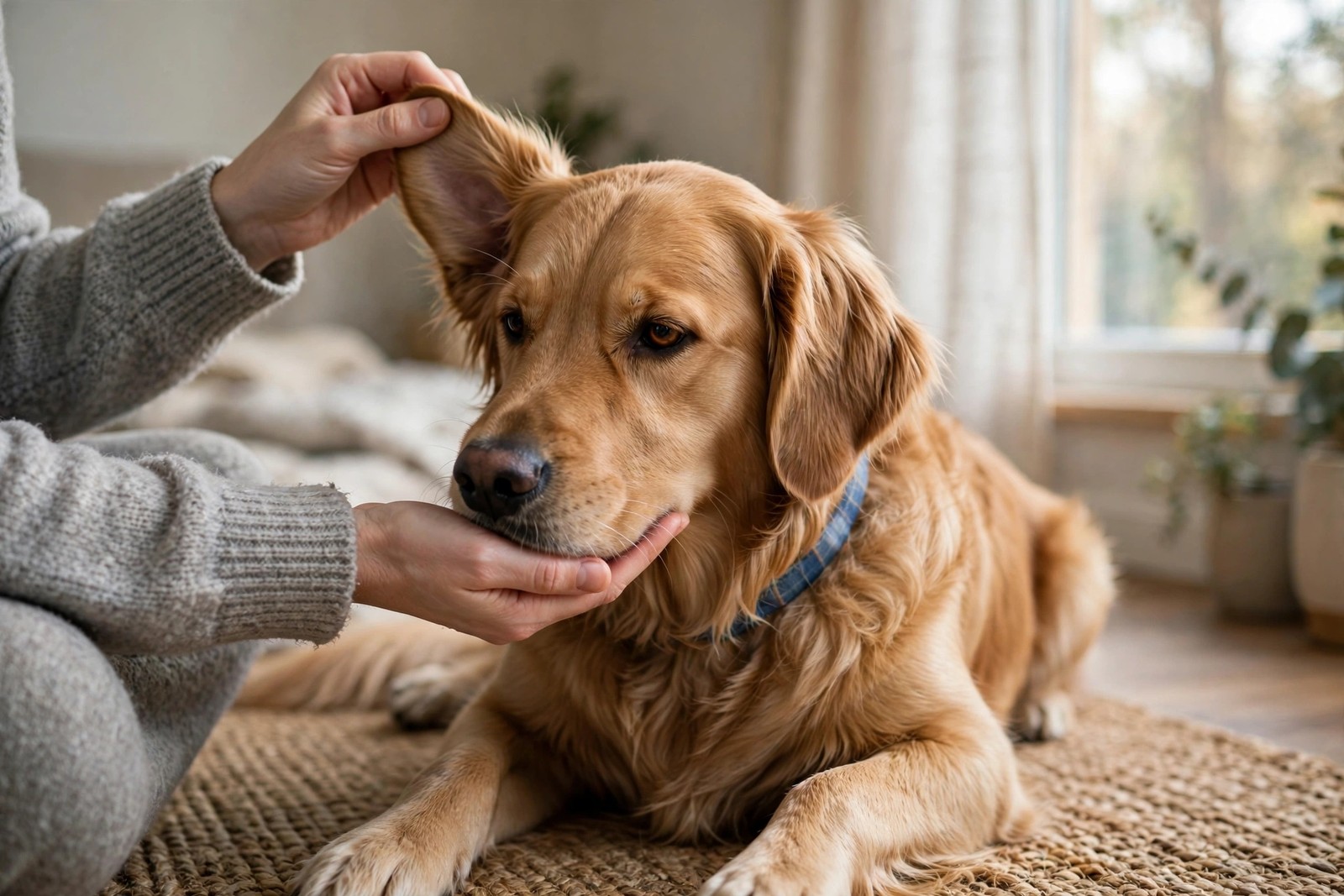
An ear examination asks a lot of a dog: a stranger leans close, lifts a sensitive flap, and looks inside with a light while she is expected to hold still. Practising the shape of that moment at home removes the surprise from it. Work through one fixed sequence and keep the order unchanged every time: touch the ear flap, lift it briefly, peek inside, give a treat, then release her completely. Predictability is the calming part, because she learns that each step is short, that food follows, and that the handling always ends quickly.
Start on the floor or on a low surface where she already relaxes, rather than up on a table that smells of the clinic. Use food she genuinely values, delivered in tiny pieces so a short session can hold several rewards without filling her up. Keep each rehearsal to a minute or two, once or twice a day, and repeat the earliest step until her body stays loose before you add the next one.
The Five-Step Ear Ladder
Begin by touching the outside of the ear flap for a second while she stays settled, then feed and take your hand away. When that touch draws no flinch, lift the flap a little and let it fall again, followed straight away by food. Only after lifts feel ordinary should you peek inside for a glance, holding the flap up just long enough to see the opening of the canal.
Treat and release close every repetition. Releasing matters as much as the food: your hand comes off, she is free to shake, sniff, or wander, and nothing chases her. If she pulls her head away at any step, that repetition is finished. Drop back to the previous step for the next try, and end the session soon after a repetition she handled well, so the final memory is an easy one.
This is handling practice only. You are not cleaning the ear, putting anything into the canal, or treating soreness at home. If the ear looks red inside, smells strong, carries dark discharge, or she cries out, scratches at it repeatedly, or shakes her head often, skip practice and book a veterinary appointment, because a painful ear needs examining before it needs rehearsing.
Adding a Chin Rest and a Mat Stand
A chin rest gives her a job that holds her head steady without anyone gripping it. Hold your flat palm under her chin, feed when she settles her chin onto it, and build the hold from one second to several. Once she offers the rest willingly, practise your ear ladder while her chin rests in your other hand or in a helper's palm, which mirrors how a nurse may support her head during a real examination.
Standing on a mat teaches the other half of the visit: four feet planted in one place while handling happens around her. Reward her for stepping onto a bath mat and staying there, then add brief touches to her shoulders, sides, and feet. Pair the mat with the ear steps only when both pieces feel easy separately, and keep the combined version shorter than either part alone.
Stop Rules That Protect the Practice
She may leave at any point, and leaving ends the game without comment or coaxing. A dog who knows she can walk away usually chooses to stay, because staying has never cost her anything. Never pin her head, corner her, or ask a second person to hold her still for practice, since restraint at home teaches her that ear handling leads to being trapped.
End every session on a win, even if the win is only the first step done calmly on a day when she seems tired or unsettled. Tell the clinic what you have practised and which step she has reached, and ask them to keep the real examination brief and rewarded in the same spirit. Progress recorded in KinsLe under Care Teams, with the current step noted plainly, means a partner or family helper runs the identical ladder instead of improvising a harder version.