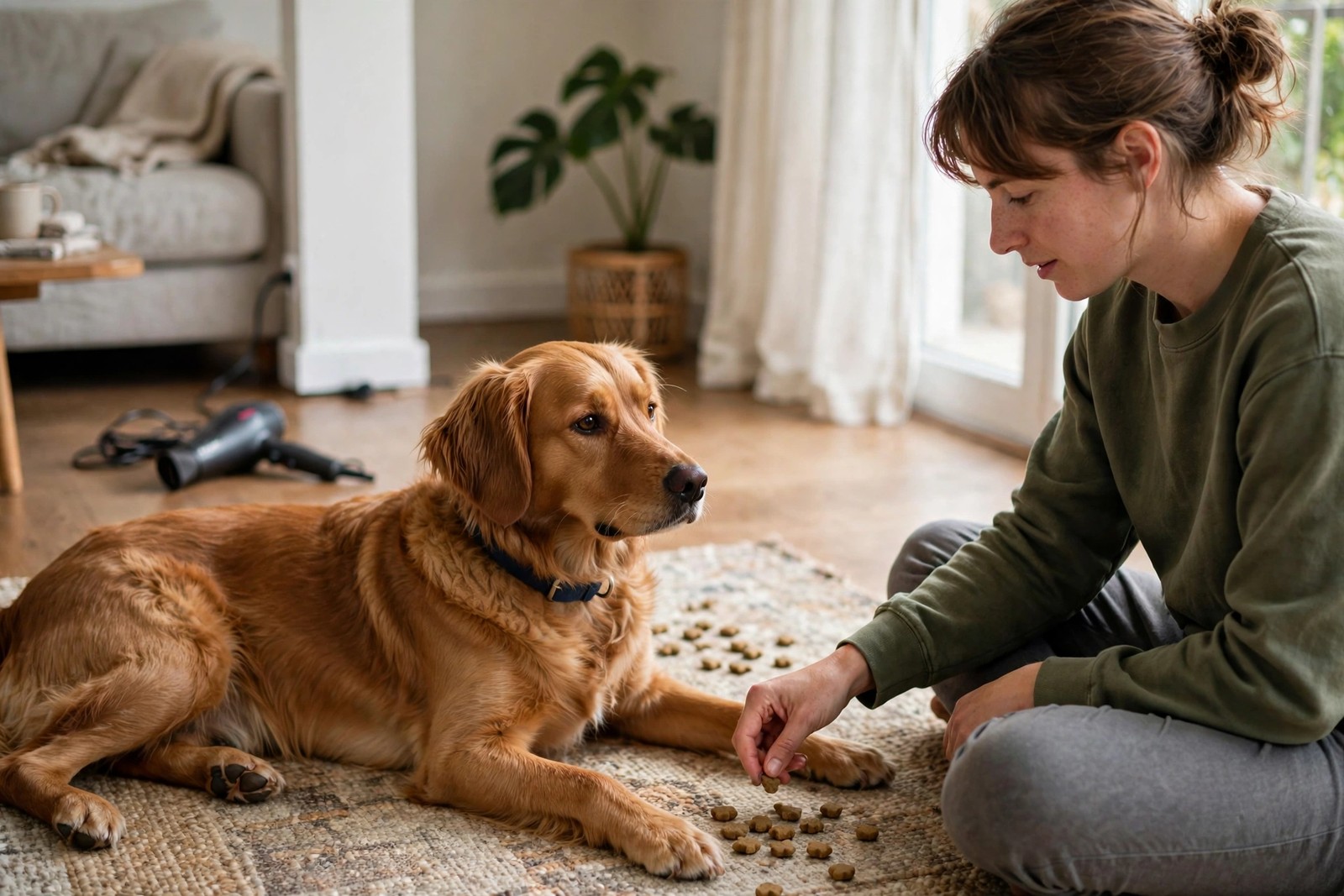
A high-velocity dryer combines three things many dogs find hard: a loud, rising whine, air that pushes against the coat and skin, and being expected to stay in one place while both happen. Because he is currently terrified, the work starts far away from the salon, with the mildest version of the challenge you can create. His fear will not be argued away in one visit, so the plan separates sound from airflow and lets him master each alone.
Tell his groomer what is happening straight away. While training continues at home, ask the salon to hand-dry him with towels and gentle air away from the high-velocity machine, even if that takes longer or costs a little more. A groomer who agrees to this is protecting your training; one who insists on blasting a panicking dog dry will reset weeks of careful work in minutes.
Stage One: Recordings at Low Volume With Treats
Find a recording of dryer noise and play it at low volume during a part of the day when he is already relaxed, such as while he chews something long-lasting or rests after a walk. Scatter treats or feed small pieces while the sound plays, then switch it off and let the feeding end with the sound, so the link between dryer noise and good things stays clear.
Raise the volume a fraction at a time across different days, never within a single session by much. His body tells you whether the level is right: soft eyes, a loose wag, and attention on you mean carry on, while pacing, panting with a tight mouth, hiding, or refusing food means the volume went up too soon. Drop back down and end soon after a stretch he handled well.
Stage Two: A Real Dryer, Far Away and Pointing at the Floor
Once recordings at a solid volume bore him, introduce a home dryer on its cool, low setting. Place it at floor level, far away across the room, aimed at the floor rather than at him, and switch it on for just a few seconds. He may look up, move closer, or move away; all three responses are acceptable, and staying in the room earns quiet rewards.
Build the seconds up gradually over many brief sessions, and only later angle the airflow loosely in his direction from a distance. Cool air matters, because heat adds a second discomfort that has nothing to do with the fear you are treating. Let him leave the room whenever he chooses, and never follow him with the dryer, lure him back toward it, or block his exit to finish a session.
Bridging Back to the Salon
When he can rest in a room with a home dryer running nearby, arrange a short salon visit built around success: a bath with hand-drying, plenty of breaks, and no high-velocity machine yet. After that, the groomer might introduce brief, distant bursts of the real dryer with food between them, stopping while he is still coping. Some dogs reach full tolerance; others settle at coping with short bursts, and that is a respectable outcome for an animal who started out terrified.
Keep sessions at home short enough that he finishes bright rather than drained, and space them out rather than drilling daily if he seems weary of the game. Note the recording volume he reached and how long the real dryer ran in KinsLe, because Care Teams notes like those stop a well-meaning helper from jumping him ahead three stages in one afternoon.