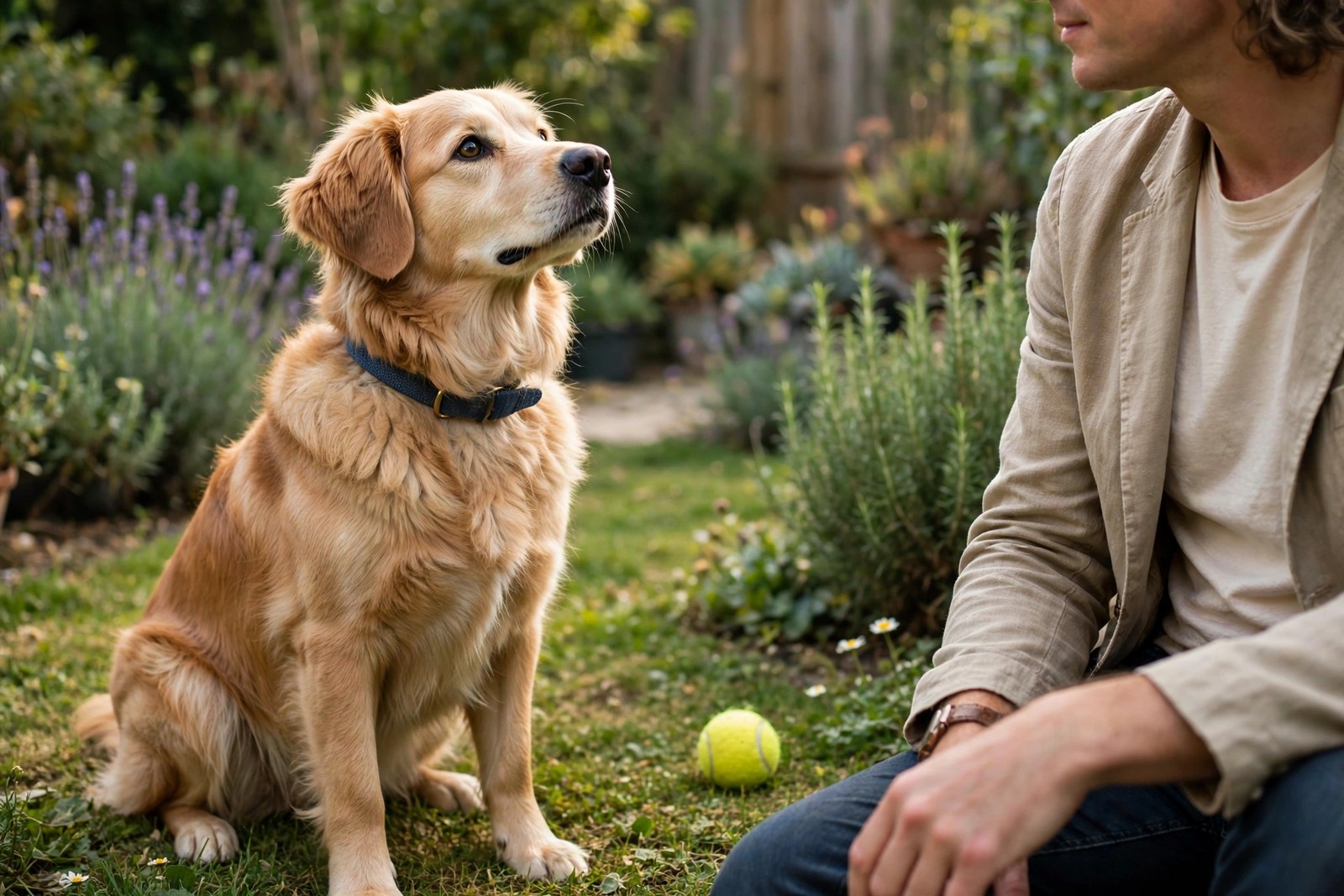
An air-snap looks alarming and reads, to many owners, like an attempted bite that missed. Read it more precisely: the dog's jaws close hard on nothing because arousal has flooded past the point where deliberate choices happen. The nervous system is simply over capacity, and the snap is what an overloaded dog does instead of the bite a truly intent dog would land. That reading matters, because it points to the real fix: lower the arousal, teach the dog a calmer way to ask for the thing excitement was chasing, and restructure play so the dog rarely reaches the snapping zone at all.
Teach a Calmer Way to Ask
Dogs repeat what works, so give the dog an asking behavior that works better. Choose one clear request, or a small set: a sit in front of you, sustained eye contact, or a nose touch pressed to your palm. Teach the chosen request away from play first, in calm moments around the house, and pay it well every time so the behavior becomes the dog's default opening move. Then move the lesson to the edge of excitement: before a game begins, wait for the sit or the touch, and let that calm request be the thing that starts the game. The dog learns a genuine exchange. Frenzied snapping makes nothing happen; a composed ask makes play happen.
End Before the Peak, Pause Instead of Punishing
Most air-snapping is scheduled by the game itself. Long, escalating rounds of wrestling, chasing, or tug push arousal upward until the dog tips over. Shorten the rounds deliberately and insert calm pauses before the peak: stop the game while the dog can still respond, ask for the sit or touch, let breathing slow and muscles soften, then resume if the dog settles. The dog who cannot settle after a pause is telling you the session is over, and ending there protects the lesson. Punishment has no useful place in this picture. Scolding or physically correcting a dog who is already past thinking adds threat to overload, teaches the dog that excitement predicts conflict with you, and can suppress the warning snap while leaving the arousal untouched, which removes the signal without removing the risk.
Track the Pattern Like It Matters
Keep a plain record of every snap for a few weeks: where it happened, what game or greeting preceded it, how long play had been running, who was present, and how the dog recovered. Patterns surface quickly on paper. Snaps may cluster around visitors arriving, around one particular playmate, around evening hours when the dog is tired, or around games that involve grabbing at toys near hands. Each pattern has its own adjustment: greetings get calmer and more structured, that playmate gets shorter and more supervised sessions, evening play moves earlier and gentler, and grabby games are replaced with fetch, search games, or tug with strict pause rules. In the Care Teams plan, write down the signals everyone should treat as a stop point, assign Ana to end tug games at the first hard stare, assign Jordan to offer the sit-and-touch reset, and have whoever saw a snap log the time and place so the household responds from one shared picture. A dog living with several people needs every one of them reading the same signals the same way, because the person who keeps playing past the warning signs retrains the habit the others are undoing.
There is a clear line where home training stops being the right tool. If snaps begin landing on skin or clothing, if the behavior escalates in frequency or intensity despite calmer structure, or if snapping appears outside play in guarding or handling situations, a veterinarian or a qualified behavior professional is the next step, and the log you have kept becomes the most useful thing you can hand over. KinsLe's Care Teams keeps each person's observation notes and the agreed pause signals together, making the calmer pattern easier to repeat daily.