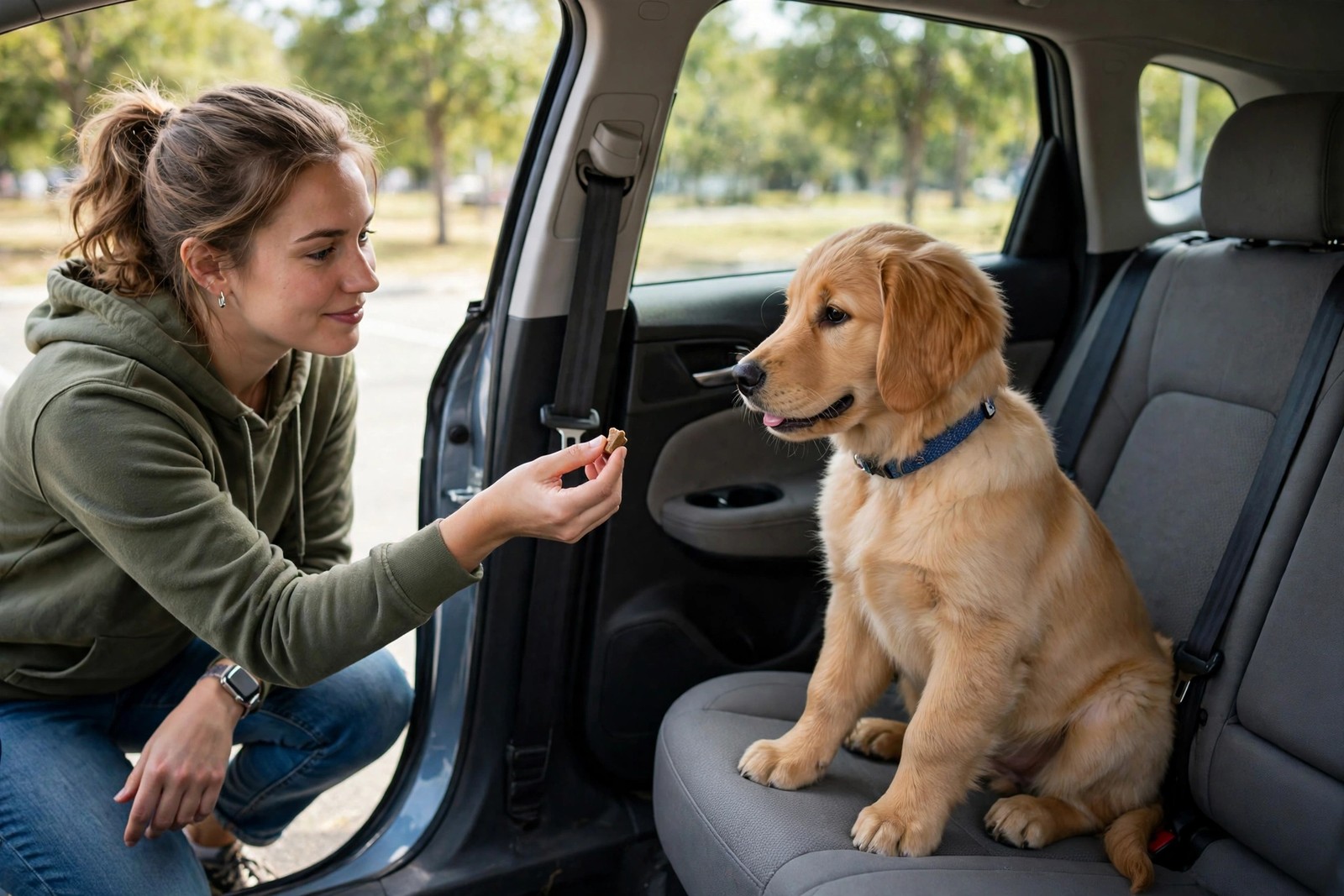
Car sickness is especially common in puppies and young dogs, whose balance systems are still maturing, and many simply grow out of it if car trips do not become associated with feeling awful. Adult dogs are often sick for a different reason: they have learned that cars predict nausea, so anxiety arrives before the motion does. Either way, the fix is the same pattern: make trips much shorter than the point of sickness, repeat them until they are boring, and manage the stomach, temperature, and motion on every drive.
Recognise the Early Signs
Vomiting is the late sign. Before it come drooling, lip-licking, yawning, panting, whining, restlessness, and a hunched, miserable stillness. Learn your dog's particular sequence, because your practice plan depends on stopping before those signs appear, not after. A dog that is repeatedly taken past the point of sickness is being trained, very effectively, to dread the car.
Note how long your dog currently lasts before signs start. Five calm minutes is a workable starting point for training even if a real journey needs forty; you are building tolerance, not testing it.
The Desensitisation Ladder
Work through stages across days, repeating each until it produces no signs at all. Stage one is simply getting into the parked car, receiving a treat or a favourite toy, and getting out again. Stage two adds sitting in the car with the engine running, still going nowhere. Stage three is a drive to the end of the street and back. Later stages lengthen gradually: around the block, then five minutes, then ten, ideally ending somewhere pleasant such as a park or a friend's garden rather than only at the vet.
If signs appear at any stage, the previous session was too long. Drop back a stage for the next few sessions rather than pushing on. Keep your own manner flat and cheerful, avoid fussing over the dog in a worried tone, and never punish sickness, which the dog cannot control and which only adds fear to nausea.
Manage the Journey Itself
Feed the last meal several hours before travel so the stomach is mostly empty, while still offering water. Keep the car cool and ventilated: a window opened a little for fresh air helps many dogs, and an overheated car makes a borderline dog sick. Secure your dog so it can lie or sit steadily facing forward, since being thrown around in a footwell or sliding on a seat worsens motion sickness. A dog that can see out steadily often copes better than one buried under luggage.
On longer essential trips, plan breaks before sickness is due, not after: stop, let the dog walk and sniff on grass for a few minutes, offer a small drink, and continue. Avoid feeding treats mid-journey to a dog that is already looking queasy, however kind the intention feels.
When to Involve Your Vet
Talk to your vet if sickness persists despite a patient staged programme, if an adult dog suddenly becomes car-sick after previously travelling well, or if vomiting also happens outside the car, because those patterns can point to an underlying problem rather than simple motion sensitivity. Your vet can also discuss whether medication for travel is appropriate in your dog's case; that is a clinical decision for them, based on your dog's health, and not something to borrow from another dog's prescription or improvise on your own.
Keep a brief note of each practice drive, its length, and the first sign you saw, because progress in this training is measured in minutes gained, and KinsLe's Care Teams lets each driver record the completed stage with a timestamp, so the next person continues the ladder at exactly the right rung.