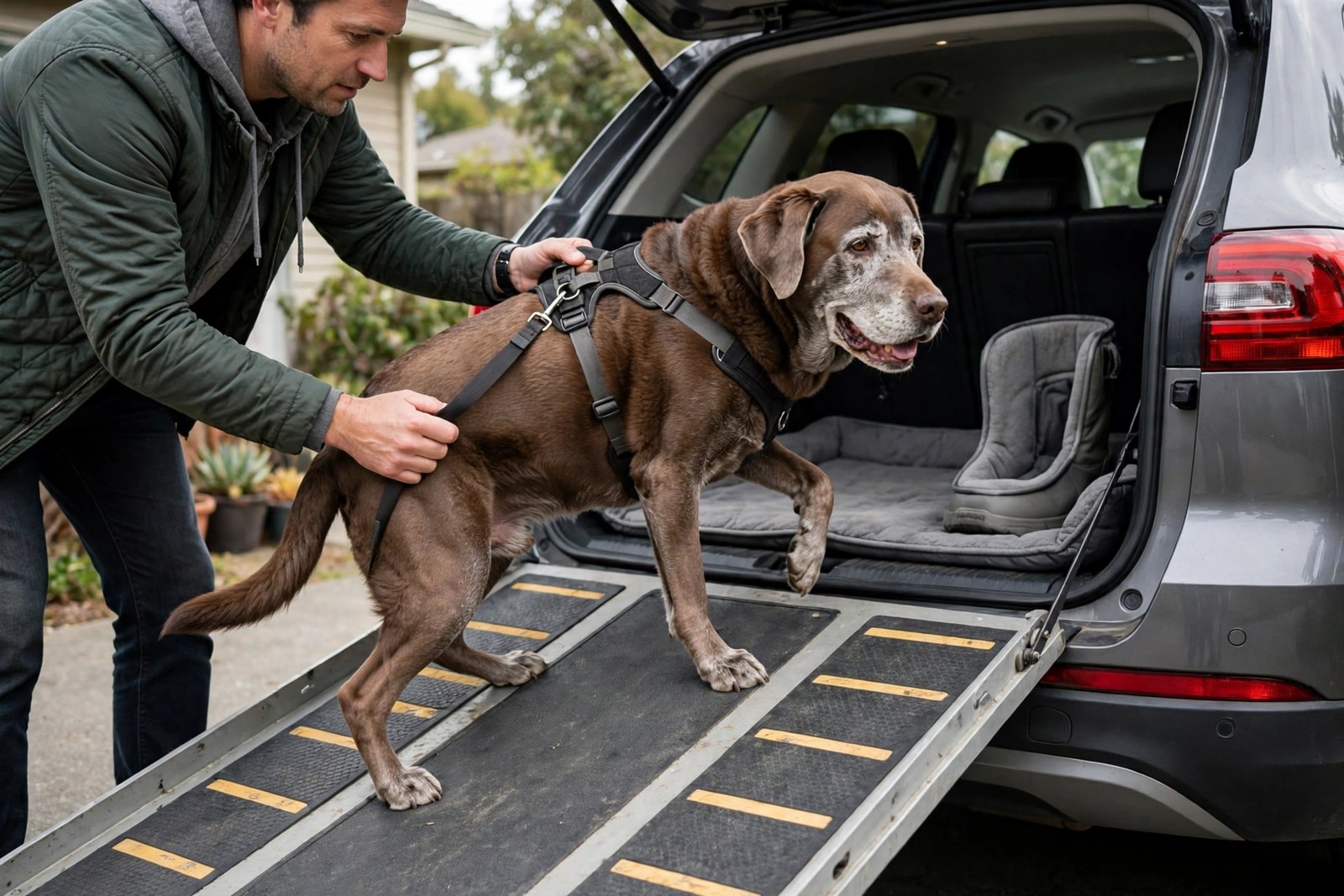
For a young dog the car is a leap. For an old dog with stiff hips, weak hind legs, sore shoulders, or fading eyesight, that same leap is the barrier between him and walks, visits, and vet care. Break the problem into three parts — a route up, support while he uses it, and grip once he is in — and most senior dogs can travel comfortably again.
Choose the Lowest Entry and the Right Aid
Survey your car honestly. A low boot lip on an estate or hatchback is usually far easier than a high back seat, and a front seat is rarely suitable for a large senior dog. For most dogs the best aid is a wide, sturdy ramp with a genuinely grippy surface; narrow, steep, or wobbly ramps frighten dogs who already doubt their legs. Length matters: a longer ramp gives a gentler slope, so measure rather than guessing. A solid folding step suits some confident dogs who can still manage one moderate height at a time, but a dog who struggles with stairs at home will usually struggle with steps too.
If your dog is small enough to lift safely, lift with one arm under the chest and one supporting the hindquarters, keeping his spine level, and protect your own back by getting close to the car first. For large dogs, use a support harness with handles at the shoulders and hips so two areas share the load and a helper can guide the rear end while you steady the front. Never haul a dog up by his collar, front legs, or scruff; that hurts, frightens, and can injure weak joints.
Train the Ramp Before You Need It
Do not debut the ramp on the morning of a vet appointment. Lay it flat on the ground at home and reward walking across it, then raise it slightly onto a low step, then to the car with the engine off. Lure with treats placed along the ramp rather than pulling on the lead, let him turn around and come down again, and stop while he is still confident. Several short practices over a few days build a dog who walks up calmly because the ramp predicts treats and nothing bad has ever happened on it.
Once the ramp works, make the destination pleasant. Practise getting in, settling, and getting out again with no journey at all, then a two-minute drive and a sniff somewhere he enjoys, so car entry does not only ever predict the vet.
Make the Inside Secure and Slippery-Free
Old dogs brace badly on moving, slick surfaces. Cover the boot or seat with a non-slip mat or a blanket over a rubber-backed liner, give him enough room to lie down fully rather than perch, and secure him with a suitable harness restraint where he travels, so braking does not slide him into a joint-twisting sprawl. On longer trips, stop every couple of hours for a supported walk, water, and a chance to toilet, and use the ramp at every stop rather than allowing one tired jump down, because descent is where many injuries happen.
If your dog cries out, trembles, pants heavily, refuses the ramp he previously accepted, or seems worse after journeys, tell your veterinarian — a change in travel tolerance in a senior dog is useful information about pain and mobility, and travel problems should never just be forced through. In KinsLe, a Pet Passport keeps his age, conditions, current medications, vet details, and mobility notes in one portable packet, so whoever drives him to an appointment can hand over the whole story in seconds.