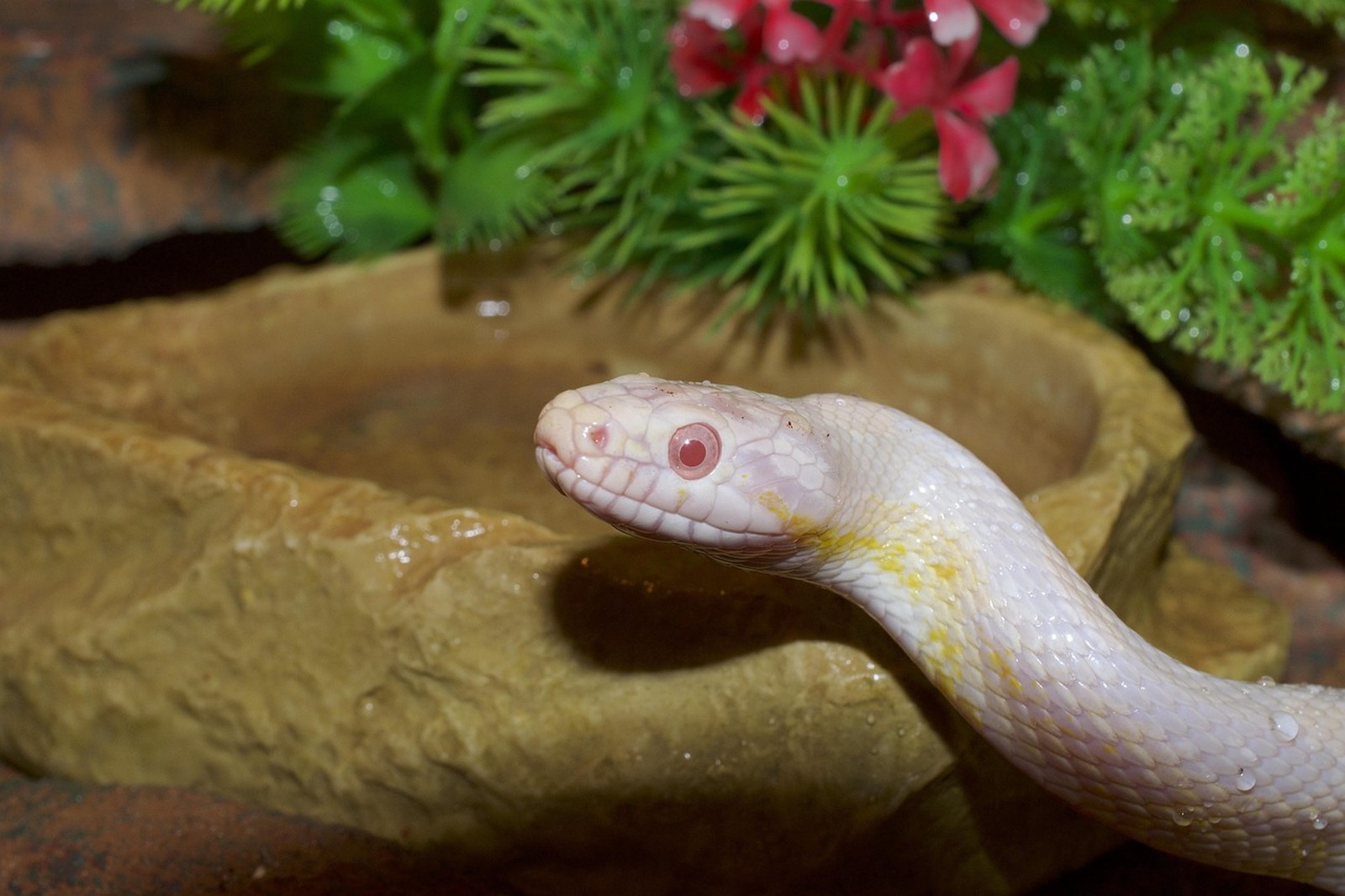
A normal shed comes off in one long piece, or in a few large pieces for bigger snakes, after the eyes clear again. A difficult shed looks different: the skin flakes away in patches, dull pieces cling to the sides and tail, or a milky layer stays over one or both eyes. The cause is usually low humidity, sometimes combined with dehydration, a rough-surface shortage, mites, or an old injury. Your job is to fix the moisture and give your snake the tools to do the work itself, because the snake's own rubbing and crawling removes skin far more safely than your fingers ever will.
Raise Humidity and Add a Humid Hide
As soon as you see the first signs of a shed, dull colour and opaque eyes, lift the enclosure humidity toward the upper end of your species' range and hold it there until the shed completes. Mist the substrate lightly, add a larger water bowl over the warm side, or cover part of a screen lid to slow evaporation, checking the reading with a hygrometer rather than guessing. Then add a humid hide: an enclosed hide on the warm side, lined with damp sphagnum moss or damp paper towel that feels moist, never dripping. Many snakes spend most of the shed cycle inside that hide, soaking in its microclimate, and emerge having shed cleanly inside it. Re-dampen the lining daily so the hide never dries out mid-cycle.
Soaks and Rough Surfaces
If pieces remain stuck after the main shed, offer a soak in shallow lukewarm water, deep enough to cover the stuck areas but shallow enough that your snake rests rather than swims. Fifteen to 20 minutes is enough; supervise throughout, keep the water lukewarm rather than warm, and let your snake leave once it becomes restless. Afterwards, let your snake crawl repeatedly through a damp, soft towel draped in your hands, or set the damp towel inside a ventilated tub and let it move through the folds itself. The friction does the loosening. Inside the enclosure, provide clean rough surfaces all year round, such as cork bark, a textured rock, or a rough branch, because snakes start a shed by rubbing the skin loose at the chin and then crawling out of it against those edges.
What Never to Do
Never pull, peel, or pick at stuck skin, however loose an edge looks. Skin that is not ready to release can tear the fresh layer beneath, leaving raw patches open to infection. Never use adhesive tape on retained skin, never use shedding sprays as a substitute for correct humidity, and never try to lift a retained eye cap with tweezers or a fingernail. Work on the environment, repeat the soak and damp-towel routine on the following day if a few pieces remain, and check especially the tail tip and any old scar tissue, where constriction from layered retained shed can cut off circulation over time.
When a Vet Needs to See the Shed
Retained caps over the eyes, shed that stays stuck through a second cycle, red or raw skin under stuck pieces, a tail tip that looks dark or pinched, or shedding problems that repeat every cycle despite correct humidity all warrant a reptile vet. Bring notes on humidity readings, temperatures, and what you tried, plus a photo of the retained areas, because that record points the vet toward environmental causes or an underlying health issue quickly. KinsLe's Care Teams helps you keep that support consistent in a shared household, with daily humidity checks and any soak sessions assigned to one keeper and marked complete with a timestamp, so nothing in the shed routine depends on memory.