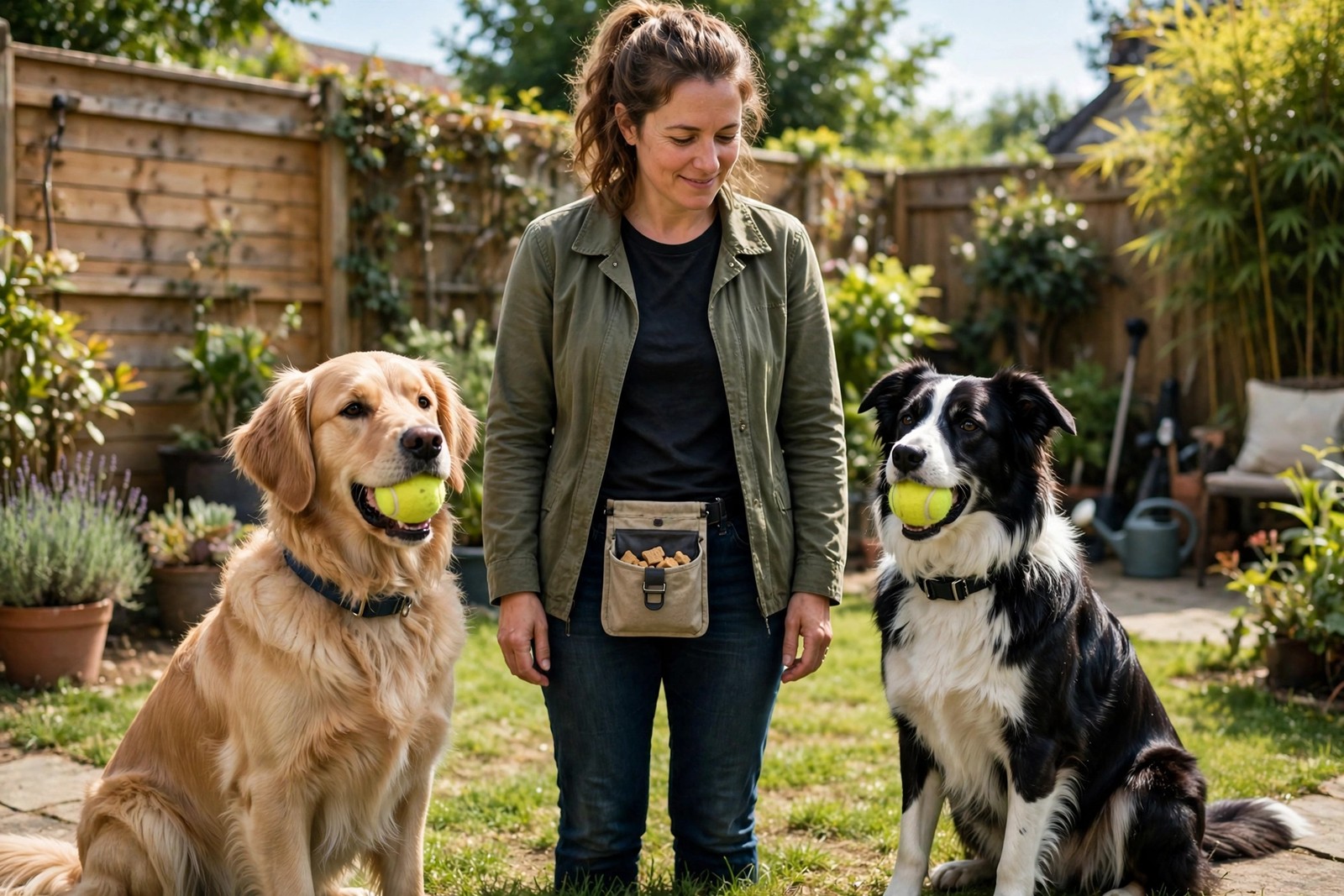
Competition over toys is rarely about stubbornness. A single exciting toy in a room with two dogs is a scarce resource, and many dogs — especially adolescents, recent rescues still learning that good things last, and dogs who grew up competing with littermates — defend scarce resources before they have learned yours will keep coming. The fix works on three fronts at once: lower the value of competing, teach each dog that the other's approach predicts good news, and structure play so arousal never boils over.
Start by Changing the Toy Box
Audit what actually causes friction. If one squeaky ball triggers guarding while rope toys are ignored, that ball is the problem item, not toys in general. Provide two or three identical copies of anything popular, so choosing a different one is always easier than challenging for one. Remove the single highest-value item completely for a few weeks and bring it out only for solo sessions behind a closed door or gate, one dog at a time, so it stops being a shared flashpoint. Scatter lower-value toys generously around play areas; abundance on the floor teaches both dogs that toys are background, not treasure.
Teach the Paid Swap to Each Dog Separately
A dog who trusts that surrendering a toy pays well stops needing to defend it. Train this one dog at a time, away from the other. Offer a medium-value toy, let the dog take it, then present a piece of chicken or cheese near the nose and say your swap cue as the dog drops the toy for the food. Immediately give the toy back. That last step matters: the dog learns that dropping an item is a loan, not a loss, and most trades end with the toy returning plus a snack.
Structure Joint Play So Nobody Has to Compete
When the dogs play together, run the game yourself rather than letting one toy roll between them. Throw two balls in opposite directions at the same moment, or throw for one dog while the other works a snuffle mat or lick mat beside you. Keep sessions short — a few minutes of fetch is enough — and finish with a calm scatter of treats in the grass or on the floor, which lowers arousal and ends the session on shared abundance instead of a final contested retrieve.
Watch body language, not just noise. Interrupt early and cheerfully if you see a dog go still over a toy, stand tall with a hard stare, cover an item with a paw or chin, or speed up as the other dog approaches. Call both dogs away, pay both, and remove that toy for the day. What you are rewarding is disengaging, and both dogs should earn for walking away, including the one who was only approaching.
Give chews and food-dispensing toys separately as a permanent rule, behind gates or in different rooms. Long-lasting chews raise the stakes far beyond a tennis ball, and even dogs who share play toys happily may guard something they expect to keep for twenty minutes.
When Competition Is More Than Play
Bring in a qualified behaviourist promptly if guarding spreads from toys to food bowls, beds, furniture, or people, if either dog has snapped, lunged, or made contact, or if the quieter dog has started avoiding rooms where toys appear. Book a vet check for a dog whose guarding is new or suddenly worse, because pain from teeth, ears, or joints lowers tolerance, and say plainly at the appointment that the behaviour changed. Do not test the dogs by staging confrontations, and never reach into a tense standoff to grab a toy; trade, lure, or separate first.
With duplicates on the floor, swaps that pay, and play you direct, most pairs settle within a few weeks, and KinsLe Care Teams helps the whole household run the same plan by assigning solo chew time, swap practice, and joint play sessions to named people, each marked complete with a timestamp.