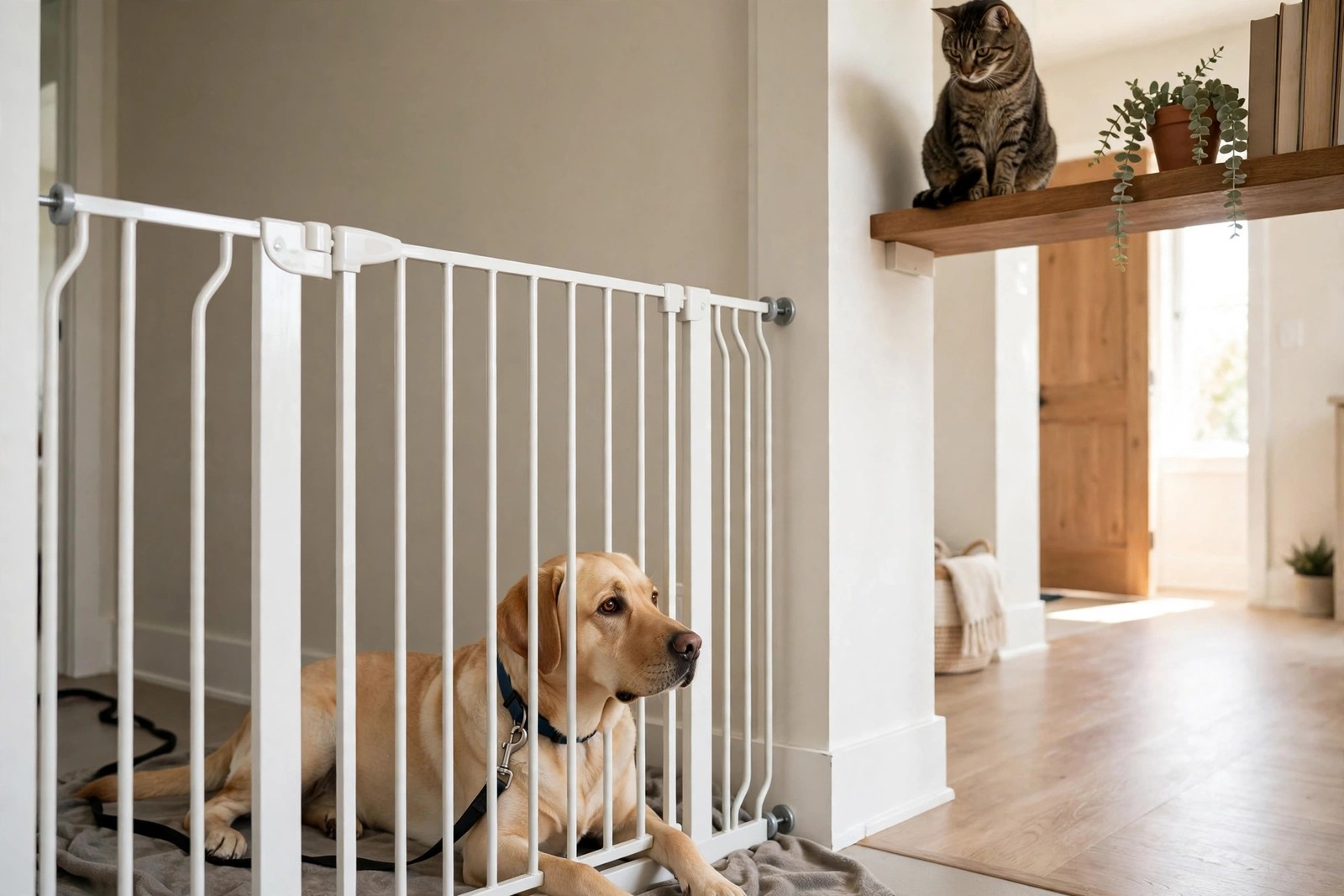
A first meeting between a dog and a cat sets a pattern that is hard to undo, so the introduction should be boring by design: scent before sight, sight before touch, and weeks of managed distance before any shared sofa time. The cat's sense of safety and the dog's ability to disengage, not friendliness in the first five minutes, are what predict success.
Stage One: Separation and Scent
Set the dog up in part of the home the cats can avoid completely, with doors or gates that actually close. For the first few days there is no visual contact at all. Swap bedding daily so each animal sleeps with the other's smell, and rub a cloth gently on the cat's cheeks and then on furniture at dog height, and the reverse, so the new scent becomes part of the furniture rather than a startling event.
Feed both animals on opposite sides of the closed door between their areas, bowls a little distance from the door at first, moving closer over days only while both eat relaxed. A cat who stops eating or a dog who fixates, whines, and scratches at the door is telling you the distance is too small; move the bowls back and slow down.
Stage Two: Seeing Without Chasing
Next, let them see each other through a sturdy baby gate, a glass door, or a door opened a crack and secured, with the dog on a lead held by someone calm. Keep sessions short, a few minutes at first. Reward the dog heavily for looking at the cat and then looking back at you, for sitting, and for settling; that disengagement is the skill the whole introduction depends on. End every session while things are still calm, not after the dog lunges or the cat flees, because a single full-speed chase can cement predatory excitement that is very hard to train back out.
Watch the cat just as closely. Eating normally, using the litter tray, and moving around their own territory are green lights. Hiding all day, toileting outside the tray, or going off food means the pace is too fast, whatever the dog is doing.
Stage Three: Shared Space, Still Managed
When the dog can watch the cat through the barrier with soft body language and respond to their name, begin short shared-room sessions with the dog on a trailing lead you can step on, and the cat entirely free to leave. Guarantee the cat's options before the dog enters: a cat flap or gate gap the dog cannot pass, high perches and shelving, and at least one room that is permanently dog-free with litter tray, water, and resting places in it.
Never leave them alone together during the early weeks, and keep that rule even after things look friendly until calm coexistence is thoroughly established over many sessions. Some pairs become companions; many more reach polite indifference, which is a perfectly good outcome. A dog with a strong chase history toward cats outdoors may always need management indoors, and honest supervision beats hopeful optimism.
Introductions fail most often through one inconsistent person, so KinsLe Family Sharing puts the stage you have reached, the gate rules, and the dog-free room agreement in your pets' shared profile where everyone in the house can check before opening a door.