
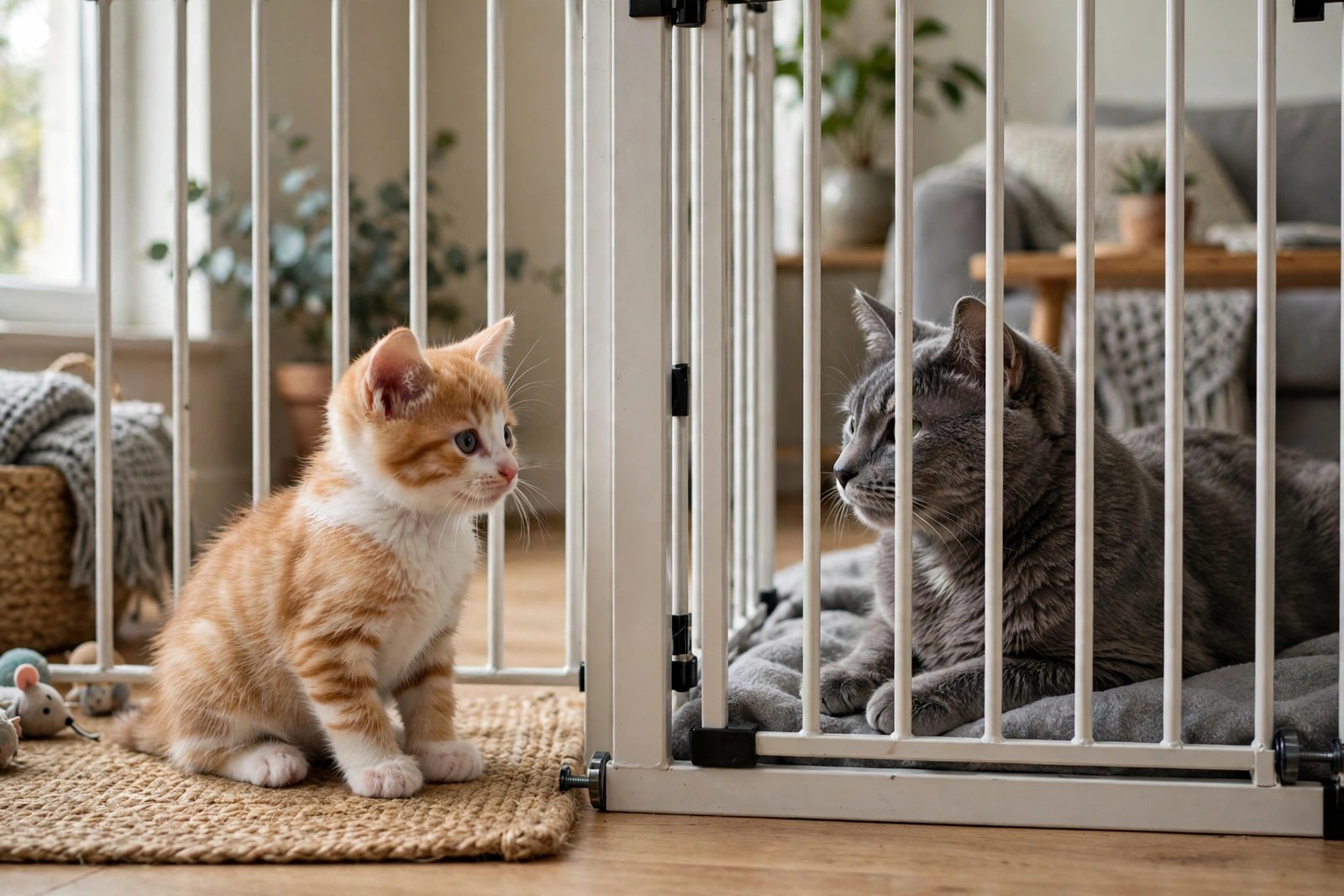
Introduce a kitten to an older cat slowly, in stages, even if the kitten seems fearless and the older cat seems calm on day one. Start with the kitten in a separate room, swap scents, feed them on opposite sides of a closed door, and only then allow short, supervised meetings. Rushing this process is the most common reason a promising pairing turns tense.
Set up the kitten's base camp
Give the kitten one room with everything she needs: litter box, food and water kept apart, a scratching post, hiding spots, and bedding that will start to smell like her. Let your older cat keep the run of the rest of the home so his routine barely changes — his territory, sunny spots, and time with you stay intact.
Visit the kitten often, but also protect one-on-one time with your resident cat. Extra attention for him is not spoiling; it is reassurance that this newcomer has not replaced him. A kitten who bounds in demanding play can overwhelm a senior cat quickly, so be the referee who makes sure the older cat always has an escape route and a quiet place to recharge.
Scent first, sight second
Cats learn each other by smell long before they are ready to share a room. Rub a soft cloth gently on each cat's cheeks and swap the cloths, or exchange bedding after a day or two. Feed meals near the closed door so each cat associates the other's scent with something good.
When both cats eat calmly near the door and show curiosity rather than fixed staring or growling, try a visual introduction through a baby gate, a cracked door held securely, or a carrier. Keep these glimpses brief. A kitten will often charge the barrier in excitement — end the session before that excitement frays your older cat's patience.
The first meetings in the same room
Choose a neutral-ish, spacious area, bring treats and a wand toy, and let the kitten explore while your older cat observes from a distance he chooses. Keep early sessions to a few minutes and end on a calm note, not after a chase.
Helpful structure for the first week of meetings:
- Short sessions, once or twice a day, always supervised
- Parallel play with two toys so they are not competing for one
- Treats for calm glances, turning away, and relaxed body language
- A clear retreat path for the older cat at all times
Some hissing or a gentle swat that teaches the kitten boundaries is normal. Separate them calmly — without scolding — if you see pinned ears, a hard stare that will not break, chasing that the kitten cannot escape, or either cat refusing to eat.
Knowing when they are ready for more freedom
Increase time together gradually as meals, play, and litter habits stay normal for both cats. Many pairs take two to four weeks to settle; a kitten and a dignified older cat can take longer, and that is fine. Do not leave them unsupervised together until you have seen repeated relaxed behavior — eating near each other, choosing to rest in the same room, and disengaging easily after excitement.
If progress stalls or reverses, go back one stage for a few days rather than pushing forward. If either cat stops eating, hides persistently, or toileting habits change, check in with your veterinarian to rule out stress or illness underneath the behavior.
Introductions unravel when people at home work to different timetables — one person letting the kitten roam free while another is still doing door feeds. The relatives you pick can view her profile for themselves in KinsLe Family Sharing.