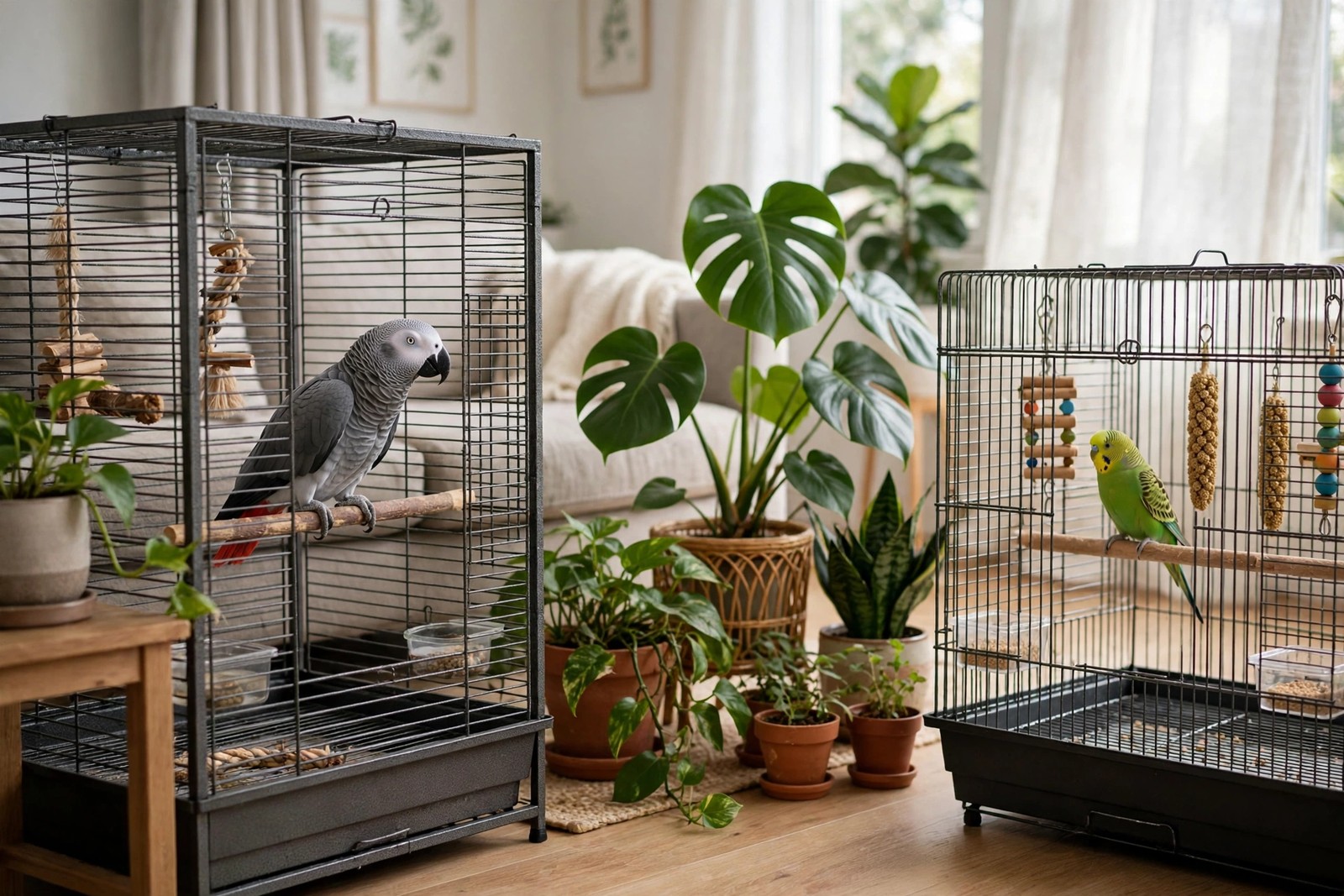
Bringing a second bird home is exciting for the humans and, from the resident parrot's point of view, an unexplained invasion. Parrots are territorial, routine-bound, and bonded to their people, so a new cage rolling straight into the room can read as a rival installed at close range.
Quarantine Comes Before Any Introduction
However healthy the new bird looks, the birds start apart. Keep the newcomer in a separate room, ideally with separate air, for a quarantine period settled with your avian veterinarian's advice — commonly around a month — and have the new bird examined during that time, because parrots can carry infections while appearing perfectly well. Nothing crosses between the cages: separate toys, dishes, perches, and cleaning tools for each bird, hands washed between handling them and tools washed rather than carried between cages, and a fixed order to the day in which the resident is fed, cleaned, and handled first and the newcomer last. This feels strict, and it is meant to: one shortcut in week one can expose the resident to exactly what quarantine exists to prevent.
Placing the Second Cage
Once quarantine ends with a clean bill of health, the second cage enters the shared room at maximum distance — opposite ends, ideally with a visual barrier such as a plant or a partly draped cover softening the direct line of sight. Expect noise. Contact calling between the cages is normal and often enthusiastic, and the resident may test the household with louder sessions than usual. What you protect through all of it is the resident's established life: the same out-of-cage times, the same greeting order, the same evening routine, treats delivered to the resident first.
Reading Both Birds as the Distance Closes
Move the second cage closer in small steps over days, and let body language, not the calendar, set the pace. Relaxed birds eat well in each other's sight, play, preen, and nap; their feathers sit sleek and their interest in the other cage is casual. Slow down or step the cages apart again if you see appetite drop, persistent screaming aimed at the other cage, lunging at bars, eyes pinning hard, feather-damaging behavior, or a bird who stops doing normal things and simply watches the newcomer with a fixed, tense stare. Watch the new bird just as carefully — a newcomer who stops eating in the resident's presence is overwhelmed, not rude.
Shared Time Out of the Cages
Neighboring cages come long before shared freedom. Let each bird out separately at first, the resident always coming out first, with the other's cage covered or the other bird wheeled out of reach, so nobody lands on a rival's roof and offers toes through the bars. When both birds have been calm neighbors for a solid stretch, try a first shared out time in a neutral space, short, with two people present and perches that let either bird choose distance, ending while things are still calm. Some pairs become companions; some remain contented neighbors for life, and neighbors is a perfectly good outcome that needs no forcing.
One Set of Rules for the Whole Household
Introductions fail most often through people, not birds: a family member swaps a toy between cages, handles the newcomer first, or lets both birds out together because they seemed fine yesterday. The handling order, quarantine boundaries, and cage-distance steps therefore belong in one place everyone follows. Agree that order and those distance steps as a household, and talk through appetite and behavior for both birds before anyone moves a cage, so a step forward or a step back is a shared decision. Through KinsLe Family Sharing, the relatives you pick can view the newcomer's profile.