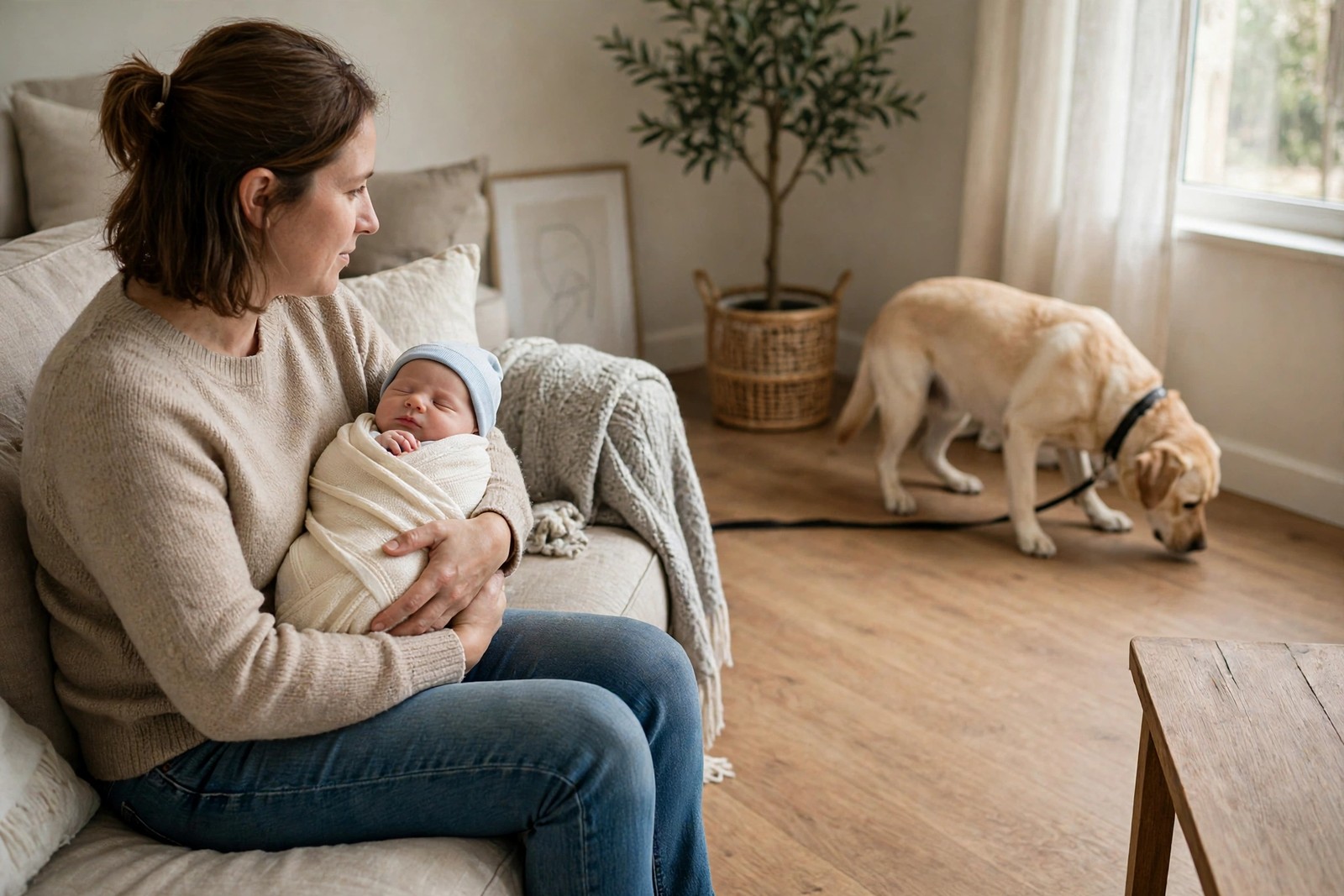
That first meeting should be brief, quiet and leashed: walk your dog into a calm room, let them look and sniff toward the baby from a distance that still feels comfortable, and reward relaxed behavior with treats and praise. Do not force closeness, and never leave dog and baby together unsupervised; end the meeting on a good note — while things are still boring — rather than waiting for your dog to get wound up.
Prepare Long Before the Hospital Trip
The introduction actually starts weeks earlier. Set up the crib, bassinet, and stroller so they are familiar furniture, not exciting new objects that arrive with the baby. Walk your dog beside the empty stroller, practice a solid "place" or "settle" on a mat, and refresh basic cues like sit, down, and leave it until they are reliable when you are distracted — because you will be distracted. If your dog has never been around infants and tends to be anxious or reactive, a session with a qualified trainer before the due date is money well spent. Dogs who guard toys or get startled by sudden noise deserve that extra preparation most of all.
Setting Up the First Meeting
Choose a moment when your dog has been walked and is pleasantly tired, not bursting with energy or already overstimulated by visitors. One adult holds the baby; another handles the dog on a loose leash. A few ground rules make the moment go well:
- Let the dog approach to a distance where they notice the baby but stay loose and wiggly, then stop there.
- Reward looking at the baby and then back at you — that check-in is gold.
- Keep it to a few minutes. Sniffing a blanket near the baby or the air in the room is plenty for day one.
- If your dog fixates, barks, or lunges, calmly increase distance and try again later — no scolding, just more space.
Over the following days, let normal life do the teaching: the dog resting on their mat while the baby feeds, brief sniffing of feet (never the face) if the dog is calm, and treats appearing whenever the baby does.
Safety Rules That Never Relax
No matter how gentle your dog is, a baby should never be left alone with them — not for a shower, not "just for a second." Babies move suddenly, grab fur, and make unpredictable noises, and even a tolerant dog can be startled. Use baby gates to create dog-free zones and baby-free rest spaces for the dog, teach children as they grow never to climb on, hug tightly, or disturb a sleeping or eating dog, and watch body language: a dog who yawns, licks their lips, turns away, or leaves the room is asking for space, and honoring that request prevents most problems before they start. As your baby becomes a mobile toddler, supervision gets more important, not less.
One Plan the Whole Household Follows
A new baby means grandparents, partners, and helpers all handling the dog — and mixed rules confuse everyone. Agree the introduction rules between you in advance: who supervises meetings, where the dog's quiet space is, and which behaviors earn a break. When the whole household follows one plan, your dog gets the consistency that makes them feel secure during a huge household change. Welcoming a baby and a dog takes patience, but most dogs settle into proud, gentle companionship. KinsLe Family Sharing gives a grandparent or another relative you pick direct access to their profile.