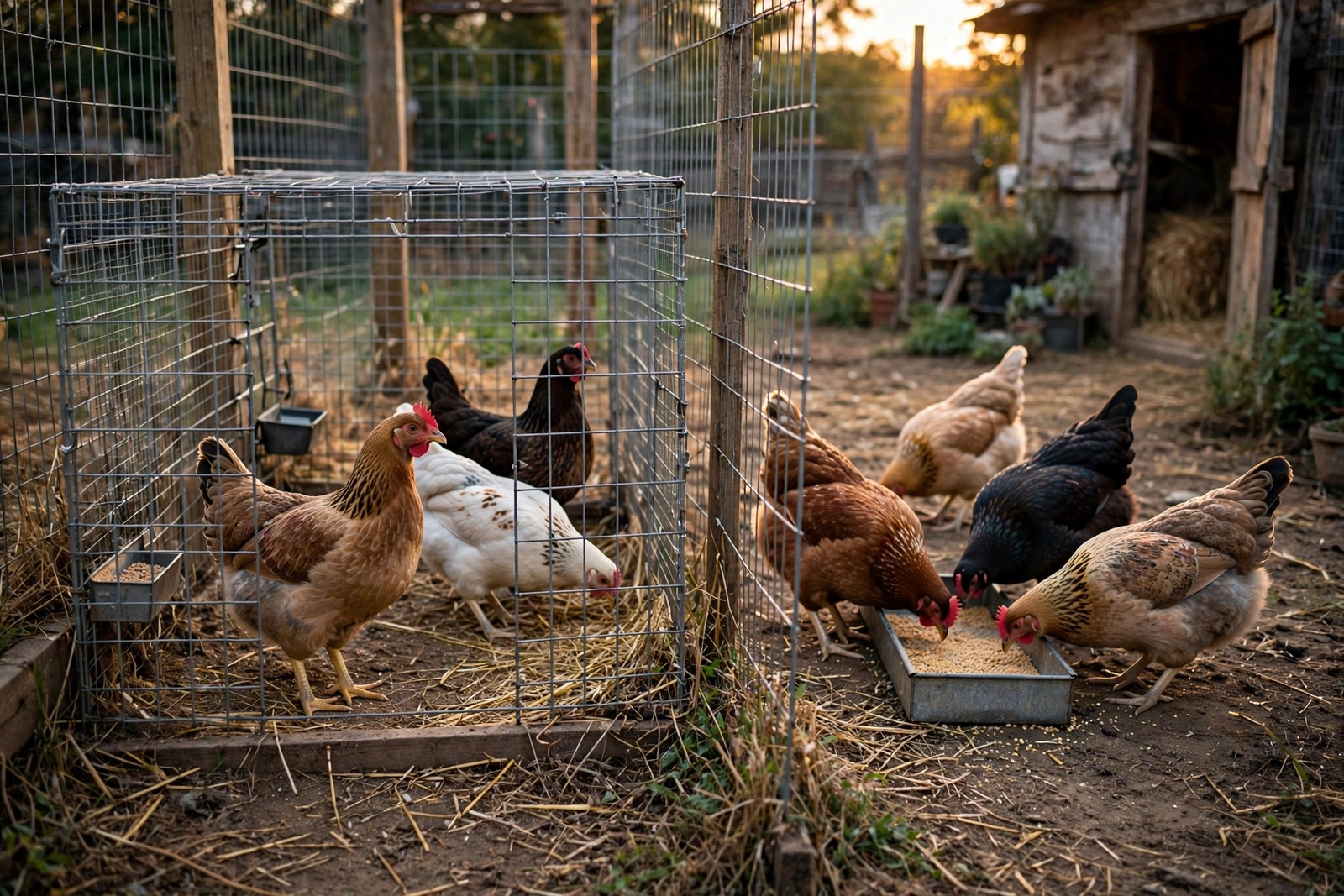
Chickens run a strict social order, and a stranger dropped into the run at noon is treated as an invader, not a new friend. A safe introduction works in three deliberate phases: quarantine that protects your existing flock's health, a period of seeing without touching, and a carefully staged mixing that gives the newcomers food, water, and escape options while the pecking order resets.
Phase One: Quarantine Comes First
House new birds completely separately, ideally at least several metres from the main flock with no shared equipment, for two to three weeks. Tend your established flock first each day and the newcomers last, washing hands and ideally changing boots between them, so nothing travels from the new birds to the old on you.
Use the quarantine period properly. Handle each new bird and check under the wings and around the vent for lice and mites, listen for sneezing or rattly breathing, watch droppings, and confirm every bird is eating, drinking, and moving brightly. A bird who arrives with a respiratory infection or a heavy parasite load can set your whole flock back, and anything that looks unwell during quarantine extends it and earns a call to a poultry vet rather than an early introduction. Quarantine is also when skittish new birds learn your voice, your bucket, and that humans predict food.
Phase Two: See But No Touch
Move the new birds into a pen, crate, or fenced section inside or directly alongside the main run, with their own feeder and waterer, for roughly a week. The wire lets both groups study each other at close range, squawk, posture, and settle the first arguments through a barrier where nobody can be cornered or injured.
Watch how the temperature changes over the days. Initial outrage, fence-pacing, and raised hackles should fade into parallel feeding and indifference. If your existing flock is still attacking the wire after a week, give it more time; this stage is cheap insurance compared with treating a badly pecked newcomer.
Phase Three: Mixing, Done at Dusk
Mix in the evening, shortly before roosting, when birds are naturally calmer and more interested in settling for the night than in fighting. Add the newcomers to the coop or run with distractions ready: extra feeders and waterers spread well apart, at least one more station than you think you need, plus scattered treats, a cabbage or similar pecking distraction, and perches or barriers that break lines of sight so a chased bird can get out of view.
Expect squabbles, chest-bumping, and some feather-pulling for several days while ranks are decided; that is the pecking order forming, not a failed mixing. Intervene if you see blood drawn, one bird relentlessly cornered and kept from food and water, or a bird hiding all day and not roosting. A bleeding bird comes out immediately, both for treatment and because blood draws more pecking. Most flocks settle within a week, with the newcomers often starting at the bottom and working up as they grow in confidence, and young pullets introduced in a small group of two or more fare far better than a single bird added alone.
Quarantine checks and staged mixing only work if every helper follows the same sequence, and KinsLe Care Teams lets you assign the new birds' daily health checks, separate feeds, and mixing-day observations to each person, marked complete with a timestamp so nothing is skipped.