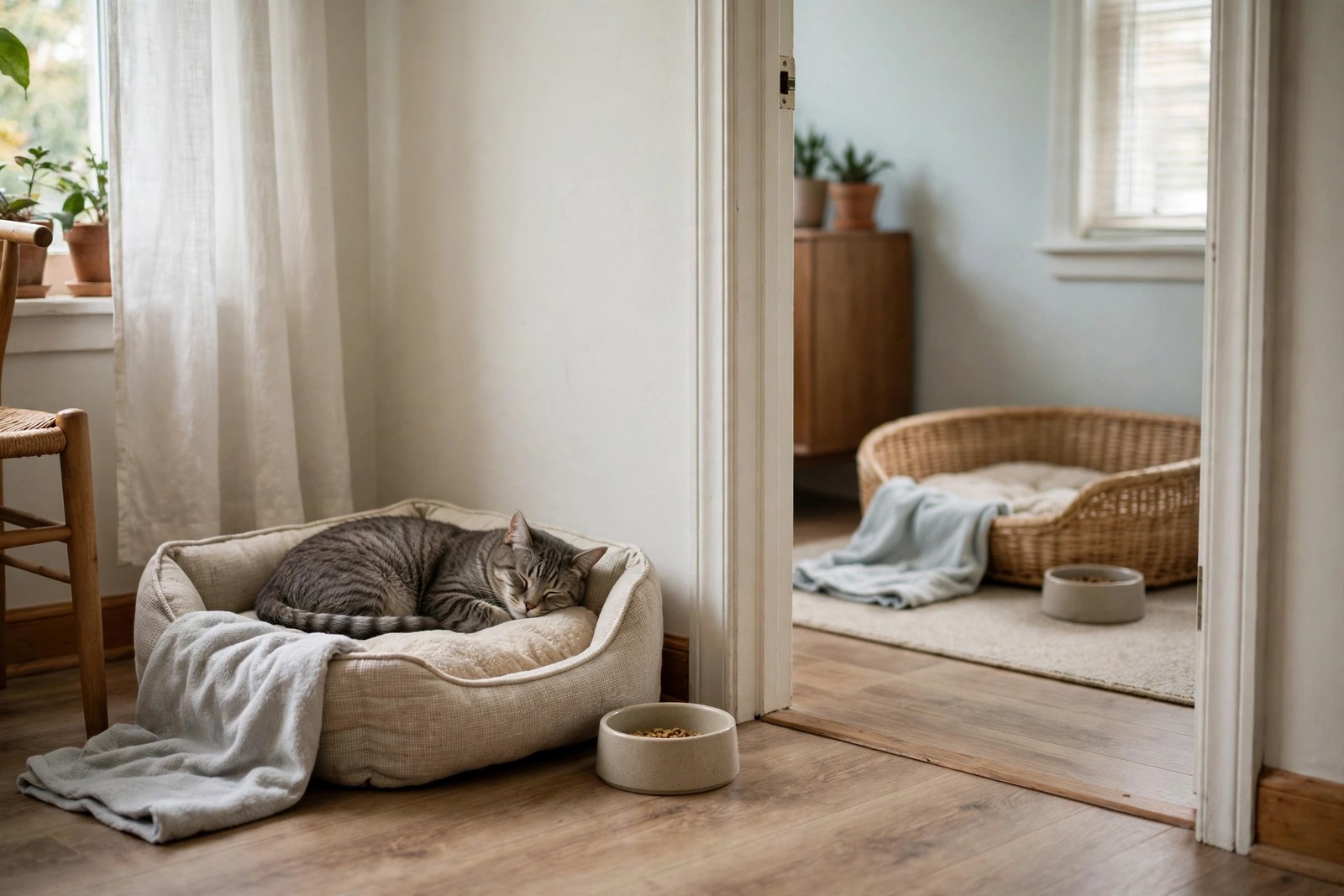
Cats meet by smell long before they meet by sight, and a good introduction respects that order. Scent swapping lets two cats who have never seen each other learn the most important fact first, that the stranger's scent is a normal, safe part of daily life, before either has to handle the far bigger challenge of a living cat in the room. Done patiently, the method is simple: carry each cat's scent to the other on cloth and bedding, pair it with good experiences, and let the cats' own reactions, not a calendar, set the speed of every stage.
Stage One: The Cheek Cloths
Take a soft, clean cloth for each cat. Rub one gently along the first cat's cheeks and chin, where friendly scent concentrates, using the pressure of a normal stroke and stopping while the cat is still enjoying it. Then leave that cloth where the second cat rests or eats, not thrust at its face, just present in its territory to investigate or ignore. Do the reverse with the second cat's cloth. Timing is the quiet trick of this stage: place the new cloth shortly before a meal, so the stranger's scent arrives in the minutes when good things happen, and the association builds itself. Refresh the cloths daily with a new rub, because scent fades and a fresh signature carries the current, calm version of the other cat.
Stage Two: Exchange the Bedding
After a few days of cloths being sniffed, ignored, or at worst briefly hissed at and then accepted, widen the exchange. Swap the bedding each cat sleeps on, or rotate a blanket between their areas, so each cat now rests surrounded by the other's full, everyday scent rather than a cheek sample. Meals can move gradually closer to the door that separates them at this stage, still with the door closed, so eating well and the other's smell become thoroughly ordinary companions. A cat that eats calmly beside bedding carrying the stranger's scent is giving you the clearest progress report this process offers.
Stage Three: Swap the Rooms Themselves
Next, let each cat explore the other's empty room. Move the first cat into a third space, let the second wander the vacated room at its own pace, sniffing, chinning, and mapping, then return everyone to their own side before any door opens between them. Room swaps teach what cloths cannot: the full geography of the stranger, its litter area, feeding spot, and resting places, all readable without confrontation. Repeat the swaps over several days. Rushing this stage is the most common way introductions wobble, because a cat that has not finished reading a room meets its author already jumpy.
Let Reactions Set the Pace, Honestly
The timeline runs from days to weeks, and the cats, not hope, decide which. Sniffing a cloth and walking away is the green light to continue. Hissing at a cloth, growling, or refusing food near it means slower, not failed: step back a stage, increase the distance between feeding and the scent, and hold there until the reaction softens. Some pairs settle in a week; others need a month of bedding exchanges, and both outcomes sit inside normal. Circle of Love is full of keepers who learned exactly this patience the long way, trading notes on cloth timing, door feeding, and the hissing that looked like disaster on day two and meant nothing by day ten. No face-to-face meeting happens until cloths and bedding are genuinely ignored, because that boredom is the foundation the first sighting will stand on. Keepers swapping scents tonight are not the first, and their hard-won lessons wait in KinsLe inside the Circle of Love community for anyone starting the same patient process.