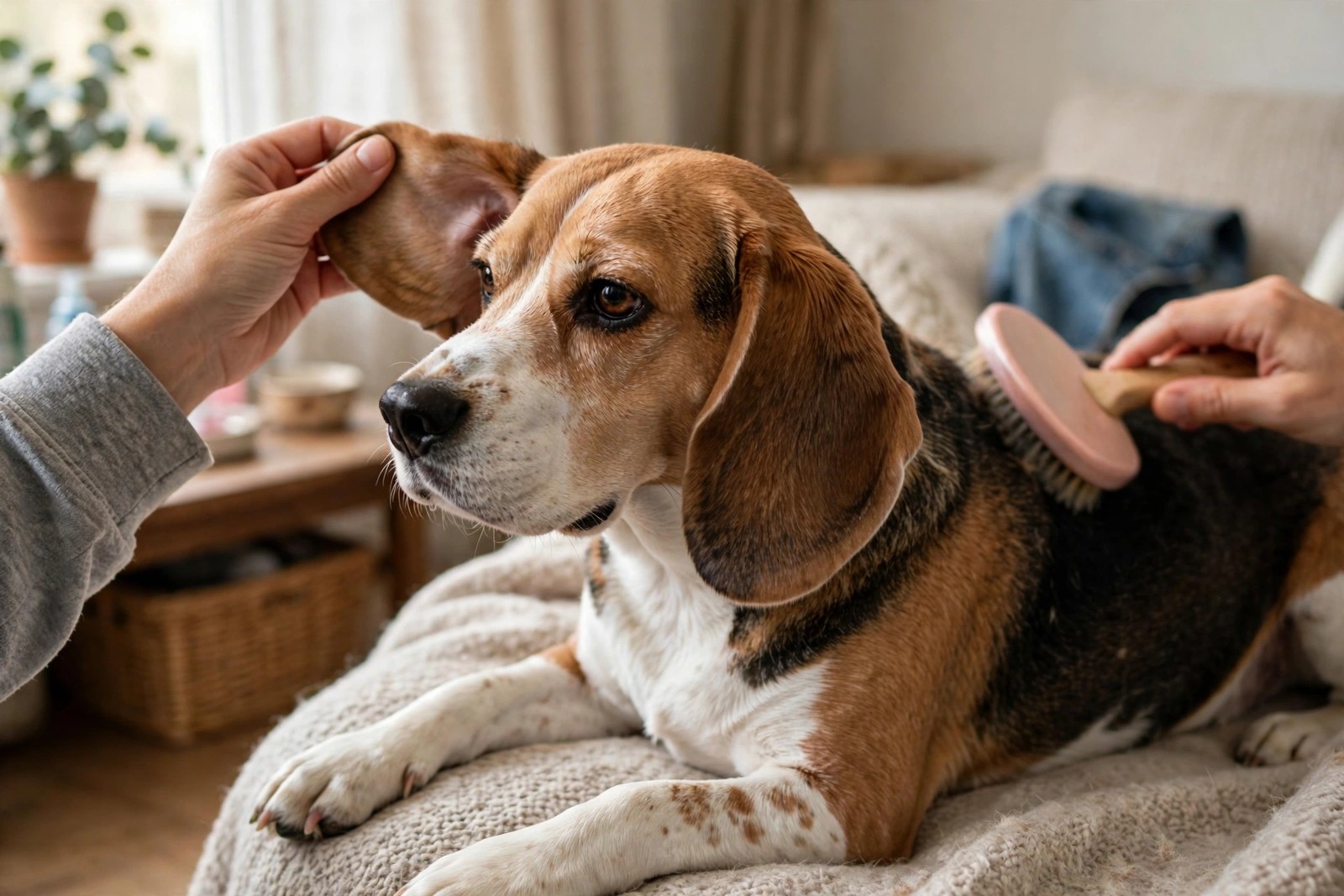
The Beagle coat fools owners in both directions. It looks wash-and-wear, yet it sheds steadily all year and thickens into a dense double layer that holds loose hair against the skin if nobody lifts it out. The routine below genuinely takes about ten minutes a week, because the coat work itself is quick and the minutes go where a Beagle actually needs them: into those long, heavy ears that hang closed over the canal and trap warm, damp air against it.
Anchor the whole routine to one weekly moment, such as after a weekend walk, so the brush, the ear check, and a quick paw inspection happen together and nothing drifts. A dog who knows the sequence stands for it happily, especially when it ends with dinner.
The Weekly Brush: Bristle Brush or Grooming Mitt
Once a week, go over her whole body with a bristle brush or a rubber grooming mitt, working in the direction the hair lies and then lightly against it to free the loose undercoat. Beagles produce a surprising volume of short hair for their size, and weekly removal is what keeps that hair on the brush instead of worked into carpets and car seats. The mitt suits dogs who fidget, since the stroking motion feels like fuss rather than grooming.
Use the brushing as a skin check at the same time. Part the coat along the back, belly, and behind the ears, looking for flea dirt, ticks after rural walks, dry flakes, or any patch where the coat feels thin or the skin looks angry. A Beagle's nose leads her through brambles and long grass, so burrs and grass seeds caught in the armpits and between the toes are worth the extra thirty seconds. Nails and a paw check ride along naturally here: trim tips as needed and rinse mud from the feet after wet walks so grit does not sit between the pads.
The Weekly Ear Check: Clean Only a Healthy Ear
Lift each ear flap in good light and look inside. A healthy Beagle ear is pale, fairly clean, and smells of very little. Wipe or clean surface dirt on a healthy ear with a vet-recommended drying cleaner on cotton wool, working only on the parts you can see and never pushing anything down into the canal. Weekly checks matter because those pendant ears ventilate poorly, so wax and moisture build up quietly between grooms and a problem can establish itself before the dog shows it.
Know the line between cleaning and a vet visit, and respect it firmly. A red, painful, or smelly ear is a vet visit, never a cleaning project: do not clean an ear that looks inflamed, that she guards or cries over, or that carries a strong yeasty or sour smell, since fluid in an infected canal makes diagnosis harder and hurts. Head shaking, scratching one ear repeatedly, or a head tilt points the same way. Book the appointment and leave the ear alone until it has been examined.
Baths Only When Muddy or Smelly
Beagles need a bath only when they are muddy or smelly, and many would argue rolling in something dreadful is a breed hobby, so those baths will happen on the fox-poo schedule rather than a calendar one. Use a mild dog shampoo, rinse far longer than feels necessary, because residue left in a dense coat itches, and dry the ears' outer folds afterwards. Between baths, a wipe down with a damp cloth after a muddy walk handles everyday dirt without stripping the coat's oils.
Over-bathing is an easy way owners turn a low-maintenance coat into a problem, producing dry skin and a stronger hound odour as the skin compensates. If she smells strong again within days of a thorough bath, or the coat feels greasy at the roots, mention it at her next veterinary visit rather than washing more often. Ticking off the weekly brush and ear check inside the app, where KinsLe records Care Teams tasks with a timestamp, gives you proof the ten minutes happened and flags a missed week before the ears pay for it.